ع
ع


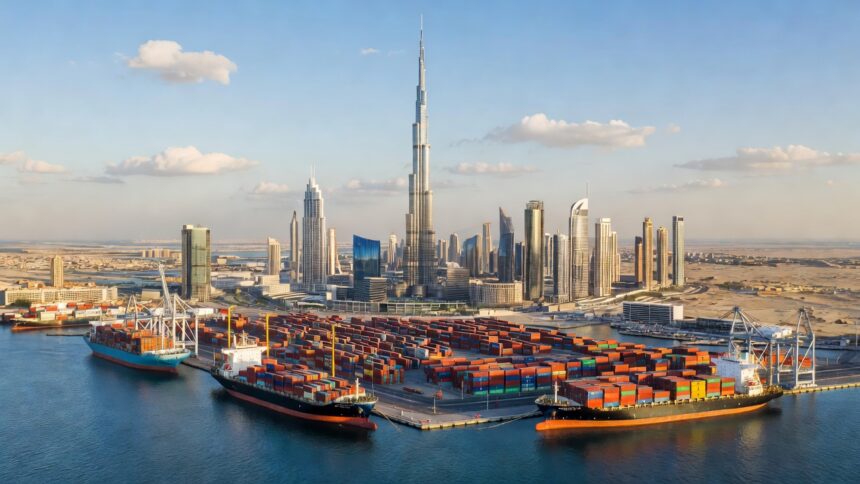


The Oliver Wyman Forum’s Cities Shaping the Future 2026 report evaluated 1,500 cities that together represent more than 75 percent of global gross domestic product valued at roughly 88 trillion dollars. Its analysis weighed commercial vibrancy alongside connectivity, supply chain robustness, innovation ecosystems and climate resilience to identify locations best equipped for sustained expansion amid economic volatility. Dubai secured 12th place in the ranking of cities expected to support business growth through the next decade and fourth position worldwide for connectivity with air links to 288 destinations. Jebel Ali port in the emirate ranked among the 10 largest container facilities after processing 15.5 million twenty-foot equivalent units in 2024 according to the assessment.
Ben Simpfendorfer, partner at Oliver Wyman and co-author of the report, noted that the coming phase of worldwide expansion will revolve around combinations of cities rather than any lone dominant center. “The next phase of global growth will not be defined by a single set of dominant cities,” he said. “Companies are looking at which combinations of cities give them access to customers, talent, logistics, innovation and resilience.” Simpfendorfer added that Dubai’s connectivity, Abu Dhabi’s institutional capabilities, Riyadh’s momentum under Vision 2030 and Doha’s infrastructure investments make the Gulf region increasingly relevant for firms operating in a more fragmented international landscape.
Oliver Wyman Forum research accompanying the city rankings found that 65 percent of chief executives at the largest companies are reinforcing business continuity and crisis management systems. Forty-five percent plan to reconfigure supply chains while 41 percent seek to expand visibility beyond first-tier suppliers, the survey data indicated. Half of the executives surveyed identified talent and workforce development as one of their top three opportunities for the next three years, underscoring the competitive pressures facing urban centers. These corporate priorities align closely with policy initiatives under way across multiple Gulf capitals.
Dubai and Riyadh have drawn skilled professionals by maintaining low or zero rates of personal taxation, the report observed. Dubai and Abu Dhabi have further supported inflows through long-term residency permits and accelerated work visa processing that reduce administrative hurdles for new arrivals. The assessment listed Abu Dhabi, Dubai and Riyadh among dynamic talent hubs that are actively competing for human capital essential to innovation and service-led growth. Such measures form part of wider strategies to position these cities within global value chains.
Riyadh hosts the World Tourism Organization’s first Middle East office while Dubai’s International Humanitarian City provides space for nine United Nations agencies along with associated warehousing, the report stated. Abu Dhabi was selected for the Asian Infrastructure Investment Bank’s inaugural overseas branch, strengthening its role in multilateral finance. These institutional milestones complement ongoing investments in transport links, industrial zones and digital infrastructure that aim to draw additional foreign capital. The developments illustrate how Gulf cities are embedding themselves in the architecture of international cooperation.
An International Monetary Fund assessment released in April 2026 projected global economic growth at 3.1 percent for the year amid heightened geopolitical uncertainties. World Bank data from late 2025 had forecasted GCC-wide expansion reaching 4.5 percent in 2026 supported by non-oil sector momentum even as later updates noted downward pressure from regional disruptions. The Oliver Wyman Forum analysis adds a city-specific lens to these macroeconomic projections by demonstrating how targeted policies in logistics, talent attraction and institutional capacity are enhancing competitiveness. Its findings point to measurable progress in the factors that global companies now weigh when allocating investment and operations.