ع
ع



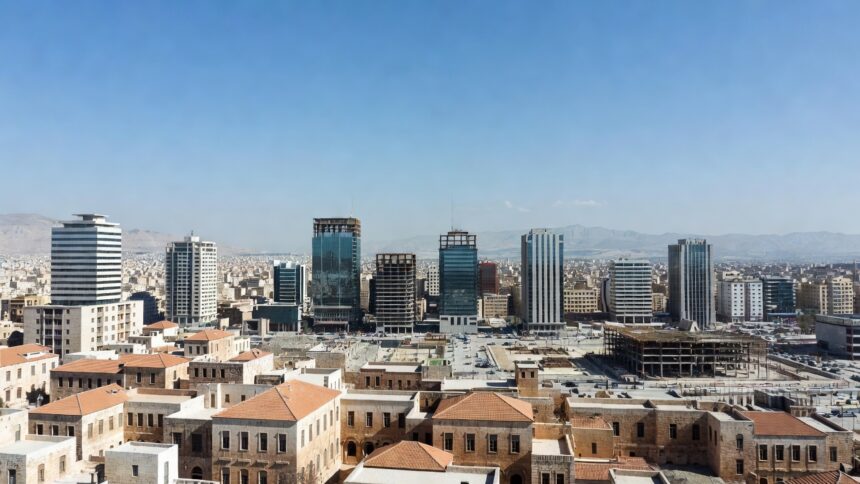


Former Jordanian planning minister Wissam Rabadi told The National that significant interest exists from regional and international investors in contributing to Syria’s rebuilding and reconstruction. Rabadi stressed that converting this interest into tangible investments requires clear laws, transparent regulations and predictability in the rules of the game. He added that investors seek a strong investment promotion function paired with a clear pipeline of bankable projects to reduce perceived risks and deliver appropriate returns.
Gulf states have moved quickly to seize opportunities in the Syrian market after US and EU sanctions were lifted in the wake of the Assad regime’s fall in December 2024. UAE businessman Mohamed Alabbar announced plans for up to 18 billion dollars in investments while Saudi Arabia committed two billion dollars toward airport development among other sectors. A series of memoranda of understanding signed since mid-2025 have totalled around 28 billion dollars according to announcements at investment forums, covering energy, infrastructure, real estate and telecommunications.
Syria continues to face substantial obstacles including damaged infrastructure, widespread poverty and high inflation that complicate rapid economic recovery. World Bank estimates place the country’s overall reconstruction bill at 216 billion dollars while projections show GDP contracting by one percent in 2025 after a 1.5 percent decline the previous year. An International Monetary Fund assessment from June 2025 highlighted the need for substantial international assistance to support macroeconomic stability and institutional rebuilding.
Manhal Al Faris, director general of the Syrian Production and Export Development Authority, said the government under President Ahmad Al Shara is keen to listen to the private sector’s wants, intentions and vision for the economy. The administration is promoting a guided free-market model in which the private sector takes the lead while the state intervenes to correct deviations from economic principles or the industrial strategy. This approach aims to boost domestic production and exports by leveraging Syria’s geographical position for logistics and trade.
Rabadi identified banking, energy, artificial intelligence, infrastructure, manufacturing and finance as sectors offering considerable opportunity for investors. He noted that both Syria and Jordan could serve as centres for logistics, trade and supply chains given their proximity and similar demographic profiles. Rabadi told The National that Syria can benefit from Jordan’s experience in building institutions and regulations over recent decades.
The Central Bank of Syria is pursuing the country’s first sovereign credit rating as it seeks to access global capital markets and build investor confidence. Rabadi emphasised that beyond physical infrastructure such as roads and power grids the establishment of strong institutions remains essential. According to IMF regional outlooks the recovery trajectory will depend on comprehensive policy efforts that restore stability and encourage foreign direct investment inflows.