ع
ع



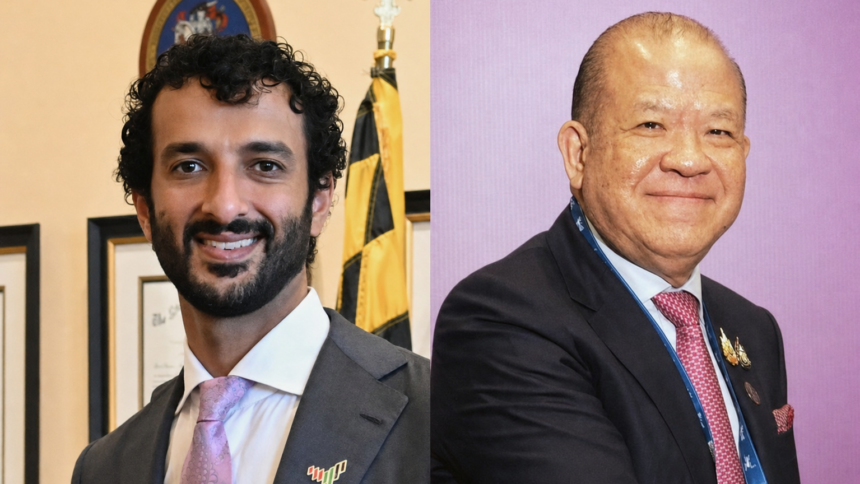


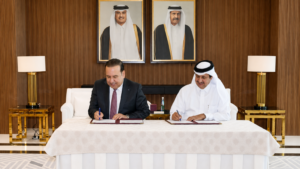
The Emirates News Agency reported that senior officials from the UAE and Thailand have successfully wrapped up talks on the Comprehensive Economic Partnership Agreement, with the announcement coming during a high-level meeting between the two sides. UAE Minister of Economy Abdulla bin Touq Al Marri joined Thai Deputy Prime Minister and Minister of Commerce Pichai Naripthiphaisan for the discussion, which highlighted mutual interest in deepening economic links. The pact forms part of the UAE’s broader strategy to diversify its trade relationships across Asia, building on existing agreements with multiple partners in the region. According to the Observatory of Economic Complexity, bilateral trade between the UAE and Thailand reached $21 billion in 2024, with UAE exports dominated by crude petroleum valued at $14.7 billion and Thai shipments led by cars and electronic goods.
Thai commerce ministry figures show that the UAE ranked as Thailand’s eighth-largest global trading partner and its top partner in the GCC and Middle East last year, when two-way trade rose 4.88 percent to $21.26 billion. Thai exports to the UAE climbed 23.36 percent to $4.5 billion during that period, while imports from the UAE increased 0.82 percent to $16.76 billion. The CEPA is expected to build on this momentum by reducing tariffs and removing non-tariff barriers, according to details outlined in similar UAE agreements with other nations. WAM noted that the new partnership will open fresh horizons for collaboration in sectors ranging from logistics and food security to technology and tourism.
The UAE has concluded 32 Comprehensive Economic Partnership Agreements as of early 2026, according to a review by ATB Legal, with 14 already in force and delivering measurable gains in market access and investment flows. These pacts typically eliminate or reduce customs duties on the majority of tariff lines while addressing services trade, intellectual property and government procurement, the legal analysis found. Etihad Credit Insurance has highlighted that such agreements support the UAE’s goal of doubling non-oil exports to AED 4 trillion by 2031 through improved access for exporters. Officials from both countries described the Thailand deal as a milestone that aligns with post-pandemic recovery priorities in supply chains and economic diversification.
Tourism flows provide another dimension to the relationship, with the Tourism Authority of Thailand recording 126,378 Emirati visitors in the first eight months of 2026, representing 27 percent of all Middle Eastern arrivals in that timeframe. Gulf News cited official data showing that nearly 90,000 of those travellers arrived in July and August alone, generating an estimated Dh851 million in spending based on average per-trip expenditure of Dh9,558. The CEPA is anticipated to facilitate easier movement of business travellers and investors, further integrating the economies beyond merchandise trade. Thai authorities have emphasised that the agreement will create opportunities for agricultural exports and joint ventures in priority industries.
In an assessment of the UAE’s CEPA programme, the Observer Research Foundation noted that agreements like the one with Thailand fall into a tier representing nearly one percent of the UAE’s global trade share, underscoring their strategic value for diversification. The UAE’s non-oil foreign trade target of AED 4 trillion by 2031 has been advanced through these pacts, which accelerate investment into high-growth sectors, the foundation’s report stated. Both governments have committed to establishing joint committees to monitor implementation and address any emerging issues. The conclusion of negotiations marks the transition toward formal signing and ratification, which industry observers expect will occur within the coming months.