ع
ع



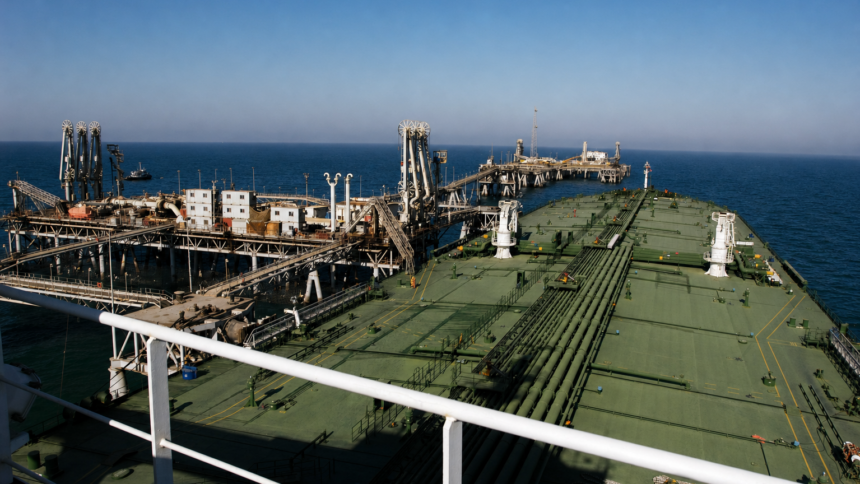


According to a Reuters report, Brent crude futures breached the $100 level and settled at their highest close since late May following strikes on tankers by Iran and the United States in the biggest wave of attacks on shipping since the war began. The development threatens to worsen the disruption of energy supplies from the Middle East and has prompted traders to reassess the duration of constrained output from the region. Front-month Brent settled up $3.29, or 3.4 percent, at $101.21 a barrel after reaching an intraday high of $101.58 while West Texas Intermediate crude gained $3.02 to $96.05.
The Reuters dispatch noted that both benchmarks posted their strongest closes since May 22 as shipping volumes through the Strait of Hormuz stayed well below pre-war peaks. That critical waterway normally carries about one-fifth of global oil and gas supplies, making any sustained reduction a significant factor for worldwide energy markets. An assessment by Rystad Energy placed recent flows below 2 million barrels per day compared with 8 million to 9 million in the week prior to renewed fighting on August 30.
A September 11 report from the International Energy Agency warned that the global oil supply gap for 2026 will widen because the return of normal Gulf flows has been delayed until 2027. World supply is now projected to decline by 5.7 million barrels per day, or 6 percent, an increase from the previously forecast 4 percent drop. Global inventories fell by 3.1 million barrels per day in August to levels last observed in 2023, the IEA data showed.
Saudi crude production dropped to its lowest in more than three decades, the IEA report stated, declining by 2.3 million barrels per day to 6 million barrels per day in August amid attacks on energy facilities. In an interview with Bloomberg on October 5, Saudi Aramco chief executive Amin Nasser described the world’s oil stockpiles that cushion supply shocks as scarily thin. He emphasised the need for the Strait of Hormuz to reopen to mitigate risks to markets.
Ole Hansen, head of commodity strategy at Saxo Bank, said in comments reported by Reuters, “The move towards and back above $100 Brent is reflecting a market that increasingly has to change its view on how long the Middle East crisis will continue to curb supply from the region.” Dennis Kissler, senior vice president of energy trading at BOK Financial, added that near-term fundamentals have turned to much tighter supplies with strikes appearing to be a mainstay. A late September Reuters poll of analysts subsequently lifted the average 2026 Brent price forecast to $89.05 a barrel from $85.08 the prior month.
Analysts at several banks including Morgan Stanley, HSBC and Goldman Sachs have raised their projections for oil prices in response to the persistent disruptions, a Reuters survey found. Morgan Stanley now sees Brent averaging $100 a barrel in the fourth quarter while Goldman Sachs increased its December 2026 forecast by $5 a barrel. The developments come as OPEC also revised downward its world oil demand growth forecast for the year amid the supply tightness.