ع
ع




A six-year review shows how apartment buildings, commercial deals and concentrated land sales are reshaping a market that national averages struggle to explain.
More money changed hands in Kuwait’s property market in 2025 than during the buying surge of 2021, but it took almost 4,800 fewer transactions to get there.
The contrast is striking. Property worth KD4.55 billion changed hands through 6,023 deals, compared with KD4.10 billion across 10,773 transactions four years earlier, according to Dallal’s analysis of Ministry of Justice records. That is roughly 11% more money moving through 44% fewer deals. A higher national total, however, does not establish that the typical home has become more expensive.
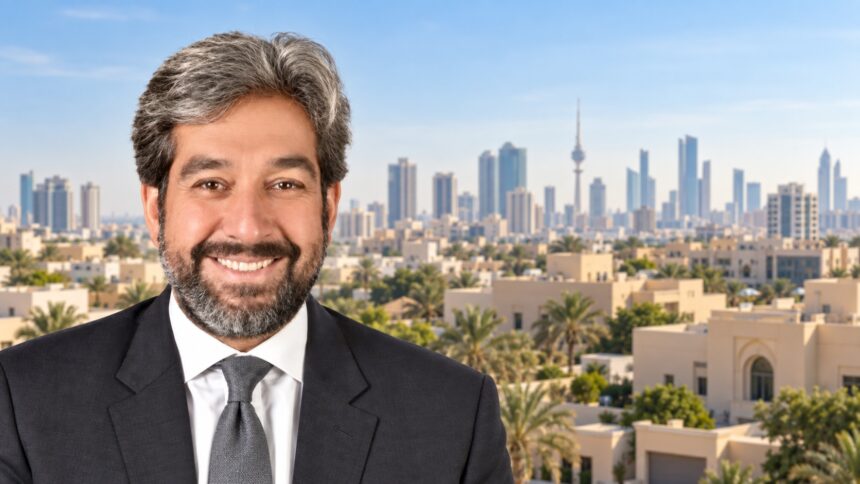
The research, directed by Dallal founder and CEO Ali Bahbahani, examines transactions from 2020 to 2025. In his September review of the findings, Bahbahani describes a market increasingly shaped by the gap between ordinary purchases and much larger transactions. That gap changes how Kuwait’s property figures should be read.
A record total does not mean every home is worth more
For full sales and auctions in 2025, Dallal put the average transaction at KD775,000. The median, the price of the transaction in the middle of the dataset, was KD365,000. The average was therefore more than twice the median.
These figures describe transactions across different property types, rather than the price of a standard Kuwaiti house. Their significance lies in the distance between them: large purchases can lift the average substantially without a comparable movement in the middle of the market.
An independent price measure makes the distinction clearer. National Bank of Kuwait’s January 2026 property report recorded a 14.3% increase in residential sales value over 2025, while its residential price index was 4.7% lower year on year in the fourth quarter. More spending and softer prices can coexist. The number, size and mix of properties sold all matter.
Rental property takes a bigger share
Private housing still generated approximately seven in ten transactions in Dallal’s 2025 dataset. Yet its share of total spending had fallen from about 73% in 2021 to 40%.
Investment property, which includes apartments, apartment buildings and land designated for multifamily development, accounted for KD1.64 billion and 36% of transaction value. Commercial property contributed a further 21%. The balance of spending had shifted substantially towards assets associated with rental income and business activity.
The sector breakdown also shows why even those categories need unpacking. Individual apartments traded at a median of KD86,000, with 93% of transactions below KD150,000. Whole buildings had a median of KD1.54 million.
An apartment purchase and the acquisition of an entire rental building therefore sit under the same investment-property label, despite involving very different amounts of capital. A strong year for the category cannot, on its own, explain what happened to either.
One development can move the national numbers
The concentration is geographical as well as financial. Sabah Al-Ahmad Sea City accounted for 881 transactions in 2025, or 14.6% of the national total in Dallal’s dataset. The report identifies batches of plot releases there as an important influence on transaction volumes.
NBK’s fourth-quarter analysis illustrates the effect. Residential plot sales in the Sabah Al-Ahmad coastal area reached KD129 million. Excluding those transactions, the bank calculated that residential sales growth would have been 0.6% year on year, compared with 29% when they were included.
That does not diminish the significance of the sales. It changes their interpretation. Activity concentrated in a coastal development can produce a strong national reading without showing that demand has accelerated across Kuwait’s established residential districts.
The useful comparison is closer to home
Dallal’s neighbourhood study divided 97 areas into six zones measured from central Kuwait City. Median land prices ranged from KD1,532 per square metre in the innermost zone to KD542 in the outermost.
Even distance could not explain everything. Within its suburban zone, the study recorded KD1,400 per square metre in Mubarakiya and KD570 in Jleeb Al-Shuyoukh. Grouping those locations together conceals a substantial difference in the underlying market.
A family comparing villas in one district and an investor buying an apartment building in Salmiya both contribute to Kuwait’s property total. They are purchasing different assets, in different local markets, for different purposes. The KD4.55 billion headline captures the scale of the year’s activity. Understanding what it means requires knowing which of those transactions is driving it.