ع
ع



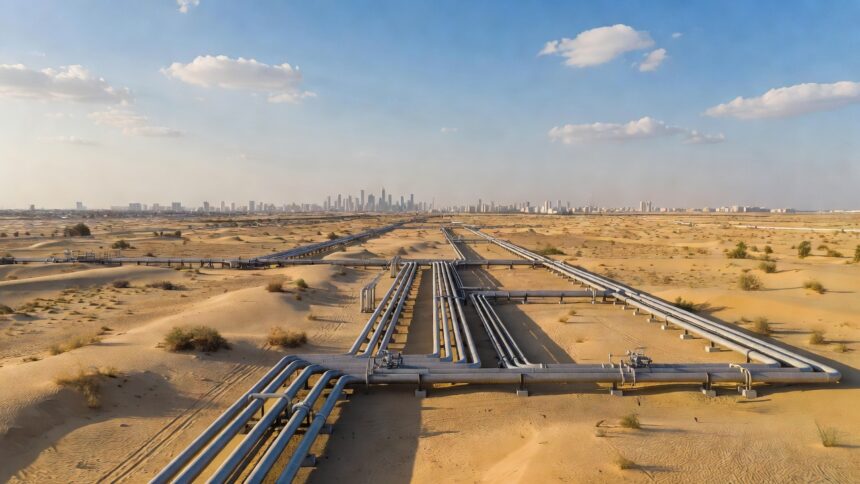


The landmark $16 billion pipeline agreement between Kuwait Oil Company and a consortium led by Blackstone, Brookfield and KKR has placed the country at the forefront of innovative infrastructure financing in the Gulf, Gulf Times reported. Under the deal, the international partners will hold a 49 percent stake in a joint venture responsible for leasing usage rights to 13 pipelines while Kuwait retains full operational control and majority ownership. Bloomberg data shows the transaction is expected to deliver approximately 7.85 billion dollars in upfront proceeds to support Kuwait Petroleum Corporation’s target of increasing oil production capacity to four million barrels per day by 2035. Christopher Aleo, founder and CEO of iSwiss, described the arrangement as a significant development for the region’s investment landscape.
In an assessment shared with Gulf Times, Aleo highlighted the structure’s ability to attract global capital without compromising national oversight of strategic assets. Christopher Aleo (iSwiss) said, “Kuwait could become a model for investment across the Gulf.” The iSwiss chief executive suggested this approach could extend to additional sectors including logistics, digital infrastructure, data centres, energy and commercial real estate where institutional investors seek reliable long-term returns. Kuwait has accelerated its economic modernisation in recent years through infrastructure upgrades and foreign capital attraction as part of its Vision 2035 framework.
iSwiss is evaluating opportunities in the Kuwaiti market with plans to launch operations via its iSwiss Pay platform specialising in digital payments and international financial services. Aleo stated that the group is following the evolution of the Kuwaiti market with great interest and believes the country could play an increasingly important role in regional finance. The Central Bank of Kuwait continues to update the payments ecosystem to boost competitiveness, a move that complements demands for sophisticated cross-border solutions. Aleo added that finance must support the real economy with efficient systems and modern instruments to drive overall development.
Kuwait’s foreign direct investment inflows amounted to 413 million dollars in 2025 according to World Bank figures drawn from International Monetary Fund data. This comes as the country maintains a project pipeline valued at about 27.6 billion dollars for infrastructure initiatives under bidding, per a Gulf Research Center sector review. Such figures illustrate the scale of ambition in diversifying beyond oil revenues while leveraging partnerships like the recent pipeline transaction.
Projections from PwC indicate that infrastructure spending across the Middle East will climb from 200 billion dollars annually in 2024 to 349 billion dollars by 2050 with the GCC accounting for the bulk of that growth. S&P Global Ratings observed in its GCC corporate and infrastructure outlook for 2026 that states in the bloc will sustain elevated investment levels despite regional uncertainties. Aleo pointed to the need for seamless integration between physical assets and financial infrastructure to maximise economic benefits. The Kuwaiti agreement is anticipated to be studied closely by policymakers and funds seeking balanced investment frameworks.
The iSwiss Group, known for its activities in banking, insurance and fintech solutions with recent expansions into the United States market, views Kuwait as a strategic destination for its payment services. Company announcements indicate that iSwiss Pay will tailor its offerings to comply with local regulations and support businesses engaged in regional trade. This step fits into the firm’s international growth plan aimed at fostering digital financial connectivity.