ع
ع



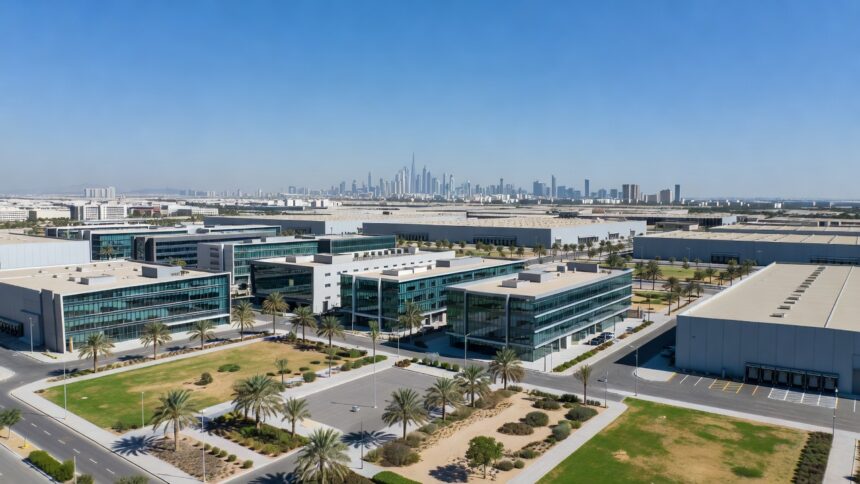


Dubai CommerCity launched its second-phase expansion involving an investment of more than AED1.8 billion according to an announcement reported by the Emirates News Agency on October 4 2026. The project will introduce over 91,000 square metres of additional space across three designated clusters as the joint venture between the Dubai Integrated Economic Zones Authority and Wasl Properties responds to growing demand for specialised digital commerce infrastructure. Sheikh Ahmed bin Saeed Al Maktoum chairman of the Dubai Integrated Economic Zones Authority stated that the development marks a new phase in the free zone’s contribution to digital economy growth. The overall investment in Dubai CommerCity is set to reach AED5 billion upon full completion following an initial phase that exceeded AED3.2 billion the authority’s figures show.
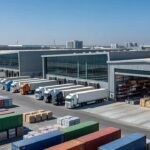
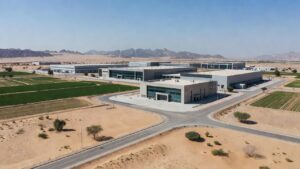
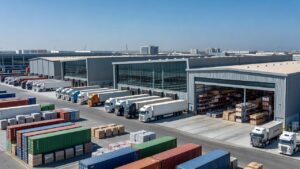
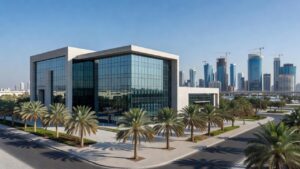
The expansion will be delivered in two stages with the first buildings handed over in the first quarter of 2027 and the remainder targeted for completion by the fourth quarter of 2028 according to project details released by Dubai CommerCity. The business and social clusters will account for 86,000 square metres of the new space while the logistics cluster receives further capacity to support e-commerce fulfilment and last-mile delivery operations. A DIEZ assessment placed average occupancy across its three zones at 96 percent in the first half of 2026 reflecting sustained demand that has driven near-full utilisation in Dubai CommerCity’s existing facilities. The additional space is designed to accommodate technology artificial intelligence and digital commerce companies seeking integrated ecosystems that combine office logistics and community amenities.
UAE e-commerce reached AED42.2 billion in 2025 more than doubling from AED17.6 billion in 2020 for a compound annual growth rate of 19 percent a joint report by EZDubai Logistics Hub and Euromonitor International found. The market is projected to expand at 9.9 percent annually through 2030 when it is expected to attain AED67.2 billion according to the same assessment which also forecast e-commerce penetration rising above 20 percent of total retail sales. Dubai CommerCity’s development aligns with these trends by expanding capacity in a sector that has seen its logistics district reach 100 percent occupancy as reported in late 2025 updates from the free zone. The expansion will support sectors including fashion electronics and automated fulfilment that have driven recent order volume increases of 158 percent following robotics deployment the free zone operator has stated.
DIEZ recorded a 24.6 percent rise in registered companies and 26.2 percent workforce growth across its zones in 2025 according to authority data released in April 2026. Dubai CommerCity specifically maintained business district occupancy near 98 percent while its logistics facilities operated at full capacity as companies in artificial intelligence and supply chain technology expanded their footprints. The new phase will incorporate dedicated spaces for retail dining and community services within the social cluster to create a comprehensive environment for the young professional demographic associated with digital commerce. These additions are expected to generate substantial employment opportunities although precise forecasts were not detailed in the October announcement.
Sheikh Ahmed bin Saeed Al Maktoum said Dubai CommerCity is entering a new phase in its contribution to the growth of the digital economy as it prepares to deliver the second phase of its expansion adding more than 91,000 square metres of new space with investments exceeding Dh1.8 billion. The chairman framed the project as part of Dubai’s strategy to anticipate needs of the new economy despite global economic variables. Abdulrahman Shahin senior vice president for property management and supply chain at Dubai CommerCity has previously highlighted similar capacity additions including a new fulfilment centre planned for 2026 to address demand from e-commerce operators. The current expansion builds on that momentum by enhancing the free zone’s role in cross-border digital trade.
The initiative supports broader objectives under the Dubai Economic Agenda and the UAE E-Commerce Strategy which seek to increase the digital sector’s contribution to gross domestic product according to statements from involved authorities. Dubai CommerCity was established as the region’s first free zone dedicated exclusively to digital commerce and has since hosted major operators including those specialising in proptech and automated logistics. With the Phase 2 rollout the free zone aims to reinforce Dubai’s position as a global hub for future commerce while integrating advanced infrastructure that meets evolving requirements for speed scalability and innovation in digital trade.