ع
ع
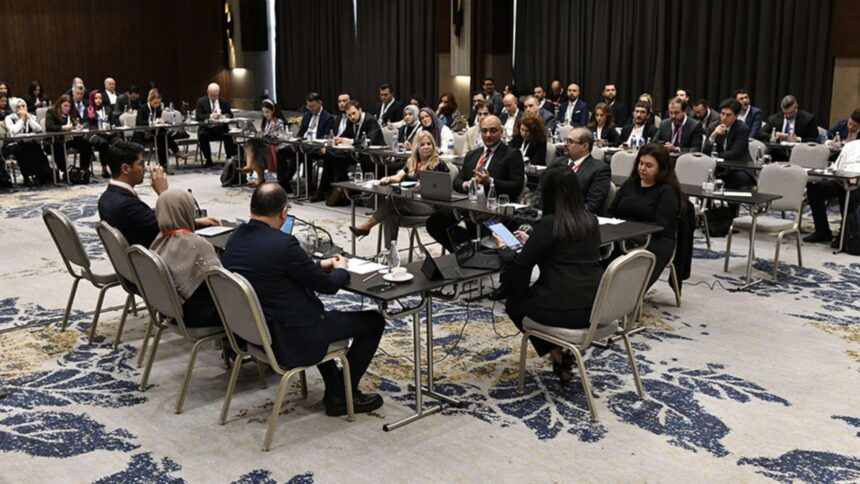


With Boursa Kuwait setting out a framework for bonds and sukuk, November’s IFN discussions will examine the products and infrastructure around Islamic finance.
Kuwait’s Islamic finance discussion is widening beyond the scale of its banks. The next set of questions concerns the instruments available to investors, how those instruments are traded and the rules that support a market beyond the initial financing transaction.
The IFN Kuwait Dialogues, scheduled by REDmoney Events for 24 November 2026, place those questions on the agenda. The published programme includes sessions on Islamic finance, capital markets and investment products, with digitalisation and tokenisation among the subjects proposed for discussion.
There is a concrete local development behind the themes. Boursa Kuwait now sets out a listing and trading framework for bonds and sukuk, referring to its rulebook and Resolution 1/2026. That makes the organisation of a tradable market a more specific editorial subject than a general prediction that Islamic finance will continue to grow.
A financing transaction is not the whole market
Boursa Kuwait’s product information explains how eligible bonds and sukuk can be listed and traded through licensed brokers. It describes requirements concerning disclosure, credit ratings and, for sukuk, external Sharia auditing approval.
The underlying distinction is between raising capital and maintaining a market in the resulting instrument. Issuance provides financing to an entity; subsequent trading involves investors valuing and transferring their interests. Both depend on information, but the questions asked after issuance do not end with the original financing decision.
A market therefore requires more than a catalogue of available products. Investors need to understand the structure, the issuer’s obligations and the information that will be available over time. A formal trading framework sets out part of that environment, while actual participation determines how the market develops in practice.
A listing should not be read as a guarantee of an immediate buyer at a particular price. The distinction between the availability of a trading mechanism and the depth of trading activity is central to any assessment of market development. It is also a reason to report observed activity separately from announcements about infrastructure.
Banking remains the largest part of the wider industry
The Islamic Financial Services Board’s 2025 stability report shows the importance of the banking sector within the global industry. Islamic banking accounted for more than 70% of Islamic financial-services assets in 2024, according to the report.
That is a global measure, not a Kuwaiti market share. It establishes the scale of the broader structural question: how financing and investment channels develop around an industry in which banks hold the largest share of assets. Capital-market products serve a different function from a bank’s everyday relationship with depositors and financing customers.
For a corporate issuer, a market instrument can involve a different group of investors and a different pattern of reporting obligations. For an investor, it creates another type of exposure to assess. Neither observation means that market financing is automatically preferable to bank financing; the structures answer different needs.
The November event’s combination of banking and asset-management discussions reflects that distinction. One part of the conversation concerns institutions providing finance, while another concerns the products held by investors. The points at which those activities meet are likely to matter as much as the size of either category.
Digital products still require an underlying structure
The programme includes tokenisation, crowdfunding and digital investment platforms among the subjects for debate. These should be treated as proposed discussion topics, rather than evidence that every associated product is authorised or available in Kuwait.
A change in the technology used to record an interest does not, by itself, explain the legal and economic nature of that interest. The reporting questions remain recognisable: what does the holder own, who has obligations to the holder and which rules govern the arrangement?
This is particularly relevant when a technology term is used alongside a familiar asset class. A digital representation of a property interest, for example, still requires an account of the underlying rights. The technology can describe how a record is handled without answering all the questions about the investment it represents.
The distinction is also useful for evaluating the conference discussion. A proposal, a pilot and a live market product are different stages of development. Reporting which stage is being described would tell readers more than grouping all three under the same innovation label.
Capital markets sit within a wider reform agenda
The IMF’s 2025 consultation with Kuwait, published in February 2026, discusses structural reform and the development of private-sector activity. That provides broader economic context for questions about how businesses obtain finance and how investors participate.
The consultation does not establish that a particular conference or financial product will deliver diversification. It frames the wider policy problem. A domestic financing channel becomes economically relevant when it connects entities seeking capital with investors able to assess the resulting obligations and risks.
There are several different indicators of progress within that process. The number of issuers, the range of instruments, subsequent trading and the quality of continuing disclosure would each reveal something different. A single headline about the size of the industry cannot substitute for all of them.
November’s agenda meets an identifiable market question
REDmoney’s published format brings industry participants together for extended discussions rather than only short presentations. In Kuwait, the current combination of capital-market infrastructure and proposed product development provides a specific subject for that exchange.
The next evidence to watch is what appears in the market and how it functions after launch. November’s discussions can be reported against that developing record: the instruments available, the information issuers provide and the participation they attract. That would keep the story tied to the financial system taking shape around Kuwait’s Islamic banking sector.