ع
ع


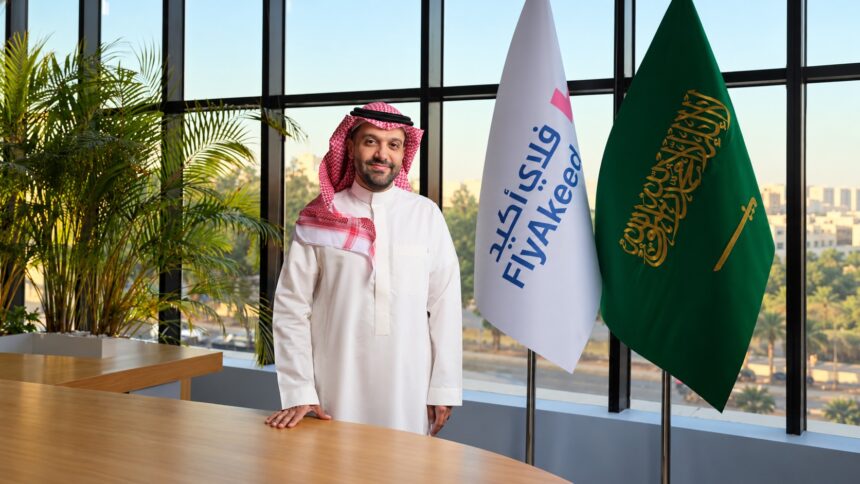


A mixed equity and sukuk package, followed by a D360 Bank agreement, brings the financing of business trips into the travel platform’s next phase.
Saudi corporate travel platform FlyAkeed is extending its business into the financing of company trips, with a $25.15 million funding package and a new agreement with D360 Bank putting payments alongside bookings in its latest expansion.
The Riyadh-based company’s September financing combines equity investment with Murabaha sukuk funding. Its stated priority is an embedded deferred-payment offering for large enterprises, allowing customers to book travel and settle their invoices later. That shifts the focus from how a journey is arranged to how it is funded.
The distinction matters for corporate finance teams. A booking platform organises an expense; a payment facility changes when cash leaves the business. FlyAkeed’s announcements bring those two functions closer together, although the commercial terms of the new offering have not been publicly set out in the disclosures reviewed.
Two sources of capital for a different travel proposition
The SAR94.3 million package announced in September includes an equity investment led by Sanabil Investments, the investment company owned by Saudi Arabia’s Public Investment Fund. Artal Capital, stc Group’s tali ventures and Aljazira Capital also participated. Artal separately led the Murabaha sukuk financing.
The published total combines the two forms of funding. The announcement does not disclose the amount assigned to each, so describing the entire $25.15 million as a conventional equity round would obscure how the transaction is structured. The mix is central to the story because the company is preparing to offer customers more time to pay, alongside continuing to develop its software.
Founder and chief executive Bassam Almohammadi summarised the demand in the company announcement published by Saudi Gazette: “Large enterprises don’t just want better software; they want better payment terms.”
FlyAkeed said it serves more than 150 corporate customers in Saudi Arabia, naming PIF, Maaden, Golf Saudi and the National Housing Company. Those are company-reported customer figures, rather than a measure of the number of businesses using the new payment product. The release did not provide an adoption figure for that offering.
A bank agreement adds another piece
The funding was followed by another payments-related announcement. D360 Bank said it signed a memorandum of understanding with FlyAkeed during Money20/20, covering digital banking and payment solutions for business travel. FlyAkeed described the agreement as building on an existing relationship and exploring additional opportunities.
A memorandum is a statement of intended cooperation. Neither announcement specifies a launched joint product, a lending commitment or a date when customers will gain access to a new service. It should therefore be read alongside the financing announcement, without assuming that D360 is funding the deferred-payment offering.
Together, the announcements indicate a broader commercial direction: travel software connected more closely to financial services. The funding identifies a particular use of capital, while the bank agreement establishes a separate route for cooperation. The eventual relationship between them remains to be explained.
Booking technology is still part of the transaction
FlyAkeed’s recent activity has also covered the airline content available through its platform. In its public company updates, it announced agreements involving Saudia and Amadeus during WTM Spotlight Riyadh, including plans to enable Amadeus NDC-X and access to Saudia’s NDC content.
Those announcements concern the booking side of the business. They sit alongside a platform that, according to FlyAkeed, handles travel requests, policy approvals, reservations, changes and expense reconciliation. Payment timing is being added to an existing corporate workflow rather than presented as a separate consumer instalment service.
The company had already raised capital for that wider ambition. In its 2023 Series A announcement, FlyAkeed disclosed $15.2 million led by Sanabil and Elm, with Artal Capital and AlRajhi Partners participating. Sanabil and Artal’s appearance in the September package shows continuity among its backers as the financing structure changes.
It also makes the latest total an imperfect comparison with the earlier equity round. The two announcements describe different combinations of capital, and neither establishes a current valuation for the company.
For buyers, the distinction between those functions remains relevant even when they appear in one interface. Approval confirms that a trip meets a company’s rules. A reservation secures the journey. An invoice records the obligation to pay. Adding financing creates a further decision about how that obligation will be settled. A single booking process can connect these steps, but does not make them economically identical.
Higher travel spending does not necessarily mean more trips
The independent industry backdrop is more complicated than a simple growth story. The Global Business Travel Association’s August 2026 forecast puts worldwide business travel spending at $1.71 trillion this year, up 7.2%. It projects trip volumes rising just 1.3%, to approximately 1.84 billion.
That gap points to costs rising faster than travel activity. GBTA also forecasts a 12.3% decline in Middle East business travel volume amid regional disruption. This is a regional projection, not a Saudi-specific result or a forecast for FlyAkeed’s bookings.
For a finance department, the practical distinction is between the price of travel and the timing of payment. Deferring an invoice changes the latter; it does not, by itself, demonstrate a cheaper ticket or a lower total travel budget. Evaluating a financed booking requires the payment terms as well as the fare.
FlyAkeed has disclosed the capital raised, the intended payment offering and a new banking relationship. The next substantive detail is the customer proposition itself: eligibility, repayment periods, charges and the scope of any bank-supported services. Those terms will show what the move from managing trips to financing them means for the companies paying the bills.