ع
ع


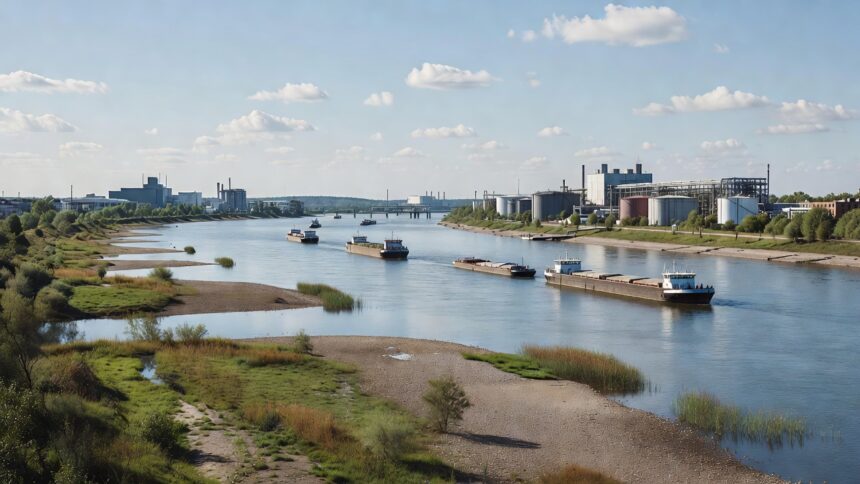


Low river levels on Germany’s Rhine have begun affecting supply chains for the chemicals sector, with barges forced to carry partial loads and freight rates climbing as a result. Thyssenkrupp Steel told Reuters the worsening conditions are now restricting raw material deliveries to its Duisburg plant, leading to a slight reduction in blast furnace output. Germany’s chemical industry association VCI reported that producers remain better prepared than during the severe 2018 drought, when logistics failures inflicted heavy financial damage.
The Rhine serves as a critical artery for moving chemicals, coal, grains and oil products through Europe’s industrial core, according to multiple Reuters assessments of river transport data. A July 14 Reuters dispatch placed the current low-water episode as another strain on an economy already navigating subdued manufacturing activity. Industry figures show the river carries a substantial share of chemical shipments, amplifying the impact of any navigation restrictions.
VCI chief executive Wolfgang Grosse Entrup stated that effects so far have stayed manageable because overall production runs at reduced capacity across the sector. He noted that the association continues to monitor water levels daily while coordinating with logistics partners to reroute where feasible. Earlier droughts demonstrated the sector’s vulnerability, with Moody’s reporting in 2022 that similar conditions raised costs for facilities located along the upper Rhine and risked output cuts.
BASF, one of the largest users of Rhine shipping, has deployed an early-warning system and chartered vessels designed for shallower drafts, the company said in statements reviewed by Reuters. In 2018 the Ludwigshafen site incurred costs estimated in the hundreds of millions of euros after low water blocked standard barge traffic. Current preparations include custom barges and diversified transport modes to limit repeat disruptions.
Economists at the German Economic Institute warned that prolonged low water could extend to refined fuel logistics from refineries, compounding pressure on downstream industries. Reuters data from late July indicated cargo volumes between Rotterdam and the Rhine had already fallen about 10 percent below seasonal norms. The chemical sector’s exposure forms part of a broader pattern in which climate-driven extremes increasingly intersect with European supply chains.
Public warnings from the VCI and logistics analysts have underscored the need for sustained investment in alternative transport infrastructure to buffer future low-water events. Separate Bloomberg Intelligence analysis estimated that up to 10 percent of Europe’s chemical shipments historically rely on the Rhine corridor. German authorities continue to track river gauges while industry bodies press for coordinated contingency planning across the chemicals value chain.