ع
ع



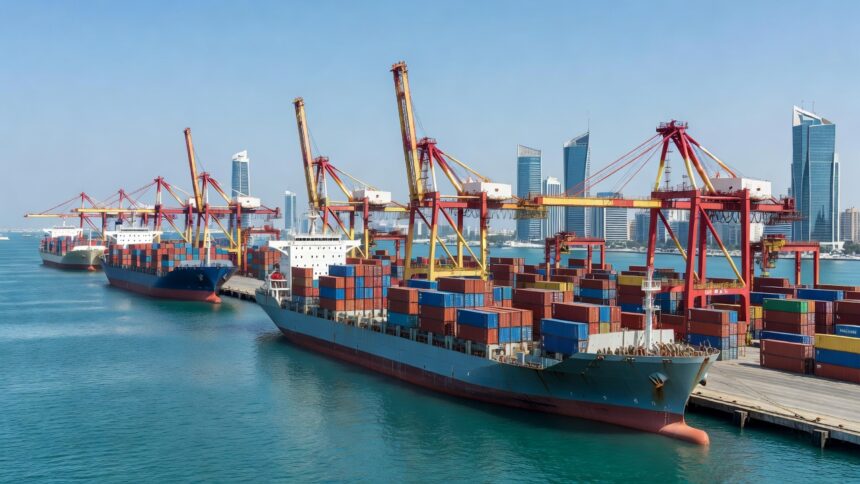


The Department for Business and Trade has projected that the pact will boost the UK economy by £3.7 billion a year in the long term compared with 2040 projections, while increasing real wages by £1.9 billion annually. Tariffs will be removed on approximately 93 per cent of UK exports to the GCC, worth an estimated £580 million per year, with immediate elimination on £360 million of duties once the agreement takes effect, the department’s conclusion summary stated. The GCC will progressively liberalise up to 90 per cent of its tariff lines within a decade while the UK will eliminate tariffs on all current imports from the bloc immediately.
Office for National Statistics figures show that total trade between the UK and the GCC reached £53 billion in 2025, making the bloc the UK’s tenth-largest trading partner, with services exports alone amounting to £17 billion. Trade with the UAE specifically surged 43 per cent over the past decade to £25.1 billion, comprising £15.8 billion in UK exports and £9.3 billion in imports, the ONS data indicates. The agreement marks the GCC’s first free trade deal with a G7 nation and arrives as the six-member bloc, with a combined GDP of £1.8 trillion, continues to expand its role in global commerce.
According to analysts cited by The National, the deal supports the Gulf’s broader diversification agenda by enhancing access in sectors such as financial services, fintech, advanced manufacturing and logistics. Hamza Dweik, head of trading for Mena at Saxo Bank, told The National that the agreement supports the broader diversification agenda and that the region has been steadily repositioning itself as a global trade and logistics hub. Deeper integration with a large developed market like the UK reinforces that trajectory, Dweik added.
Helen Barrett, a partner at Dubai-based CSP Group and deputy chair of the British Chamber of Commerce Dubai, said in comments to The National that the agreement locks in existing levels of market access for UK firms across financial and professional services, improving regulatory transparency and ensuring licensing processes are fair. The deal also secures the most ambitious business mobility commitments the Gulf has ever granted to a trading partner, giving UK professionals greater certainty when travelling to the GCC to deliver services, engage in business activity or transfer within their company, Barrett noted. It further prohibits unjustified data localisation requirements, allowing UK companies to store and process data outside the region and removing a significant operational cost.
John Hensel, senior vice president at Abu Dhabi-based Demeter Tactical Investments, told The National that the provisions on financial data flows, recognition of professional qualifications and long-stay business mobility map directly onto the sectors where Saudi Arabia’s Vision 2030 and its regional equivalents assume the next leg of growth will come from. Combined with the investor protection chapter, the deal provides the legal certainty that long-duration capital needs to underwrite the infrastructure those plans depend on, Hensel added in the report. The agreement is additive rather than substitutive and broadens the bloc’s external economic map alongside parallel tracks with the EU, India and others, he said.
Vijay Valecha, chief investment officer at Dubai-based Century Financial, told The National that UK firms in financial services, fintech, advanced manufacturing and professional services now have clearer and more secure access to one of the world’s fastest-growing economic regions. The deal gives investors on both sides greater confidence to deploy capital across each other’s markets, Valecha added, noting that the Gulf is already a major source of capital into the UK supporting critical infrastructure including Heathrow Airport. Analysts at Abu Dhabi-based Trade Foresight described the FTA as a market entry acceleration signal for food and drink exporters, medical device manufacturers and cross-border tech firms through massive tariff cuts on consumer items like cheese, cereals and chocolate.
While the overall impact is likely to be incremental rather than disruptive, the agreement strengthens the institutional framework for growth over time, Dweik told The National. Mark Graver, a director at Savills Middle East based in Bahrain, said in remarks to the newspaper that the deal was long overdue and fantastic but staggeringly short on ambition given the potential, though it is a start. Analysts at Dubai-based Bright Global Tax Consulting and Accounting told The National that the pact sends a strong message that the Gulf region is helping shape the future of global trade amid economic uncertainty.