ع
ع


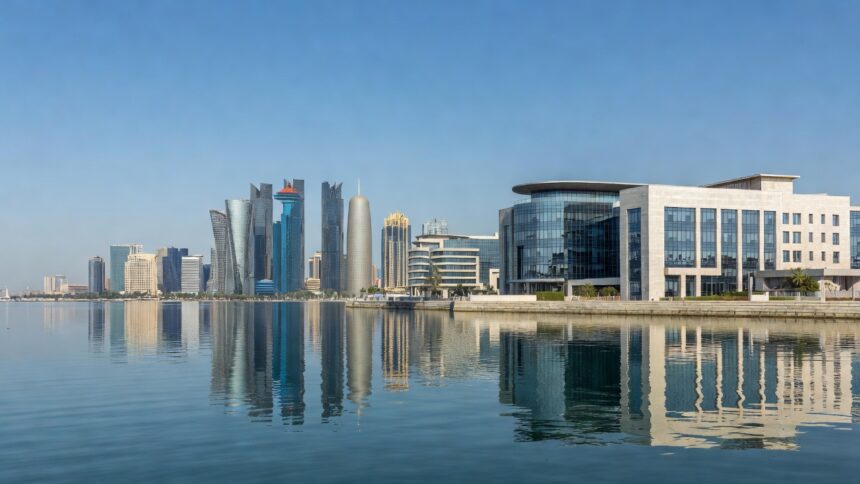


Dalia al-Khalaf, founder and managing partner at Rawdat Capital, has identified Qatar as a testbed for applied AI deployment, arguing that the greatest impact will come from applying the technology across healthcare, education, energy, manufacturing, logistics, agriculture and public services. While global attention often centres on foundational models and infrastructure, al-Khalaf told Gulf Times that long-term winners will integrate AI into industries to improve productivity and address challenges at scale, with the country’s vision, stability and international outlook providing ideal conditions for such efforts. She noted that artificial intelligence is complex and strategic, requiring governments to focus on security, governance and national interest even as regulation influences the pace of adoption without determining its direction.
Rawdat Capital seeks to ensure Qatar gains direct access to opportunities from China’s innovation economy, particularly in AI, robotics, advanced manufacturing, clean energy, electric vehicles and healthcare technology, al-Khalaf explained. China is setting global trends in these sectors, making the ability to connect ecosystems, capital and markets essential for turning innovation into outcomes, according to her assessment. “One of the lessons from every major technology cycle is that innovation ultimately finds its way to the market. We believe the coming decade will reward those who build bridges rather than barriers,” al-Khalaf added. The firm is building the relationships, knowledge and infrastructure needed to realise this vision through its experience onboarding Chinese companies into the region and converting introductions into successful partnerships.
Al-Khalaf emphasised the importance of trust when building such investment corridors between major centres of innovation. “Being a bridge sounds simple, but in practice it requires trust on both sides,” she stated. Chinese companies frequently possess high-quality technology but lack local relationships, market understanding and commercial networks across the GCC, while many regional investors recognise China’s leadership in innovation yet may not possess the cultural understanding, language capabilities or connections required to select the right partners. Rawdat Capital operates between these worlds to translate language along with expectations, business practices and strategic priorities, with the goal of converting introductions into successful outcomes for all stakeholders.
The executive highlighted the firm’s recent partnership with Guolian Investment Management as a sign of increasing confidence among major Chinese institutions in Qatar’s role as a gateway to regional opportunity. Qatar possesses the vision, stability, capital and international outlook required to serve as a central player in evolving global investment corridors linking China, the Gulf and emerging markets, al-Khalaf said. “Our role is to ensure that Qatar has direct access to these opportunities through trusted relationships, deep market knowledge and proven execution capability,” she pointed out. “Qatar is uniquely positioned to become the leading gateway between China’s innovation economy and the opportunities emerging across the GCC and wider MENA region.”
According to The Peninsula Qatar, the country’s AI market reached approximately $59 million in 2026, nearly doubling from around $31 million in 2022. A PwC assessment found that digital investments are projected to increase to $5.7 billion by 2026 from $1.65 billion in 2022. The developments support Qatar’s National Artificial Intelligence Strategy, developed by the Ministry of Communications and Information Technology around six pillars encompassing education, data access, employment, business, research and ethics in alignment with the Qatar National Vision 2030.
Government AI initiatives have included the Fanar generative AI model in the Arabic language along with a partnership with Scale AI to enhance public services, a New Arab review indicated. IMARC Group data places the GCC artificial intelligence market at $6.22 billion in 2025 with a projection to reach $23.03 billion by 2034 at a compound annual growth rate of 14.87 percent. Al-Khalaf stated that Qatari investors are set to benefit from access to China’s technology ecosystem, which often requires patient capital, strategic partnerships and a focus on long-term potential rather than short-term returns.