ع
ع
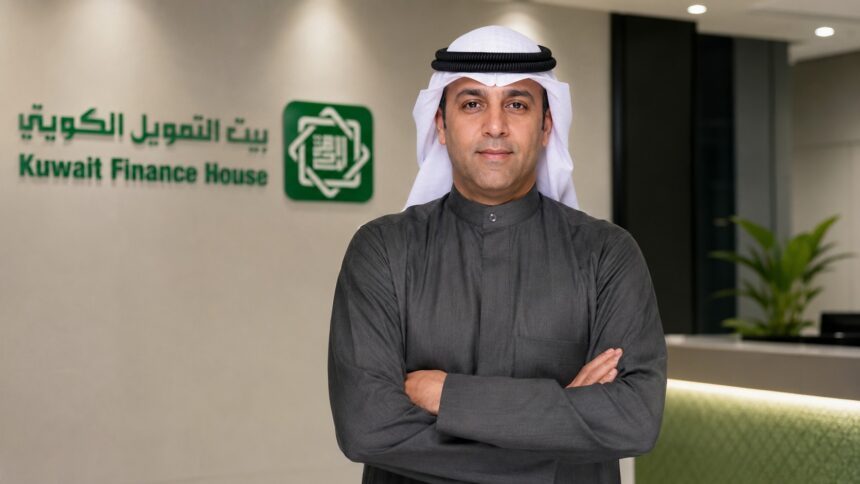


Kuwait’s money market fund industry grew 29 per cent over the year to KD 1.86 billion. The highest dinar return in the market belongs to a Sharia-compliant manager.
Islamic money market funds operate under structural constraints that conventional funds do not. They cannot use repo, conventional treasury bills or interest-bearing instruments, and instead deploy murabaha and wakala placements, Islamic central bank instruments and sukuk. This narrower toolkit has traditionally been assumed to carry a yield penalty relative to conventional funds. Kuwait’s current performance data does not support that assumption.
According to an initiation report on the sector by InvestGB, Kuwait’s money market fund industry comprises 15 funds, nine denominated in dinars and six in dollars, with combined assets of KD 1.86 billion. That represents growth of 29 per cent in the twelve months to April and approximately 144 per cent since 2019, when the sector held KD 764 million. The expansion has coincided with rising global demand for cash instruments, with worldwide money fund assets passing seven trillion dollars. Six new funds have launched in Kuwait over two years, the most recent in April.
Fund performance and rankings
KFH Capital’s dinar money market fund returned an annualised 3.93 per cent in April and 3.93 per cent year to date, the highest on both measures among funds in the market. Its dollar fund led the April table at 4.02 per cent and ranked second year to date, eight basis points off the top. The dinar fund recorded KD 81 million in net inflows over the year, the largest of any fund in the sector.
The wider table reflects the structure of Kuwaiti banking, with most major banking groups competing for the same liquidity through their investment arms. Ahli Capital returned 3.87 per cent, KIB’s Al Dawli fund and Gulf Capital’s Lulwa fund around 3.80 per cent, and the dinar funds of Boubyan, Warba and NBK’s Islamic franchise in the mid-3.7 per cent range. NBK Wealth’s conventional flagship, Watani KD, returned 3.42 per cent year to date. Al Hilal ranked lowest at 2.49 per cent.
The spread between the highest and lowest returns is 144 basis points on a product class marketed as broadly equivalent. In money market funds, where instruments and mandates are similar across managers, relative return is the primary basis of competition.
The role of market structure
Performance differentials in this segment are largely attributable to structure rather than short-term positioning. Sharia-compliant assets account for approximately 49 per cent of Kuwait’s banking system, according to Fitch Ratings. Persistent demand from Islamic banks for compliant liquidity supports the pricing of murabaha and wakala deposits, the core instruments available to these funds.
Origination capacity is a further factor. KFH Capital arranged approximately 18 billion dollars of sukuk for sovereign and corporate issuers in the most recent period tracked by Euromoney, coordinated Kuwait Finance House’s one billion dollar issuance, and maintains its own global sukuk index. The same platform manages more than KD 1.5 billion in Sharia-compliant real estate funds and listed the first REIT on Boursa Kuwait. Proximity to sukuk origination gives the fund manager earlier visibility of supply and pricing.
Returns relative to alternatives
Fund returns are best assessed against the alternatives available to a Kuwait-based investor. Boursa Kuwait’s All-Share index stood at 8,734 in early July, down approximately 2 per cent since the start of the year and below the record set in October, over a period in which regional conflict introduced volatility into equity markets. Money market funds maintained daily net asset value pricing throughout.
Other options offer limited advantage. The highest-returning dollar fund in the market yields approximately a tenth of a percentage point more than KFH Capital’s dinar fund, a marginal difference that a dinar-based investor can forgo without assuming currency risk. Bank deposits offer comparable headline rates only under term commitments, whereas the fund structure provides similar bank-bid yields with daily liquidity.
The principal means of achieving a higher return is extending duration. NBK Wealth reports that its dinar bond fund has outperformed local money market funds by approximately 200 basis points since inception. That outperformance requires moving outside the money market segment and accepting mark-to-market risk, which money market funds are structured to avoid.
Outlook
Regulatory developments are likely to support the segment. Kuwait’s financing and liquidity law has reopened the sovereign debt pipeline, and a dedicated sukuk law is progressing through the approval process. These measures would provide access to domestic government paper that these funds have largely operated without, expanding the available instrument pool, with the greatest benefit accruing to managers already positioned in Islamic instruments. As the rate cycle turns and headline yields compress across the sector, scale, origination access and inflow momentum are likely to determine relative performance.
Money market funds remain among the lower-profile products in Kuwaiti finance, but they are among the fastest-growing. Over a period in which the equity market has been broadly flat, they have delivered consistent positive returns.