ع
ع



The Kuwaiti group published its graduated companies in February and set out a general partner mandate, in a half when regional investors supplied 81 percent of all venture capital deployed across MENA.
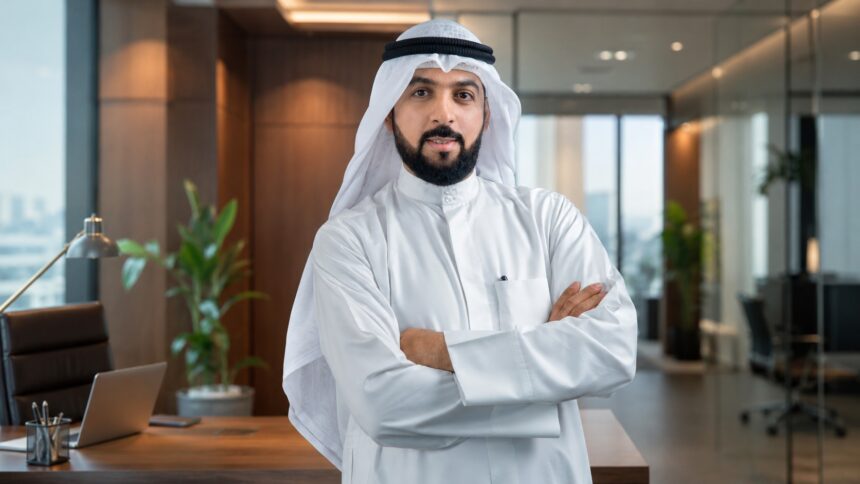
Mohammed Al-Rashidi has a precise view of what most incubators actually sell.
“The incubator model common in Kuwait and the region is essentially a real estate business,” One Global Holding’s executive chairman said in a video published on the group’s account in July. “You lease a floor, fit it out, turn it into retail and workstations, and lease it on. That exists everywhere as business centres.”
Accelerators, in his account, have a different limitation. “An accelerator is a programme with a target. When the target is met, the programme ends, and you are left without continuity.” His conclusion is the sentence the group has now organised itself around: “Continuity is what we solved.”
In February, One Global put that claim in front of investors for the first time.
The Book, Opened
The group’s investor page, reissued on 12 February, lists seven ventures it describes as the successful incubation and graduation of companies within its portfolio: the payments platform Casheer, the travel venture Flytern, Squiarcle, Yeppy, Capital House, One Engage and the Og Money wallet. The sector tags span fintech, travel and tourism, e-commerce, capital markets, digital payments, digital wallets and customer engagement. The home page carries a wider strip adding VentureWorks and TaifTech.
Alongside it, One Global Capital set out its mandate in plainer terms than before. It secures funding through digitised venture capital practices while acting as a general partner and managing limited partners’ money, with graduated companies forming the track record that precedes the onboarding of external startups.
A Gap First Noticed in California
Al-Rashidi traces the diagnosis to conversations well outside the Gulf, which is what keeps it from being a local complaint.
“I was in Silicon Valley talking to founders,” he said. “One told me he had mentors from Google, Cisco and Microsoft, that everyone had been through incubators and acceleration programmes.” The founder still could not get the company built. “Knowledge alone does not build the company. Starting the work and building it is the part that is missing.”
That, he argues, is why the builder model emerged there and why it transfers. “Continuity means someone who stays with you. That is a co-founder, not a programme.” And on the decision to convert the group in 2023: “We saw that this model suited our experience and what the market needs.”
Why the Market Agrees This Year
The commercial case has sharpened since. MENA-based investors supplied an estimated 81 percent of all capital deployed in the region in the first half of 2026, up from 58 percent a year earlier and their highest share in more than five years, with regional deployment rising 23 percent to $940 million, a five year high for a first half.
What narrowed was the supply of companies to put it into. Regional startups raised $1.35 billion across 214 deals, according to MAGNiTT, with deal count down 41 percent and the ten largest transactions absorbing 58 percent of the total. Committed local capital is hunting for assembled, operating businesses, which is the specific thing a builder produces.
One Global’s raw material is regulatory rather than financial. Its published timeline records Microsoft Gold Partner and ISV status, a service provider role with the Central Bank of Bahrain, aggregator status with the Central Bank of Egypt, a patented payment order mechanism, Mastercard payment facilitator status with principal Mastercard and Visa membership, a Hedera grant, and an electronic payment agency licence from the Central Bank of Kuwait. Its Casheer platform sits on the Central Bank’s live register of licensed e-payment service providers. Mastercard’s 2023 announcement put the group’s customer base at 3.2 million across six markets. A venture built inside that perimeter starts with a licence and a route to customers.
The Honest Caveat
Liquidity is the part that takes patience. Regional M&A transactions fell 56 percent to 16 in the half, so the exit window that eventually prices any portfolio is narrower than it was, and a builder produces fewer companies a year than a fund produces cheques. The counterweight is that these ventures are licensed and trading rather than pre-revenue, which is a different risk from the one the market has just repriced.
Twenty years of building, then a book opened in public. Al-Rashidi’s argument is that the difference between a landlord and a builder only becomes visible in year three, and he has now invited investors to check.