ع
ع



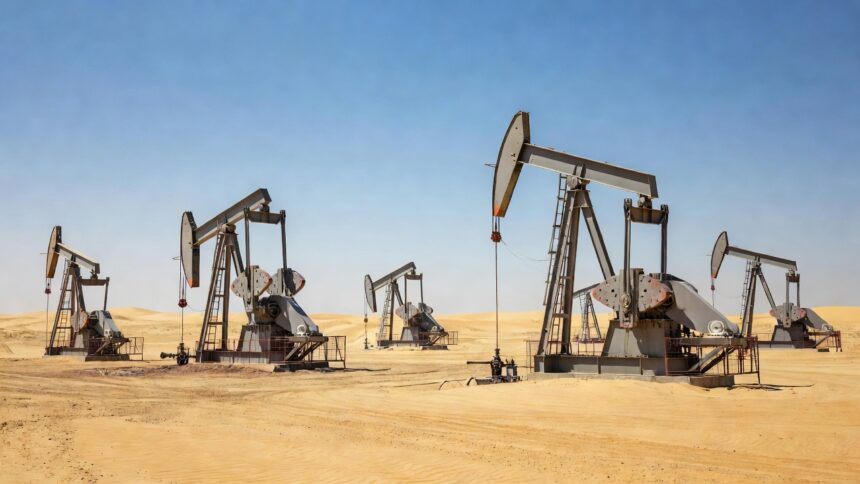


The Kuwait Petroleum Corporation said the price of Kuwaiti oil climbed to US$87.44 per barrel on Tuesday, reversing recent losses and aligning with an uptick in international crude values. According to the Emirates News Agency, which cited the state oil producer, the increase reflected broader market movements after several sessions of volatility. Kuwait News Agency figures placed the previous session’s close lower, with the single-day gain exceeding two dollars in some comparable periods.
Global benchmarks followed a similar path, with Brent crude advancing toward the mid-80s range and West Texas Intermediate posting parallel gains, a Kuwait Petroleum Corporation assessment found. The Kuwaiti price serves as the official selling value for the country’s key export grade, which accounts for the bulk of its hydrocarbon shipments to Asian and European refiners. Such daily postings help shape revenue projections for the national budget, where oil traditionally funds more than 90 percent of expenditures according to Central Statistical Bureau compilations.
The International Energy Agency has projected global oil demand to expand by about 1 million barrels per day through the remainder of 2026, a forecast that has lent support to prices above the $80 threshold in recent weeks. Kuwait, an OPEC member, has kept its production near 2.7 million barrels daily in line with group allocations, OPEC monthly reports show. This output level has allowed the country to maintain market share while contributing to the organization’s efforts to balance supply.
Kuwait Investment Authority data indicates that sustained prices in the current band bolster inflows to the sovereign wealth fund, whose assets exceeded $700 billion in the latest available tallies from financial oversight bodies. Higher revenues from crude sales have enabled continued investment in downstream refining capacity and economic diversification initiatives under the national development plan. Officials at the corporation have noted that stable export income remains central to funding infrastructure projects across the energy sector.
Analysts following Gulf energy markets observed that geopolitical factors and inventory draws in major consuming regions contributed to the latest price recovery, though they cautioned against assuming a long-term trend. The Organization of the Petroleum Exporting Countries has reported that collective output compliance stayed above 100 percent for several consecutive months, supporting price floors. U.S. Energy Information Administration statistics rank Kuwait consistently among the world’s top 10 producers, a position that amplifies the impact of its pricing on regional benchmarks.
Further updates from the Kuwait Petroleum Corporation will continue to track daily changes, with the next release expected to incorporate Wednesday’s trading activity in both local and international markets. Industry participants use these figures to gauge near-term revenue outlooks for Gulf exporters facing similar exposure to crude price swings.