ع
ع




Research involving more than 1,000 young people in Kuwait is helping Lei Wa Lakom explore a question with practical consequences for financial education: what helps people turn knowledge into everyday decisions?
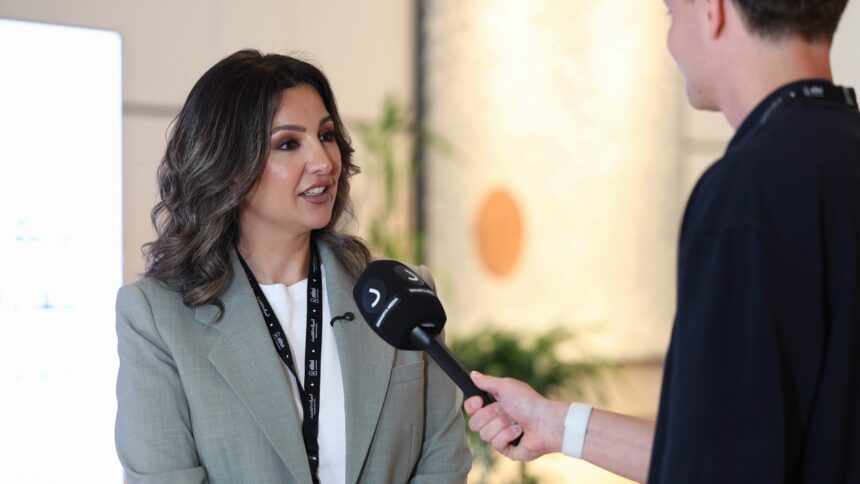
Taiba Al-Humaidhi wants better evidence to guide the next stage of Lei Wa Lakom’s work. Speaking to Diwaniya Media at the Women & the Economy conference in Kuwait on 17 October, the organisation’s founder described understanding where to begin as a central part of developing meaningful initiatives.
“The biggest struggle I’ve had is data, and measuring where to start from,” she said. “That’s what we’ve been doing for two years now.”
In financial education, that starting point has already led to research involving more than 1,000 young people in Kuwait. The work has progressed from developing a measurement tool to university workshops and a further question: how can an understanding of money translate into sustained behaviour?
For banks, educators and organisations funding financial-literacy initiatives, the distinction matters. Reaching an audience establishes that information has been delivered. Understanding what participants subsequently do with it requires a different kind of assessment.
Building evidence around Kuwaiti youth
In a June account of its research, Lei Wa Lakom said it worked with researchers and academics to develop and validate a financial-literacy questionnaire tailored to Kuwait.
According to the organisation, the study involved more than 1,000 participants aged 18 to 25 and identified four domains of financial literacy. It then conducted pilot university workshops using surveys before and after the sessions to examine participants’ knowledge and learning experiences.
The organisation also reported that Al-Humaidhi presented the work at the sixth Annual Behavioural Transformations Workshop, hosted by the School for Government at King’s College London in collaboration with the LSE Behavioural Lab.
The sequence gives her conference comments a concrete foundation. Measurement formed part of the work before the latest gathering, with the workshops offering a way to explore how young people responded to financial education.
The research sample should not be treated as a national financial-literacy score. Its reported purpose was to help establish a measurement tool suited to the context in which the organisation works.
Financial literacy extends beyond knowledge
International research takes a similarly broad approach to the subject.
The OECD/INFE 2023 International Survey of Adult Financial Literacy covered 39 countries and economies, including 20 OECD members. It assessed financial knowledge, behaviour and attitudes, alongside financial inclusion, digital financial literacy and financial well-being.
That framework recognises that understanding financial concepts is one component of financial capability. How people approach decisions and manage their affairs also forms part of the picture.
The OECD’s financial-education research reports that adults with higher financial-literacy scores also have higher financial well-being and resilience, after accounting for individual socioeconomic characteristics.
The finding is an association, rather than proof that a particular educational intervention produces those outcomes. It nevertheless explains why researchers examine more than whether participants can correctly answer questions after a session.
For organisations evaluating financial education, the practical question becomes which outcome they intend to influence. An improvement in understanding, a change in confidence and a sustained change in behaviour are distinct results.
Each can be relevant, but they need to be identified clearly before an initiative can be assessed.
The next question is what people do
Lei Wa Lakom’s June update described an interest in the gap between understanding a financial principle and applying it. It outlined plans to explore behavioural support, including reminders and accountability mechanisms, through further work.
These were research directions, rather than demonstrated results. The organisation did not establish in that account that any particular tool had produced lasting changes in participants’ financial circumstances.
That distinction makes the next phase especially relevant. A workshop can examine whether participants understand a subject more clearly. Establishing whether an approach influences decisions over time requires follow-up.
For example, a future study could distinguish between someone recognising the importance of planning and actually maintaining a planning habit. That is an illustration of what evaluation might examine, rather than a result reported by Lei Wa Lakom.
The commercial relevance is straightforward. Institutions supporting financial education need evidence about what their investment achieves. Educators need to understand which parts of an intervention participants retain and use. Participants need material that connects with the decisions they face.
A clearer baseline helps make those questions answerable. It also allows findings from one initiative to inform the design of another, instead of treating every workshop as a separate exercise.
A six-month test centred on learning
Asked what success would look like six months after the Women & the Economy conference, Al-Humaidhi answered: “Having better questions that we need to answer.”
She said greater access to data would help her understand where to focus and work with others on initiatives addressing the experiences of women in the workforce and the wider community.
Her answer suggests that the conference’s value, for her, includes what it helps clarify. Conversations may reveal issues worth investigating, while research can establish how to respond and what to measure.
It also places collaboration at the centre of the next stage. Al-Humaidhi spoke about developing initiatives with people around her who want to pursue the same objectives, rather than presenting the work as a finished solution.
For the financial-literacy programme, the substantive follow-up is whether future evaluation can connect learning with action. That means identifying the decisions an intervention intends to influence, establishing an appropriate starting point and examining what happens afterwards.
Lei Wa Lakom has described its measurement work and initial workshops. The next evidence to watch is what emerges from its investigation of behaviour, and whether that evidence changes how financial education is delivered.