ع
ع



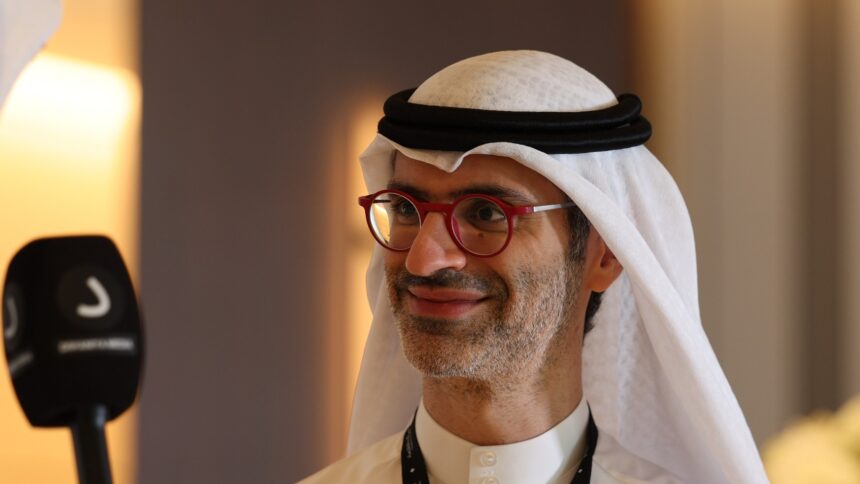


With women accounting for 77% of Kuwait University’s graduates in its 2023–2024 sustainability report, Bader Al-Saif’s comments on ambition and professional opportunity highlight the economic significance of the country’s educated talent.
Women’s academic achievements at Kuwait University offer a concrete starting point for examining the contribution that educated talent can make to the country’s economic future.
Women constituted 77% of the university’s graduates in its 2023–2024 sustainability report, representing a substantial pool of qualifications available to employers and institutions across the economy.
Speaking to Diwaniya Media at the Women & the Economy conference, Lei Wa Lakom, on 17 October, Bader Al-Saif, assistant professor of history at Kuwait University, encouraged graduates to pursue ambitious professional goals and highlighted women’s contributions across different fields.
“Look, the sky is the limit,” he said.
His comments placed education, workforce participation and leadership within the same discussion. Each describes a different stage in the development of professional talent, from acquiring qualifications to applying expertise and eventually taking responsibility for organisations and resources.
Education as a long-term economic investment
The graduation figure reported by Kuwait University relates to that institution rather than the entire country. It establishes the scale of women’s achievement within the university, while subsequent employment and earnings would need to be assessed separately.
For businesses, the economic relevance is straightforward: graduates bring knowledge that can be applied to research, operations, professional services and management. Their contribution develops as they gain experience and take on more demanding responsibilities.
Education is consequently an investment with a long time horizon. The resources devoted to teaching and study precede the years in which graduates apply their skills throughout working life.
The financial value cannot be calculated from a graduation percentage alone. It depends on factors including the work graduates undertake, the expertise they develop and the length of their careers. Nevertheless, the university’s figures demonstrate the substantial role women play in the institution’s supply of qualified talent.
Al-Saif’s advice reflected confidence in that potential.
“People, women, men, everyone on all walks of life should push the envelope, should not be willing to settle for less,” he said.
He pointed to the ambition he had observed among women colleagues in academia, private business and public service. Those experiences gave his comments a connection to several settings in which education becomes professional contribution.
Participation carries wider economic significance
International research provides context for the economic importance of women’s participation.
In presenting its Women, Business and the Law 2024 report, the World Bank said closing gender gaps in employment and entrepreneurship could increase global gross domestic product by more than 20%.
That estimate concerns worldwide economic potential. It is not a projection for Kuwait, nor a return that can be assigned to a particular domestic initiative.
Its relevance to the discussion is the scale of the economic activity associated with participation. Employment brings skills into production and services, while entrepreneurship creates another route through which knowledge and experience can be applied.
Al-Saif identified workforce participation and opportunities across sectors among the subjects addressed at the conference. He also included access to senior leadership, connecting the discussion to the responsibilities people assume as their careers develop.
For Kuwait’s employers, the university’s graduating talent offers a concrete local dimension to that broader economic theme. Recruitment provides the starting point for a relationship that can develop through specialist training, accumulated experience and increasing responsibility.
The interview did not attach a numerical growth forecast to those opportunities. Its emphasis was on encouraging ambition and developing practical action around specific areas of professional life.
Professional experience builds economic value
A graduate’s contribution evolves over time.
Early employment provides opportunities to apply academic knowledge to the requirements of an organisation. Later responsibilities may involve managing projects, supervising colleagues or making decisions about budgets and operations.
Those stages carry different forms of economic value. Technical expertise supports the quality of work being delivered, while managerial experience helps organise people and resources around wider objectives.
Al-Saif’s reference to senior leadership placed that longer professional journey within the conference discussion. It also recognised that women’s contribution encompasses both participation in the workforce and responsibility for the institutions in which they work.
His own observations drew on several professional environments.
“I think that attitude itself can get you into many places,” he said, referring to the ambition he had seen among women colleagues.
That breadth matters for an economic reading of his remarks. Professional achievement can take the form of academic research, specialist practice, enterprise or public service. Each involves applying skills, although the outputs and ways of measuring them differ.
For a business, the relevant measures may include expertise, operational performance and the development of future managers. For a university, they may include teaching and research. Al-Saif’s comments brought these different settings into a shared discussion of opportunity.
Building on achievement through practical action
The conference provided a setting to connect those opportunities with specific topics for further discussion.
Al-Saif said its value included developing actionable recommendations and bringing them to a wider audience. He identified the role individuals could play through their own expertise and professional responsibilities.
“The empowerment of women is ongoing, but it needs to be paired with specific actions based on each person’s abilities and work backgrounds,” he said.
For his own contribution, he pointed to teaching, research and amplifying women’s voices in discussions within Kuwait and internationally.
From an economic perspective, graduate career outcomes would provide a useful way to follow the contribution of educational investment over time. Employment destinations, professional qualifications, entrepreneurial activity and progression into responsibility describe different ways that contribution can develop.
These measures would complement the university’s graduation figures by documenting the careers that follow. They would also distinguish between immediate outcomes, such as a first appointment, and achievements accumulated over a longer working life.
Al-Saif’s interview did not announce an investment fund, a corporate hiring commitment or a new financial programme. It highlighted the people whose education and experience form part of the economy’s productive resources.
Kuwait University’s figures show the substantial place women hold within its graduating talent. Their subsequent careers will provide the fuller account of how that educational investment contributes to businesses, institutions and the country’s economic life.