ع
ع



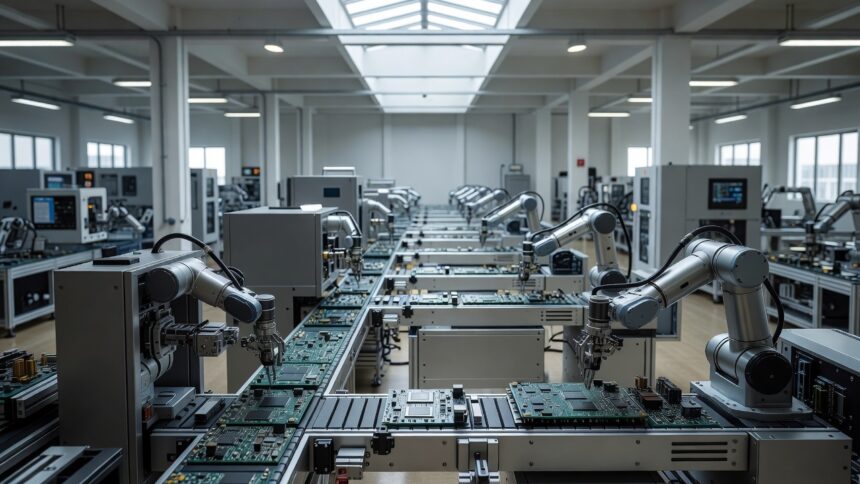


The National Bureau of Statistics data showed that the computer, communication and other electronic equipment manufacturing sector drove much of the momentum among major industrial firms in the January-to-June period. This performance came as overall profits for industrial enterprises above designated size climbed 18.7 percent from a year earlier to reach 3.95 trillion yuan. The electronics surge aligned with rising demand tied to artificial intelligence applications and expanded computing needs across multiple industries.
NBS figures placed the electronics profit increase as a key factor that lifted the combined results for all covered enterprises. Profits at state-owned firms advanced 17.9 percent to 1.30 trillion yuan during the same timeframe. Joint-stock companies recorded a 24.7 percent gain that took their total to 3.04 trillion yuan while private enterprises posted a 13.0 percent rise to 965.56 billion yuan.
A sector-by-sector review from the statistical office highlighted mining as another strong performer with profits up 33.5 percent. Manufacturing as a whole advanced 20.1 percent yet utilities registered a 4.2 percent decline. These shifts reflected varied pressures from export resilience on one side and softer domestic demand on the other.
Non-ferrous metal smelting and rolling posted the highest growth rate at 99.4 percent according to the NBS breakdown. The chemicals industry followed with a 67.8 percent increase over the first six months. Such gains supplemented the electronics contribution and helped offset weakness elsewhere in the industrial landscape.
Data from the statistical office indicated that industrial profits rose 15.1 percent in June alone after a 21.1 percent increase in May. The slight moderation occurred even as export orders continued to support advanced manufacturing segments. Earlier readings had shown 18.8 percent growth for the first five months of the year before the full-half figure settled at 18.7 percent.
The National Bureau of Statistics release noted that integration of artificial intelligence technologies had boosted orders for electronic components and related equipment throughout the period. Demand for higher computing power appeared across sectors ranging from telecommunications to industrial automation. This trend sustained the elevated profit trajectory first observed in earlier 2026 readings for the electronics category.