ع
ع
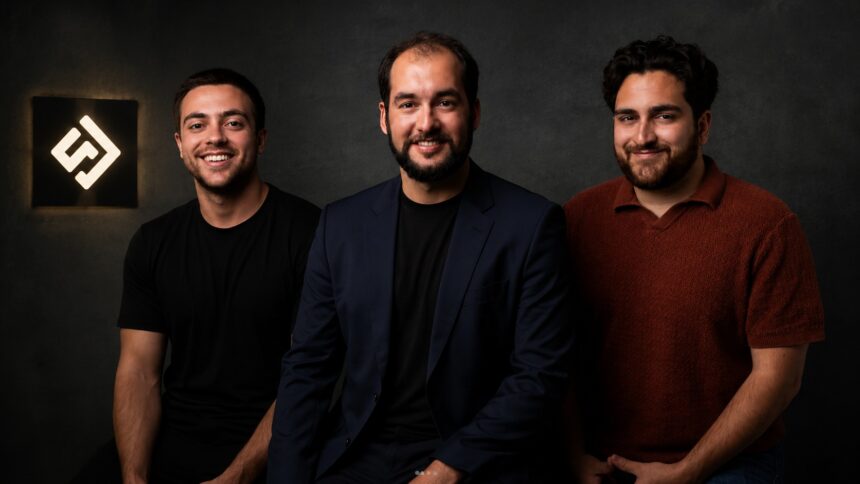


The stablecoin app was founded in Kuwait City, where virtual assets are still banned outright. Its listed address is now the ADGM, the jurisdiction that regulates the asset it runs on.
CNBC and Statista published the 2026 edition of the World’s Top Fintech Companies in late July, ranking 500 firms selected from roughly 3,500 evaluated across eight segments. The digital assets category carries Coinbase, Circle, Gemini and Bybit alongside custody and infrastructure names from New York, London, Singapore and Hong Kong. One entry in that category is registered in Abu Dhabi. It is Kem, a stablecoin app founded four years ago in Kuwait City.
That single line in a league table describes the last three years of Gulf digital finance more precisely than most policy papers.
Kem launched in 2021 as a peer-to-peer payments app and raised roughly $1 million in a pre-seed round led by Maqamees Holdings. In August 2024, Tether announced a $3 million strategic investment, describing Kem as its route into the Middle Eastern market. Chief executive Seth Sadeq called it “one of the most important deals in the crypto industry right now,” while Tether’s Paolo Ardoino, quoted on Kem’s own site, said the investment “perfectly aligns with our mission to advance financial freedom for all.” Reported funding totals $4.5 million across two rounds. The product today is a wallet holding USDT, USDC, bitcoin and Tether Gold, a free Visa card issued through Rain, and a business account running payroll into more than 150 countries.
Where the licence is not
Kuwait settled its position on 17 July 2023. Circulars issued jointly by the Central Bank of Kuwait, the Capital Markets Authority, the Ministry of Commerce and Industry and the Insurance Regulatory Unit imposed what regulators themselves termed an absolute prohibition on virtual assets as a payment instrument or an investment, banned mining, and barred the issuance of licences to virtual asset service providers operating commercially. The stated rationale was FATF Recommendation 15. The position has held through 2026. For a company like Kem, the practical effect is that no domestic licence exists to apply for.
What Abu Dhabi built instead
The Central Bank of the UAE issued its Payment Token Services Regulation in July 2024, requiring full reserve backing for dirham payment tokens and excluding algorithmic and privacy tokens from payment use. AE Coin became the first licensed AED-pegged stablecoin, ADNOC Distribution signed a memorandum in December 2025 to accept it across nearly 980 service stations in the UAE, Saudi Arabia and Egypt, RAKBANK secured in-principle approval in January, and a consortium of ADQ, International Holding Company and First Abu Dhabi Bank is developing a dirham stablecoin pending central bank clearance.
Abu Dhabi went further on the asset itself. The ADGM Financial Services Regulatory Authority’s expanded regime for fiat-referenced tokens took effect on 1 January 2026, and in December the FSRA recognised USDT as an Accepted Fiat-Referenced Token across nearly all the major chains it supports, extending an earlier approval covering Ethereum, Solana and Avalanche. The extension included TRON, the network Kem uses for the gas-free USDT withdrawals it launched with TRON DAO in July 2025. Circle holds an FSRA permission as a money services provider, and Binance received full authorisation to operate Binance.com under ADGM oversight from 5 January.
For a company whose entire customer balance is denominated in USDT, that is not an abstract convenience. The asset and the address now sit under the same regulator.
Bahrain moved in parallel. The Central Bank of Bahrain’s Stablecoin Issuance and Offering module, issued on 2 July 2025, licences dinar and dollar stablecoins, permits yield-bearing structures and sets base capital at BHD 250,000. AX Coin took the first in-principle approval in January and the first full issuer licence in June, followed by agreements with Singapore Gulf Bank and The Benefit Company.
An honest measure of the listing
A place on a 500-name list records presence and performance, not scale. In March, the stablecoin card company KAST raised an $80 million Series A at a $600 million valuation, reporting more than a million users and roughly $5 billion in annualised transaction volume. Kem’s disclosed funding stands at $4.5 million, last raised in August 2024, with about 25 staff as of the end of March. And a company number at ADGM is a registered address, not an issuance licence of the kind Bahrain granted AX Coin.
Kem has not left its first market. Its country pages cover all six GCC states and its Kuwait page still describes a Kuwait-headquartered fintech. Both are true at once, and that is the point. The customers stayed. The corporate address moved to the jurisdiction that wrote a rulebook and then approved the token. Kuwait produced the company; Abu Dhabi is what the list records.