ع
ع


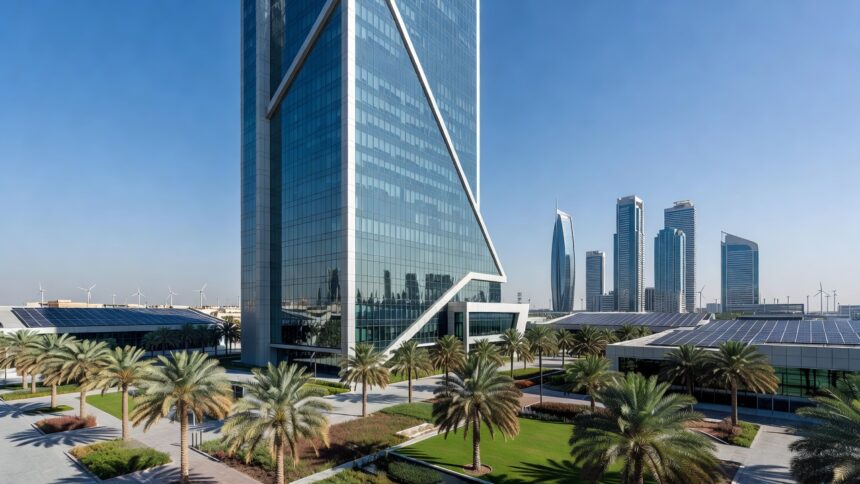


The Emirates News Agency reported on October 8 that the World Green Economy Summit 2026 will take place at the Dubai World Trade Centre under the patronage of His Highness Sheikh Mohammed bin Rashid Al Maktoum, Vice President, Prime Minister and Ruler of Dubai. Organised jointly by the Dubai Supreme Council of Energy, Dubai Electricity and Water Authority and the World Green Economy Organisation, the event will assemble more than 135 speakers including ministers, business leaders, government officials and innovators. Discussions will centre on translating proven green economy models into broader implementation across global markets.
WGES 2026 structures its programme around four thematic pillars that include energy technology and infrastructure, business strategy and transition, water and food security, and finance, according to the organising bodies. Three cross-cutting themes of artificial intelligence, governance and system enablers will integrate throughout the sessions to provide a comprehensive framework for advancing the green transition. The finance pillar in particular will examine mechanisms to improve project bankability and move climate initiatives from planning to execution.
A Climate Policy Initiative assessment found that at least $6.3 trillion in annual investment is required until 2030 to mitigate the most severe impacts of climate change, while current levels stand at approximately $2.3 trillion. Summit sessions will convene project financiers, investors and decision-makers to address this shortfall through blended finance, green bonds and other instruments, the organisers stated. Saeed Mohammed Al Tayer, vice chairman of the Dubai Supreme Council of Energy and chairman of the World Green Economy Organisation, highlighted that the green economy now exceeds $5 trillion in annual value and expands at twice the pace of traditional industries.
Industry analysis cited by summit participants places the global circular economy market at $517.79 billion in 2025, with projections from the same data indicating growth to $888 billion by 2030 at a compound annual rate of 11.3 percent. Recycled materials produce 80 percent fewer emissions than those derived from primary extraction, a statistic expected to inform conversations on supply chain resilience and resource efficiency. The business strategy pillar will review how leading companies integrate circular principles, green skills development and regulatory compliance into core operations.
Saeed Al Abbar, CEO and founder of AESG, said, “The transition to a green economy will not be achieved through isolated targets or sustainability commitments alone. We need to focus on scalable solutions that make both environmental and economic sense. WGES is an important platform to bring together the technology, investment and collaboration needed to accelerate that transition.” Valerio Capizzi, global lead for utilities at ING Bank, added that the path to net zero demands collaboration alongside investment and technology to balance affordability, security and sustainability. These insights will contribute to outcomes aimed at strengthening the UAE’s role in sustainable finance, including references to initiatives such as the ALTÉRRA fund and contributions to international climate mechanisms announced at COP28.
Building on prior editions, WGES 2026 will showcase international success stories and policy frameworks that support green growth, the Dubai Supreme Council of Energy indicated in its briefing. Participants will evaluate the influence of carbon markets, trade policies and international agreements on industry decision-making. The two-day gathering concludes a series of preparatory announcements that have emphasised practical steps toward wider adoption of green technologies and financing models.