ع
ع



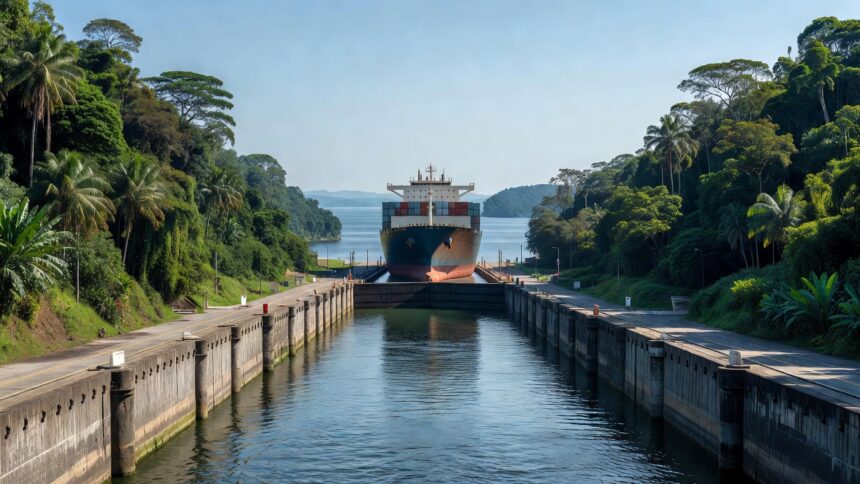


The Panama Canal Authority has initiated a series of measures to manage declining water resources in its key reservoirs amid changing climate patterns. Daily transits have already been scheduled to decrease from 36 to 32 starting mid-September, with further adjustments possible if precipitation levels do not improve. Ilya Espino de Marotta assumed her position as the first female administrator of the century-old waterway on September 8, 2026, bringing extensive engineering experience to the role.
Espino de Marotta indicated that while current steps focus on gradual implementation, more significant action may become necessary during the peak dry season. “We do not rule out the possibility that in February or March we may have to lower the limit — probably not to 24 slots per day, but it could be reduced to 29 or something similar,” she said. The authority has accumulated greater water reserves this cycle through early conservation efforts, reducing the likelihood of returning to the 22 daily transits recorded in 2023.
According to Panama Canal Authority figures, the 2023-2024 drought period resulted in 2,700 fewer crossings overall, disrupting global supply chains and forcing many vessels onto alternative routes around Cape Horn. The canal accounts for 5 percent of worldwide maritime trade, with major clients including the United States, China, Japan and several Latin American nations. Rising auction prices for transit slots have already reflected the tightening capacity, with some fees exceeding one million dollars for larger vessels.
Each ship passage requires some 200 million liters of fresh water to operate the lock system, water that ultimately flows into the sea. Recent reductions in maximum draft limits have helped conserve resources by requiring vessels to carry lighter loads. These operational changes coincide with increased reliance on the canal as other global chokepoints face their own geopolitical challenges.
Rainfall in the canal watershed from May to August fell 34 percent below the long-term average, while water inflows dropped 44 percent, a Panama Canal Authority assessment found. The authority has accelerated work on the Rio Indio reservoir project to expand storage capacity and mitigate future shortages. Officials update lake level forecasts weekly to refine their planning for the remainder of the year and into 2027.
Shipping companies have been advised to secure bookings well in advance to avoid delays, as unreserved vessels face longer waiting times at both ends of the canal. The authority reported record revenues in the first nine months of fiscal 2026 despite the emerging constraints, underscoring the route’s enduring importance to international commerce. Projections for the full year anticipate more than 10,000 deep-draft transits if current trends hold.