ع
ع



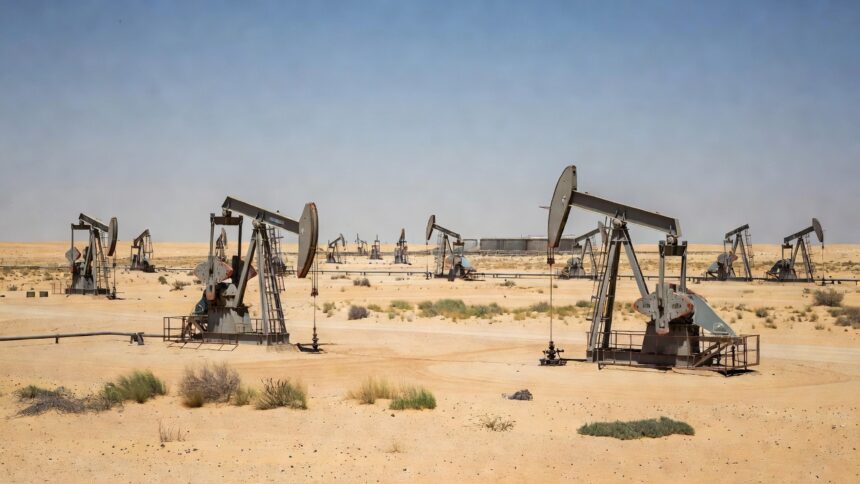


Oil Minister Basim Mohammed Khudair detailed the sharp fall in Iraqi crude exports during a press conference in Baghdad, attributing the drop directly to the closure of the Strait of Hormuz that has blocked the primary outlet for southern fields. The minister reported that pre-escalation exports had reached almost 3.4 million barrels per day through the strait, while current shipments range between 1.5 million and 1.7 million bpd against production of around 2.7 million bpd. Khudair noted that the reduced volumes have prompted immediate steps to identify and activate bypass options to limit revenue losses.
The minister outlined two flagship alternative export projects now under accelerated development to ease dependence on the blocked waterway. One initiative centres on shipments via the Port of Aqaba, while the other involves construction of the Basra-Fishkhabur pipeline, which authorities intend to implement under a build-operate-transfer contract. Khudair added that Iraqi oil fields retain the capacity to ramp output back toward previous peaks once transit constraints ease.
Iraq’s government remains focused on longer-term infrastructure upgrades and route diversification, according to the minister’s assessment delivered Saturday. Khudair emphasised ongoing work to attract investment into the sector and create a stable operating climate for international companies. He further highlighted progress on associated gas utilisation as a parallel priority to maximise resource value from existing fields.
Domestic market requirements have been fully met despite the transit disruption, Khudair stated, ensuring local refineries and power generation continue without interruption. The minister described the dual-track gas strategy now in motion, with one stream dedicated to eliminating routine flaring of associated gas and the second aimed at developing standalone gas fields. Fourteen contracts for these gas projects have already been referred to international firms, he reported.
Economic intelligence provider QuantCube Technology data reviewed by CNBC indicate that Iraq’s exports fell even more steeply in the initial months after the strait became effectively impassable in late February 2026, with April volumes at roughly one-tenth of pre-crisis levels. The International Monetary Fund projects a 6.8 percent contraction in Iraqi GDP for 2026, driven primarily by the combined effects of OPEC+ output limits and the Hormuz disruptions that have curtailed export revenues. Iraq’s oil sector supplies the overwhelming share of government income, making the sustained shortfall a central fiscal concern.
Officials have simultaneously engaged regional partners on additional pipeline options, including potential links through the UAE, as part of a broader effort to build redundancy in export infrastructure. The minister’s comments align with earlier government statements that emphasised the need for diversified Mediterranean and Red Sea outlets to mitigate future risks. Khudair reiterated that production capacity itself has not been damaged and can be restored once new routes become operational.