ع
ع





The National Bureau of Statistics placed July’s producer price index gain at 3.5 percent from a year earlier, a slowdown from the 4.1 percent recorded in June and below the 3.8 percent median forecast in a Reuters poll of economists. Consumer prices advanced 0.5 percent on the year, with the core index that strips out food and energy climbing 0.9 percent even as food prices dropped 1.5 percent. The consumer price index fell 0.1 percent from the prior month after a 0.3 percent decline in June, contrasting with expectations for a 0.2 percent increase, according to the bureau’s release.
NBS statistician Dong Lijuan attributed the monthly price movements to a combination of imported factors that weighed on certain industries together with seasonal influences. High temperatures, heavy rainfall and typhoons slowed construction activity and exerted downward pressure on prices in affected sectors while industrial transformation and consumption upgrading supported demand and lifted prices elsewhere. The producer price index declined 0.7 percent on a monthly basis in July, the National Bureau of Statistics reported.
ANZ senior China strategist Zhaopeng Xing linked the softer-than-expected July readings to retreating global oil prices combined with weakening domestic demand. Xing observed that oil price trends remain uncertain and their ultimate effect on inflation is therefore difficult to predict. He added that the impact of accelerated fiscal spending planned for the second half of the year would probably emerge only after a lag of roughly one quarter, leading ANZ to maintain its forecast for an M-shaped inflation path through the remainder of 2026.
Pinpoint Asset Management chief economist Zhiwei Zhang said the inflation outcomes aligned with other recent activity indicators including purchasing managers’ index readings that pointed to softening momentum in the second quarter. Zhang noted that the Politburo meeting in July had signaled stronger fiscal measures as the main policy response although the transmission of that spending into the real economy would require additional time. The National Bureau of Statistics data showed upstream mining and raw materials sectors continued to drive producer price increases while food and daily consumer goods registered price declines.
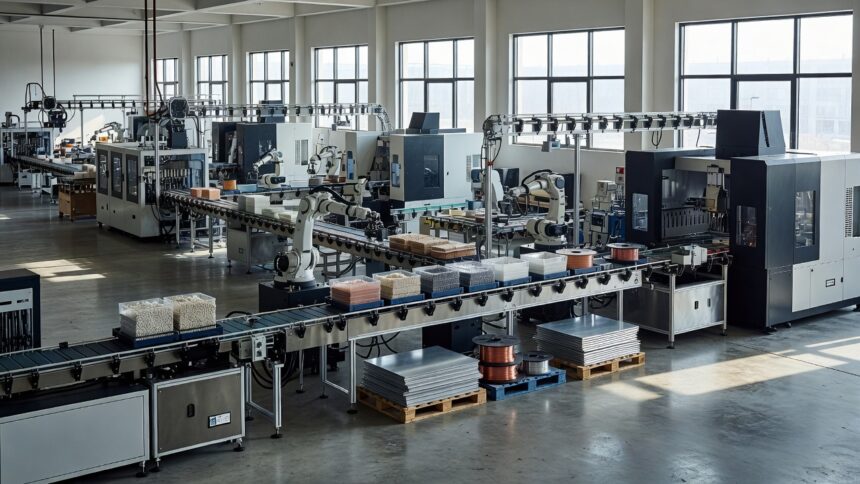
Chinese authorities face a two-speed economy in which factory output and exports have remained robust while domestic demand stays weak, a situation that has prompted pledges to accelerate already budgeted infrastructure spending through the remainder of the year. Although high-tech and upstream industries have recorded solid profit growth, manufacturers oriented toward the domestic market have encountered margin pressure from sluggish sales and rising input costs, according to government assessments. Factory activity contracted in July according to the official survey and slowed to a four-month low in a private gauge, both of which highlighted softening new orders.
Geopolitical developments including the US-Israel conflict with Iran had earlier pushed up energy and raw material costs, helping to reverse China’s prolonged deflationary trend, the National Bureau of Statistics indicated. Government efforts to curb aggressive price competition in industrial sectors produced only limited results prior to the latest data. ANZ economists project full-year producer price inflation at 2.5 percent and consumer price inflation at 1.0 percent.