ع
ع



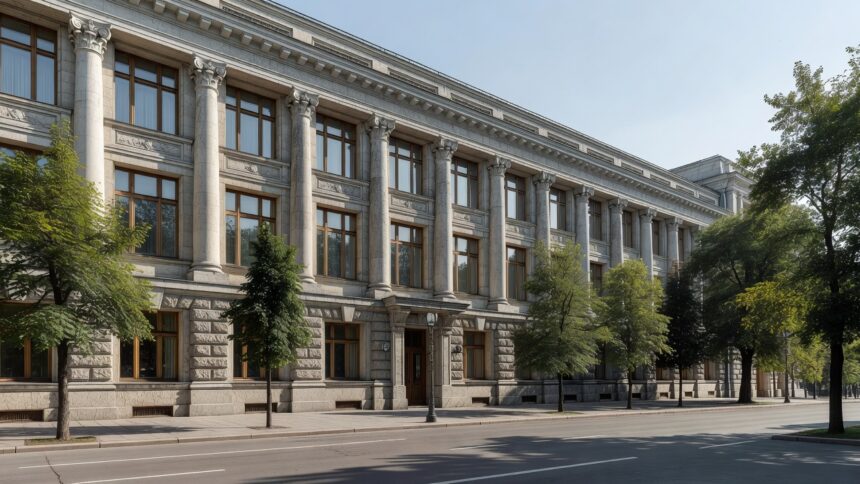


The Bank of Russia said in a statement that it reduced the key rate from 14.25 percent on July 24 as the economy grew at a moderate pace in the second quarter while considerable price growth and higher inflation expectations in summer months were tied mainly to one-off factors. The regulator revised its 2026 gross domestic product growth forecast downward to a range of zero to 1 percent from the earlier projection of 0.5 percent to 1.5 percent. It lifted the 2026 inflation outlook to between 6 percent and 7 percent from 4.5 percent to 5.5 percent citing the considerable rise in fuel prices and slightly raised its forecast for the average key rate this year. The central bank added that measures of underlying inflation have remained in the 4 percent to 5 percent range in annualised terms.
Official figures show the consumer price index rose 0.9 percent in June after increasing 0.2 percent in May pushing annual inflation to 6 percent from 5.3 percent a month earlier. Petrol prices have increased 16 percent since the start of the year according to the data. Household inflation expectations climbed in July to their highest level since market turmoil in March 2022 the central bank reported adding that sustained elevation could impede a durable slowdown in inflation.
Ukrainian drone attacks on Russian oil refineries have interrupted gasoline supplies leading to extended queues at filling stations and higher fuel costs the statement noted. Strikes on the leading online retailer Wildberries have also disrupted the consumer economy. The central bank observed that lending growth decelerated slightly in June while companies markedly lowered their expectations for future demand and output.
The decision arrived amid accumulating political pressure including comments this week from President Vladimir Putin who met central bank governor Elvira Nabiullina and described the economy as stable despite external attempts to destabilise the fuel and energy sector along with some other industries. Putin stated last week that a key rate cut should be and will be a natural process based on macroeconomic indicators and economic stability. Economist Evgeny Kogan observed that it was an interesting coincidence as soon as the president developed expectations of a rate cut they immediately began to materialise.
The Bank of Russia has pursued gradual easing after maintaining higher rates through much of the prior period with the latest reduction following multiple cuts that lowered the benchmark from above 20 percent in 2025. A mid-July macroeconomic survey from the Bank of Russia found that analysts had raised their 2026 inflation projection to 6.2 percent while lifting the key rate forecast to an average 14.5 percent for the year. The regulator’s updated baseline assumes the key rate will average 14.5 percent to 14.6 percent in 2026 before declining further.
International institutions project somewhat stronger growth than the central bank’s latest assessment. World Bank data places Russia’s 2026 GDP expansion at 0.8 percent with inflation expected to ease gradually despite near-term pressures. The International Monetary Fund anticipates 1.1 percent growth in 2026 alongside consumer price rises of 5.6 percent according to its latest country assessment.