ع
ع



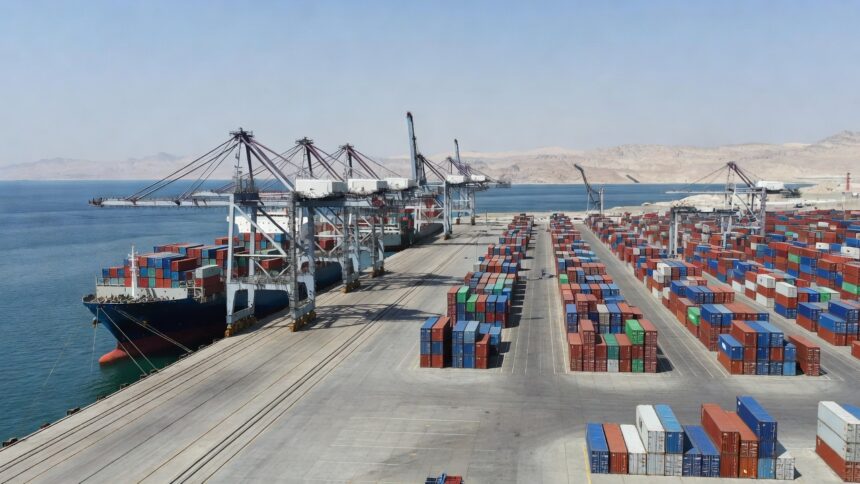


According to a report distributed by the Emirates News Agency, the Aqaba Container Terminal processed 472,680 twenty-foot equivalent units during the first six months of 2025. The figure reflects operations at Jordan’s primary container port, which serves as a vital link for national and regional trade flows. Port management outlined the volume in an update that also touched on efforts to enhance efficiency through modern equipment and infrastructure.
World Cargo News reported that the terminal handled 824,199 TEU across all of 2024, an 8.29 percent decline from the prior year. The same data showed a 43 percent rise in vessel calls over that period, pointing to larger average vessel sizes and scheduling optimizations. Such trends illustrate the terminal’s adaptation to shifting maritime demands in the Red Sea corridor.
APM Terminals announced in late 2025 that the facility had surpassed one million TEU for the full year, building directly on the first-half performance. The company attributed the milestone to infrastructure upgrades and the introduction of greener equipment designed to boost capacity while reducing emissions. This progress came after the 2024 dip and aligned with broader investments in the terminal’s capabilities.
The terminal’s annual throughput capacity stands at 1.3 million TEU following an expansion completed in October 2013, according to port authority specifications. That project extended the quay by 460 metres to reach a total length of one kilometre and added advanced ship-to-shore cranes with a 22-container-row reach along with additional rubber-tyred gantry cranes. These enhancements have enabled the port to accommodate larger vessels and support increased trade volumes.
Jordan relies on the Aqaba facility for the majority of its containerized imports and exports, making its performance central to the national economy. Maritime industry assessments have tracked variable conditions at Red Sea ports in recent years due to global supply chain shifts and geopolitical influences. The first-half 2025 throughput of 472,680 TEU provided momentum for the record achieved later that year.