ع
ع



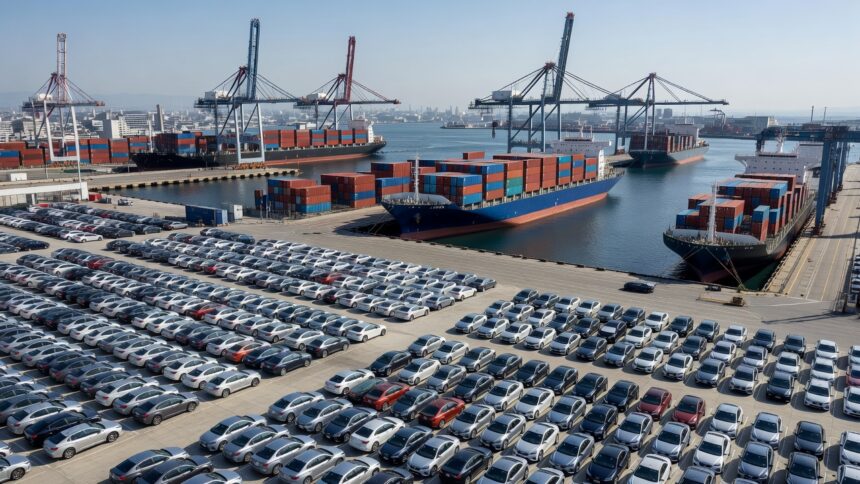


The Ministry of Finance preliminary data placed the May current account surplus at 3.72 trillion yen. The goods account swung to a surplus of 6.9 billion yen from a deficit of 497.1 billion yen a year earlier as exports climbed 14.7 percent to 9.36 trillion yen while imports rose 8.1 percent to 9.35 trillion yen. Strong overseas demand for Japanese semiconductor-related devices and automobiles supported the improved trade performance according to the ministry.
Primary income expanded 2.3 percent to 4.28 trillion yen the ministry reported with elevated returns on securities held overseas providing much of the lift. A weaker yen in recent periods has amplified the value of those foreign earnings which have become a mainstay of Japan’s external accounts. The services and secondary income balances also contributed to the overall positive reading though the ministry offered limited detail on those components in its initial release.
Japan posts US$24.43 billion current account surplus in May according to the latest official statistics continuing a pattern of surpluses that have defined the nation’s economic interaction with global markets. The Ministry of Finance releases such data monthly to track shifts in trade services and investment income. These updates serve as a key gauge of Japan’s position in the international balance of payments.
Ministry of Finance figures for the fiscal year through March showed a record current account surplus of 34.52 trillion yen up 15 percent from the year before. That annual total reflected a return to goods trade surplus for the first time in five years driven by chip and vehicle exports while primary income reached 42.28 trillion yen. The performance highlighted Japan’s enduring role as a major net creditor nation.
The ministry’s April data had shown a surplus of 3.91 trillion yen which exceeded most forecasts and followed a record monthly reading in March. Such consistent external strength has persisted even as the Bank of Japan advances gradual monetary policy adjustments. Economists track these balances for indications of underlying resilience in export sectors and overseas investment yields.
Upcoming releases for subsequent months will clarify whether the May improvement marks a sustained trend through the remainder of 2026. The ministry has noted that global demand patterns and currency movements remain important variables in future outcomes. Japan’s accumulated net external assets continue to rank among the largest worldwide according to long-term ministry compilations.