ع
ع



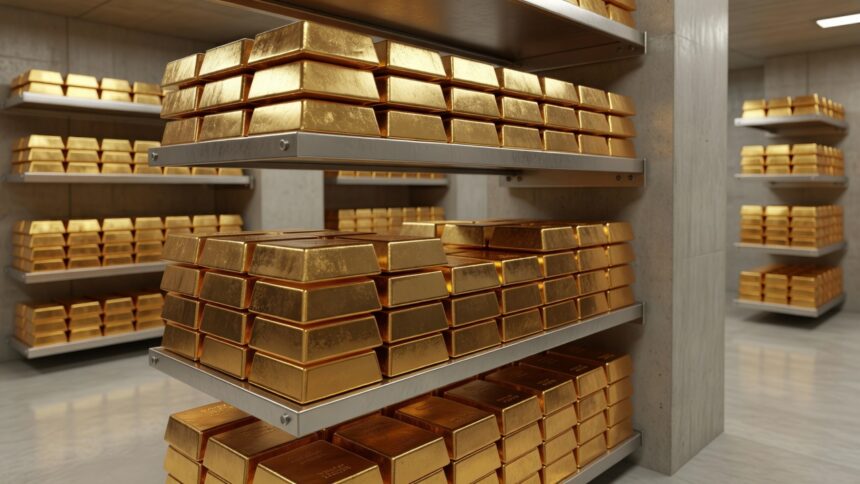


The Emirates News Agency reported that gold prices wavered on Wednesday with spot gold ultimately rising 0.42 percent to $4,122.97 per ounce. This came after the metal had dropped more than 1 percent in the previous session. The movement was driven by the US military’s fresh air strikes on Iran in response to attacks on ships in the Strait of Hormuz, Trading Economics noted in its commodity update.
J.P. Morgan Global Research has highlighted how trade concerns, geopolitical crises and central bank buying have fueled volatility in gold prices throughout 2026. The bank’s analysts forecast an average price of $6,000 per ounce by the fourth quarter of this year, rising toward $6,300 by the end of 2027. Gold peaked in late January before cooling off and recently finding support near $4,170, a J.P. Morgan assessment found.
According to Trading Economics, the gold price is 24.42 percent higher than a year ago even after falling 3.24 percent over the past month. The all-time high stands at $5,608.35 reached in January 2026. These figures illustrate the metal’s sustained appeal as a safe-haven asset during periods of uncertainty.
Goldman Sachs lowered its end-2026 price target for gold to $4,900 per ounce from $5,400, a recent report from the investment bank showed. The adjustment accounts for expectations around interest rates and economic growth trajectories. Central banks have maintained steady purchases, providing a floor for prices despite swings in investor sentiment, multiple market assessments have noted.
A Yahoo Finance analysis pointed to gold climbing above $5,000 per ounce for the first time in January 2026 before experiencing sharp corrections of up to 14 percent in a matter of days. Such volatility has become more pronounced in the current environment of geopolitical shifts and policy uncertainties. Market participants continue to monitor developments closely for signals on future direction.
The London Bullion Market Association’s daily fixing process remains central to global gold pricing, offering a transparent benchmark used by traders worldwide. On Wednesday the price action reflected a balance between safe-haven buying linked to Middle East developments and pressures from a firmer dollar in certain sessions. Further US economic releases this week are expected to influence trading ranges in the near term, according to commodity market data.