ع
ع




Georges Elhedery said HSBC remained confident in the Gulf states’ economic prospects as the region braced for shocks from the conflict that began 10 days earlier. Iranian drones and ballistic missiles struck countries across the GCC, severely disrupting oil and gas exports that form the bedrock of regional revenues, according to a report by Arabian Business. The HSBC chief added in a statement that the bank was steadfast in its belief in the long-term strength and resilience of the GCC, with years ahead expected to deliver renewed stability, growth and prosperity. Elhedery had told investors on a February 25 conference call that the Asia-Middle East corridor was becoming a defining axis of global growth, with the UAE among markets central to expanding the bank’s wealth management fees.
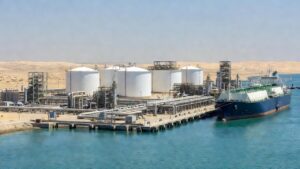
The conflict triggered the closure of the Strait of Hormuz on March 4, 2026, stranding exports and pushing Brent crude prices above $120 per barrel, a Wikipedia entry on the economic impact of the 2026 Iran war showed. Oil production across Kuwait, Iraq, Saudi Arabia and the UAE dropped by at least 6.7 million barrels per day within a week, while QatarEnergy declared force majeure on LNG shipments, according to the same account. An Oxford Economics briefing dated March 11, 2026, downgraded GCC real GDP growth by 1.8 percentage points to 2.6 percent for the year, citing reduced hydrocarbon exports, tourism and domestic demand. Chatham House analysis from mid-March noted that even alternative pipeline routes could handle only about one-quarter of normal volumes through the strait.
HSBC has expanded its presence across the Gulf as part of a group strategy focused on inter-regional deal flows and capital movements to lift overall profitability, Arabian Business reported. A Reuters calculation drawn from company figures indicated that the bank’s UAE and Saudi Arabian operations, which represent the bulk of its regional activity, contributed 5 percent of overall group profits annually over the preceding five years. The lender does not break out a specific Middle East profit share in its disclosures. Elhedery’s comments underscored an unchanged conviction in GCC fundamentals despite the immediate pressures.
Prior to the outbreak of hostilities, the World Bank had projected GCC economic growth to reach 4.5 percent in 2026, driven by the rollback of OPEC+ oil production cuts and robust non-oil sector expansion. An International Monetary Fund regional economic outlook published in April 2026 revised MENAP growth sharply lower to 1.4 percent for the year, a downgrade of 2.3 percentage points, with oil exporters facing steep cuts of up to 15 percentage points in some cases. The reference scenario assumed disruptions would ease by mid-2026 with oil prices averaging around $82 per barrel, though adverse scenarios with prices at $110 pushed global growth projections down further.
GCC non-hydrocarbon activity, which accounts for more than 60 percent of total GDP, has shown resilience through investments in manufacturing, services and logistics, a January 2026 World Bank Global Economic Prospects report found. Saudi Arabia and the UAE have redirected limited volumes via pipelines to Red Sea and Arabian Sea terminals, yet broader effects include disrupted food imports that supply over 80 percent of the region’s caloric intake. The IMF noted that every 10 percent rise in crude prices trims GDP growth by about 0.5 percentage point for oil importers while lifting inflation by a full percentage point, with oil exporters facing mixed outcomes depending on export access.
The bank’s emphasis on the Asia-Middle East corridor aligns with GCC states’ ongoing diversification away from pure hydrocarbon dependence toward sectors such as tourism, finance and technology. Elhedery’s statement highlighted expectations of eventual recovery in stability and prosperity once the immediate conflict-related pressures subside. Later IMF updates from April 2026 indicated that a broader rebound could materialise in 2027, supported by stronger energy output and non-oil momentum in economies with sufficient fiscal buffers.