ع
ع



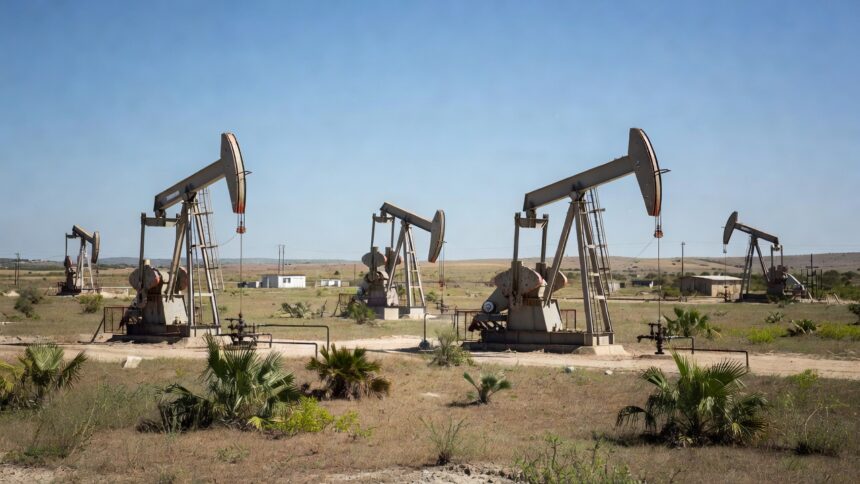


OPEC figures placed Venezuelan crude production at just over one million barrels per day in June 2026 before the monthly total advanced to 1.2 million barrels per day in July. The July reading reflected a 23 percent rise since the start of the year and marked the strongest monthly performance in more than seven years. Trading Economics data drawn from OPEC submissions showed the sequential increase from 1.187 million barrels per day in June while CEIC statistics recorded a closely aligned 1.117 million barrels per day for the same month. Venezuelan authorities have attributed the gains to policy adjustments implemented after political changes in early 2026.
A Reuters assessment of shipping data and PDVSA documents indicated that oil exports averaged 1.09 million barrels per day in September 2025 before climbing further in subsequent months with the highest volumes recorded since February 2020. United States imports from Venezuela reached levels last seen in January 2019 while India imported around 427000 barrels per day in May 2026 making it the second-largest customer. RBN Energy tracking showed shipments to U.S. refiners rising sharply after February and stabilizing near one million barrels per day by mid-year as accumulated stocks were released and diluent imports increased.
The Organization of the Petroleum Exporting Countries monthly oil market report noted that output had bottomed at 392000 barrels per day in July 2020 when the COVID-19 pandemic compounded earlier declines triggered by low prices and sanctions imposed in 2019. Production had averaged more than two million barrels per day in the late 1990s before sustained contraction set in according to historical records maintained by the OPEC secretariat. Recent secondary-source assessments from the group confirmed that 2026 monthly averages remained below the 2.1 million barrels per day achieved in June 2016 yet demonstrated consistent recovery momentum.
Venezuela’s Ministry of Petroleum projected that daily production could reach 1.37 million barrels per day by the end of 2026 a target that would represent the strongest annual close since the tightening of U.S. energy sanctions. The Institute of International Finance outlined three recovery scenarios ranging from an additional 150000 barrels per day under cautious assumptions to as much as 500000 barrels per day if investment accelerates. Oilprice.com analysis tied the current expansion to sanctions relief, regulatory streamlining and heightened global demand linked to Middle East supply disruptions in the Strait of Hormuz.
Public statements carried by WAM indicated that Venezuela oil production rises to highest since 2019 as the country re-engages established buyers and attracts fresh capital into upstream operations. PDVSA has focused on blending heavy crude with imported diluents to meet refinery specifications and expand marketable volumes according to documents reviewed by Reuters. The sustained increase has supported export revenues that fell to around four billion dollars annually by 2023 before beginning a measurable rebound in 2025 and 2026.
Wikipedia compilation of industry statistics placed Venezuela’s proven reserves at 304 billion barrels the largest globally yet noted that actual output has been constrained by infrastructure shortfalls and limited access to technology since the late 2010s. Funds Society reporting on IIF projections suggested that even moderate investment continuity could lift output from the one-million-barrel baseline recorded in 2025 toward 1.3 million to 1.4 million barrels per day within two years. Further coordination between state entities and international partners will determine whether the recent gains translate into longer-term stabilization of the sector.