ع
ع



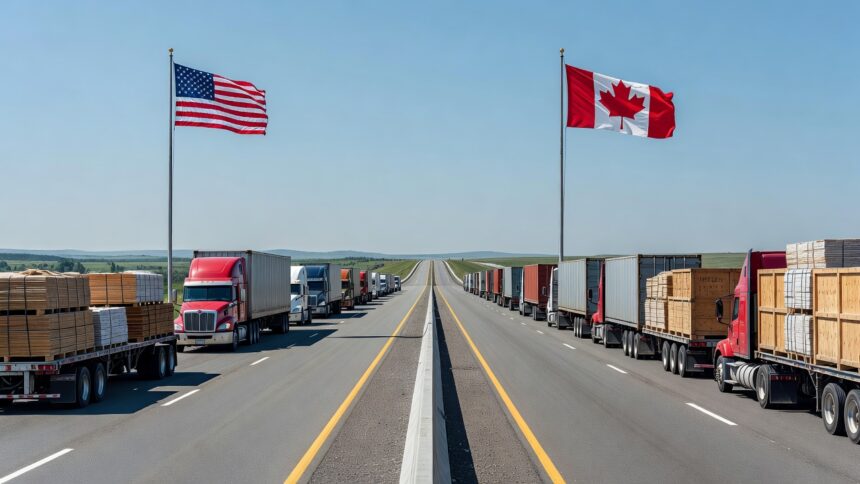


The White House announced that 50 percent tariffs under Section 338 would apply to Canadian goods valued at roughly 20 billion dollars with the duties taking effect at midnight on August 21. Canadian Prime Minister Mark Carney suspended the negotiations in response and directed his team to return to Ottawa according to a statement from his office. Carney added that Canada would impose equivalent tariffs on American products to shield domestic workers and industries from the impact.
Carney’s office stated that Canadian negotiators had engaged in good faith throughout the process which included three days of intensive discussions in Washington between Minister Dominic LeBlanc and US Trade Representative Jamieson Greer. The prime minister’s statement noted that while some progress had occurred last-minute alterations to the American proposals proved unacceptable. Greer for his part told reporters that Canada had introduced new demands and backed away from prior commitments disrupting a tentative balance reached earlier in the week.
Bilateral trade between the two countries reached 880 billion dollars in goods and services last year according to figures compiled by both governments with the United States absorbing about 70 percent of Canadian exports. The latest tariffs target a fraction of that flow focusing on items such as plywood liquor electrical equipment and sporting goods. US officials had paused an initial deadline earlier in the week to allow additional bargaining time but the extension failed to produce an accord.
The measures mark the first deployment of Section 338 authority from the 1930 Tariff Act a tool that permits the president to levy duties of up to 50 percent on imports from nations found to discriminate against US commerce according to a review by legal analysts at Holland & Knight. The proclamations originally issued in July cited Canadian policies on motor vehicles alcoholic beverages and dairy products as the basis for retaliation. Canadian officials had countered that their actions merely mirrored previous American tariffs imposed in violation of the USMCA framework.
Greer’s office emphasized that the American offer would have granted Canada the most favorable treatment among major US trading partners including reductions on steel aluminum autos and lumber. Carney’s statement countered that the revised terms were unfair uneconomic and called into question the reliability of any potential agreement. Both sides indicated that further support measures for affected industries would be rolled out in the coming days with Canada building on nearly 25 billion dollars already committed over the past 18 months.
The impasse arrives amid a broader review of the USMCA trade pact with negotiators having sought to address longstanding irritants in sectors ranging from automotive manufacturing to natural resources. Canadian statements highlighted the integrated nature of North American supply chains warning that prolonged duties could disrupt cross-border operations. US Trade Representative Jamieson Greer described the outcome as a missed opportunity but left open the possibility of renewed discussions once positions realigned.