ع
ع


Saudi startups raised a record $1.72 billion in 2025. The harder test is turning record deployment into exits, recycled capital and the kind of track record that pulls global funds permanently into the Kingdom.
Saudi Arabia has already answered one of the questions that followed its startup market for most of the last decade: can enough capital be assembled around local technology companies to create a venture market at scale?
In 2025, the answer was emphatic. The 2025 Saudi Arabia Venture Capital Report produced by MAGNiTT and sponsored by Saudi Venture Capital recorded $1.72 billion of funding across 257 transactions, both historic highs, with the Kingdom accounting for 45 percent of MENA venture capital deployment. Early-stage transactions represented 87 percent of deals. Capital formation is no longer the missing piece.
Liquidity is less settled. The same full-year data recorded 10 M&A exits in 2025. An earlier SVC study of the development of Saudi venture capital shows why that matters: exits had fluctuated between four and eight annually from 2018 through 2024 before moving higher in 2025. Jahez, Rasan and Nice One have demonstrated public-market routes, while acquisitions including HungerStation and Drahim established other forms of liquidity. The pieces of a cycle exist. The question is whether they can become repeatable.
The market after the record year
The first quarter of 2026 made that question more urgent. Funding fell 62 percent year on year and deal volume dropped 39 percent, according to MAGNiTT’s Q1 assessment. Saudi Arabia still led MENA by deal count, but the investor mix shifted sharply. Local investors represented 60 percent of active investors, while international participation fell to 15 percent from 35 percent in 2025, the lowest share MAGNiTT recorded in five years.
A weaker quarter does not erase a record year. It does expose what makes a venture ecosystem durable when global capital becomes cautious. New funds can keep companies financed. Exits give investors a reason to come back.
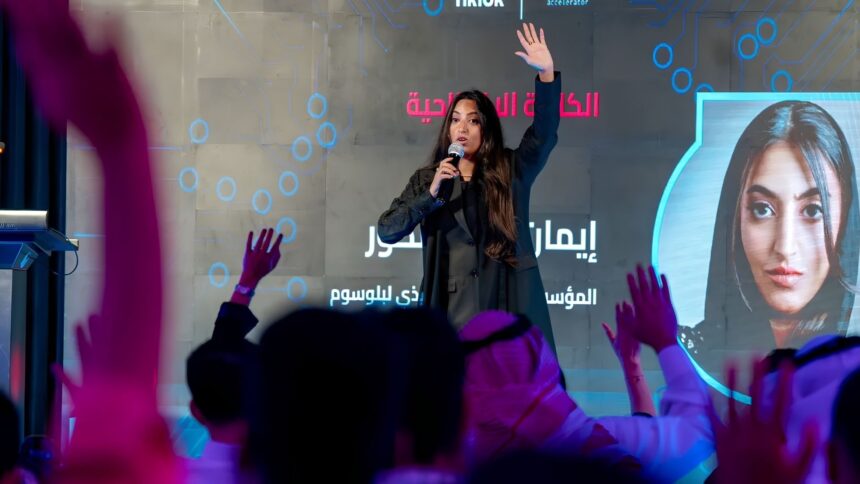
That distinction sits at the centre of an argument Emon Shakoor, founder and CEO of Riyadh-based Blossom Accelerator, has been making as the Saudi ecosystem matures. In an Argaam OnPoint interview, Shakoor pointed to companies moving “from product market fit to rapid scalability to pre IPO or full on IPO.” Her emphasis was not simply on large Saudi companies being created. It was on what their progression does to everyone who financed them.
Liquidity as soft power
Shakoor calls it a “life cycle of liquidity.” When early investors and family offices can see capital move into a startup, through commercialisation and scale, and eventually back out through an acquisition or listing, the Saudi market acquires something another incentive programme cannot manufacture: a realised track record.
Her argument is that those success stories become a “dominant force of soft power” for global venture capital. She cites firms such as Andreessen Horowitz and Sequoia as the calibre of international investor that a proven Saudi lifecycle could encourage to go deeper, whether by backing companies in the Kingdom, sending portfolio businesses to operate there or eventually establishing regional fund infrastructure.
The logic is particularly relevant as LEAP 2026 runs in Riyadh from 31 August to 3 September. The event can bring founders and investors into the same city. The economic value comes after they leave the exhibition floor. International companies have to establish, sell and scale locally; Saudi startups have to reach regional and global customers; investors eventually have to realise returns.
Shakoor sits inside that connective layer. The official LEAP programme lists her across sessions on startup investment, market entry and corporate innovation, while Blossom has increasingly positioned itself around soft landing, commercialisation and cross-border capital rather than acceleration alone. That puts the company in a market where the valuable intermediary is no longer simply the organisation that helps a founder raise. It is the one that helps build the path from entry to exit.
The evidence still has to compound
There is one limit to the liquidity thesis. Ten M&A exits in a year remain a small base beside 257 venture transactions, and a company approaching an IPO is not the same thing as investors receiving cash from one. Saudi Arabia still needs more realised outcomes across acquisitions, secondaries and public listings before a complete venture cycle can be called routine.
But that is precisely why the next exits matter more than another record funding headline. Liquidity gives founders capital to build again, gives employees the means to become angels, gives family offices evidence for another allocation and gives international fund managers a return history they can take to their investment committees.
Saudi Arabia has proved that companies can raise. The next demonstration is that capital can travel the entire distance through the system and come out the other side. If that becomes normal rather than exceptional, the Kingdom will have built something more powerful than a large startup market. It will have built a venture flywheel.