ع
ع


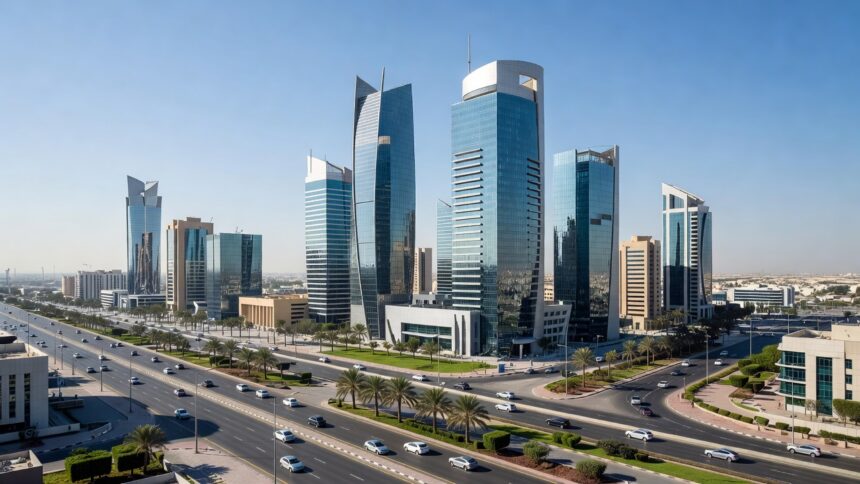


The Riyad Bank Saudi Arabia Purchasing Managers’ Index dropped to 48.8 in March from 56.1 the previous month, recording the first contraction in the non-oil private sector since August 2020. This 7.3-point decline represented the second-largest monthly fall since the survey began in 2009, exceeded only by the drop seen in March 2020. The reading below the 50 threshold that separates expansion from contraction pointed to a deterioration in overall business conditions across the kingdom’s non-oil economy.
Export orders recorded their steepest fall in nearly six years while backlogs of work rose at the fastest pace since July 2018, according to the index components. Employment continued to expand but at a slower rate than in February as firms adopted a more cautious approach to hiring. Input costs increased at the softest pace in a year, reflecting a slowdown in wage inflation from the record high registered the month before.
Riyad Bank attributed the downturn largely to supply chain disruptions from freight delays and rising transport costs linked to heightened geopolitical tensions that escalated in late February. Delivery times lengthened to the greatest extent since June 2020 while some firms halted new projects and delayed spending decisions as they monitored the regional conflict, which affected hydrocarbon exports through the Strait of Hormuz. The bank’s report noted that new orders stalled amid these uncertainties.
Naif Al-Ghaith, chief economist at Riyad Bank, said underlying fundamentals remain supportive with employment growth signalling business confidence in future demand. “While this marks the first dip below the expansion threshold in over five-and-a-half years, it largely captures short-term uncertainty linked to heightened geopolitical tensions in the region,” Al-Ghaith stated. He added that expectations across firms remain positive, underpinned by continuing government spending initiatives and Vision 2030 transformation programmes.
A Vision 2030 annual report published in April 2026 showed non-oil GDP reached $893 billion in 2025, approaching its target and contributing to the private sector accounting for 51 percent of output. Non-oil exports represented just over 22 percent of non-oil output last year, below the 50 percent goal for 2030 but still at record levels according to the report. These figures illustrate the sustained progress in economic diversification that has kept medium-term growth prospects intact despite the March slowdown.
World Bank data placed Saudi Arabia’s expected economic growth at 3.1 percent for 2026, positioning the kingdom as the strongest performer in the Gulf despite the regional disruptions. An International Monetary Fund assessment found that the length of the conflict would determine the overall impact on global and regional growth rates. Subsequent Riyad Bank releases showed the PMI rebounding to 51.5 in April and 52.8 in May, confirming the March contraction as a temporary dip rather than a structural shift.