ع
ع



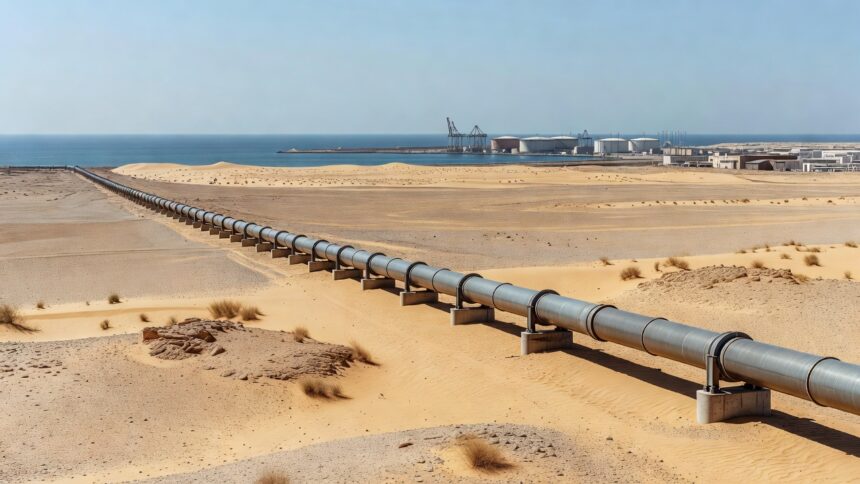


Five sources familiar with the discussions told Reuters that Saudi Arabia is weighing an increase in the East-West pipeline’s capacity by as much as 2 million barrels per day, which would allow both the kingdom and potentially neighboring countries to move larger volumes of crude and products to the Red Sea port of Yanbu without traversing the Strait of Hormuz. The line, which was built in the early 1980s, assumed greater strategic weight after shipping through the strait halted in February with the onset of the Iran conflict, according to the report published by Gulf Times. Aramco’s chief executive said in May that the pipeline can carry up to 7 million barrels per day, with roughly 2 million barrels per day supplying refineries on the west coast and 5 million barrels per day available for export. The US Energy Information Administration data from prior years shows Saudi Arabia accounted for 38 percent of crude flows through the strait before the disruptions, underscoring the pipeline’s role as a critical alternative route.
The kingdom has already restored the East-West pipeline to its full 7 million barrels per day capacity following an April attack that temporarily cut throughput by about 700,000 barrels per day, the Saudi energy ministry announced at the time as reported by Argus Media. OPEC assessments from May placed Saudi production lower amid the conflict, with the cartel revising its global oil demand growth forecast for 2026 downward to around 1.2 million barrels per day. Kuwait, Bahrain and Qatar currently lack their own bypass routes while Iraq’s pipeline to Turkey operates well below capacity due to recurring disputes, according to the sources. One person briefed on the matter indicated the Saudi expansion could incorporate a smaller parallel line dedicated to oil products.
Kuwait Petroleum Corp CEO Sheikh Nawaf al-Sabah told the Atlantic Council Global Energy Forum last month that his country was engaged in discussions with Saudi Arabia and the emirates on expanding the existing pipeline network to handle Kuwaiti barrels. Al-Sabah’s remarks aligned with the sources’ account that the potential capacity addition would range between 1 million and 2 million barrels per day while also considering refined products. The project would require years to complete, billions of dollars in investment and adjustments to Saudi crude pricing formulas, another source noted. Iraqi output fell from 4.3 million barrels per day to less than 1.5 million barrels per day in May during the height of the disruptions, according to OPEC figures.
Zaid Belbagi, managing partner at Hardcastle Advisory in London, said the recent talks on new pipeline corridors involving Saudi Arabia, Kuwait and Qatar reflect a broader strategic focus on reducing dependence on the Strait of Hormuz after the conflict highlighted regional vulnerabilities. The UAE, which maintains its own bypass line to Fujairah carrying up to 1.8 million barrels per day, has finished half of a new pipeline that will double that capacity when it starts next year, one industry assessment found. An anonymous industry source told Reuters the Saudi move could signal the next phase of competition with the UAE over oil production levels and pricing. Aramco declined to comment on the expansion considerations while several regional government offices did not immediately respond to requests for comment.
The Iran blockade earlier forced the shutdown of as much as 12 million barrels per day across Gulf producers, driving prices higher before a preliminary US-Iran agreement last month allowed partial resumption of flows that still lag pre-conflict volumes, Reuters data showed. Kuwait declared force majeure on some exports in March and Bahrain’s Sitra refinery sustained multiple strikes, according to conflict reports compiled by multiple agencies. The East-West pipeline’s current operations have helped stabilize Saudi exports, with Yanbu terminals handling increased volumes even after the April incident that briefly reduced flows, Vortexa consultancy estimates indicated. Such infrastructure enhancements could reshape Gulf export patterns over the coming years if the preliminary talks advance to formal planning.