ع
ع



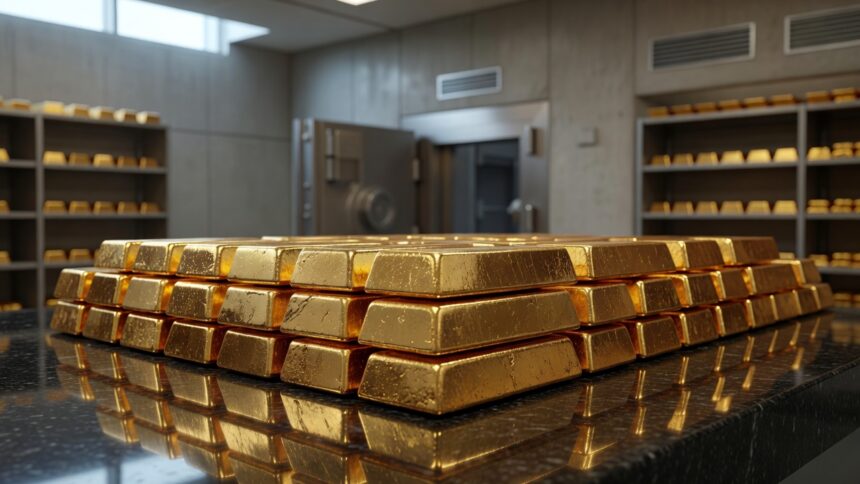


The Emirates News Agency reported that gold neared its lowest level in a week as strengthening economic data from the United States prompted a reassessment of Federal Reserve policy. Spot prices dropped 1.8 percent in one session to their lowest since early August before stabilizing around 4,315 dollars an ounce. Surging oil prices above 100 dollars a barrel have contributed to the inflationary environment, with the producer price index rising 0.4 percent last month. Analysts anticipate this could influence the central bank’s decision at its September meeting.
Bloomberg figures show the metal was on track for a third consecutive weekly decline. The US producer price index increase was the largest since May and tied to higher energy costs from Middle East tensions. This development has lifted the case for rate hikes, reducing gold’s appeal as a non-yielding asset. Bond yields have climbed above 4.9 percent on the 10-year Treasury, further pressuring bullion values.
In an assessment from TD Securities, analysts Ryan McKay and Bart Melek stated that near-term selling may only delay the next leg higher for gold. “Strong data and a hawkish Fed may only catalyze relatively modest near-term selling, postponing the timing of the next leg higher, rather than leading to material downside,” they noted. The yellow metal has held support in its higher range despite the pressures. Commodity trading advisors could turn sellers below certain thresholds, the analysts added.
Reuters reported that gold was trading at 4,385 dollars per ounce, down 0.4 percent, with futures also lower. A stronger dollar and rising bond yields have weighed on the market ahead of key inflation data. Most economists expect the Fed to hold rates steady in its mid-September meeting. The recent moves have erased some of the gains built on earlier rate cut expectations.
Central bank gold purchases have remained a key support, with an OMFIF survey indicating a shift away from dollar assets toward bullion amid geopolitical risks. ETF demand has been mixed, leading some banks to revise forecasts lower. Morgan Stanley suggested its price outlook depends on a revival in ETF buying and easing oil pressures. Gold has fallen approximately 29 percent from its January peak above 5,500 dollars.
The current environment highlights gold’s sensitivity to interest rate expectations and real yields, according to market observers. With CPI data due shortly after the PPI release, further volatility is anticipated in the precious metals market. Longer-term, renewed dollar-debasement narratives could provide a floor for prices. Industry observers will track developments in both energy and monetary policy closely in the coming weeks.