ع
ع



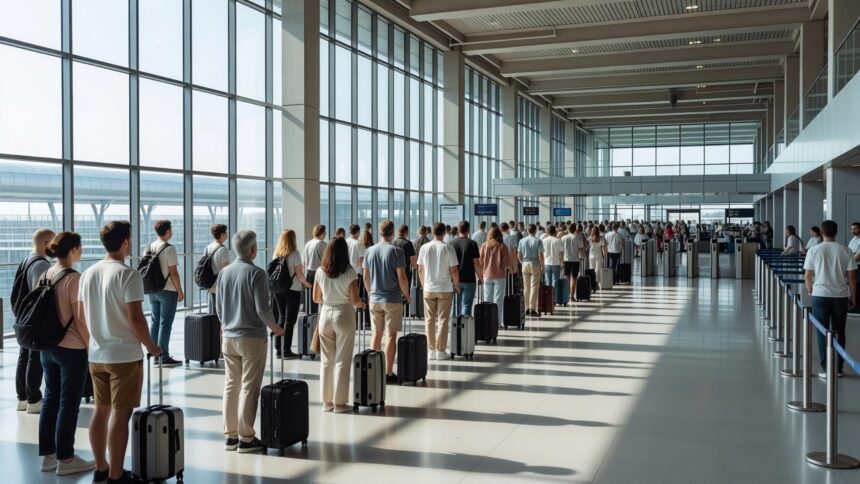


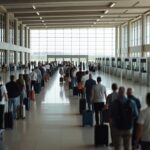
The new EU Entry/Exit System (EES) has led to border queues of two to five hours at key European airports this summer, affecting both arrivals and departures for non-EU passport holders. According to Gulf Times, the system has become the longest wait of many journeys, with Rome and Faro seeing processing times nearly triple previous levels under manual stamping. An aviation analyst writing there stated that Europe’s EES has become summer’s defining bottleneck. Passengers missing flights and aircraft departing with empty seats have become common occurrences since the full implementation on April 10, 2026.
The European Commission data places the EES as covering 29 Schengen countries and requiring biometric registration of fingerprints and facial images to replace passport stamps. The system logs every entry and exit to help identify overstayers and prevent document fraud. A biometric profile is valid for three years, allowing faster processing for returning visitors on subsequent trips. However, the Gulf Times report noted that this distinction has not been clearly explained at many airports, leading to unnecessary delays.
ACI Europe, Airlines for Europe and IATA wrote jointly to European Commission President Ursula von der Leyen on July 1 to warn that the rollout had reached a critical point and to request the option to suspend biometric checks during the July and August peak. Nine member states supported that position, yet the Commission declined a full suspension while conceding the system was “not perfect” and identifying around 20 difficult spots among some 1,500 border crossing points. The Commission also confirmed in early July that it would not extend the flexibility window airports had relied upon.
A World Travel and Tourism Council assessment found that the disruption puts as many as 41 million arrivals at risk along with $45.4 billion in visitor spending from major source markets. The WTTC analysis, based on surveys of travelers from the UK, United States, Canada and Australia, indicated that one-third of respondents would be less likely to visit if waits regularly stretched to three or four hours. That warning, issued in June 2026, arrives as Europe competes for visitors during its busiest season.
Reports from airports including Zurich, Brussels, Alicante, Palma, Tenerife, Paris Charles de Gaulle, Geneva, Vienna, Madrid and Barcelona have documented similar strains, where terminals lacked the physical space or staffing for the added verification steps. The dual entry-and-exit requirements have particularly affected departure halls that were not built to accommodate hundreds of travelers awaiting border checks before boarding. Approximately 40 million more passengers are expected at European airports during July and August than in May and June, intensifying the pressure.
Airports and ports hold the ability to suspend biometric registration in renewable six-hour blocks when queues grow unmanageable, and member states have applied this measure extensively. Industry assessments indicate the fallback has offered limited relief without preventing excessive queues or safeguarding airline schedules. The European Commission has continued to monitor implementation at the affected border points.