ع
ع


Reuters reported that Nigerian billionaire Aliko Dangote launched the initial public offering of Dangote Petroleum Refinery and Petrochemicals on September 14 with books opening at 0800 local time for an offer of 4.1 billion shares priced at 525 naira each. The transaction, framed as a “people’s IPO,” seeks broad participation from ordinary Nigerians, the diaspora and other Africans in a roughly 3 percent stake sale. If fully subscribed the offer would raise 2.15 trillion naira, equivalent to about $1.6 billion, though that total could reach $2.1 billion should the company exercise a greenshoe option for additional shares in the event of oversubscription.
The company prospectus placed a valuation of around $47 billion on the refinery, up from the $40 billion implied by a private placement completed in July that raised $2.5 billion and was oversubscribed 3.7 times. That earlier round brought in institutional investors including the Africa Finance Corporation. Dangote has indicated a secondary listing in the United States could follow the Nigerian debut, which is scheduled to see shares begin trading in late November.
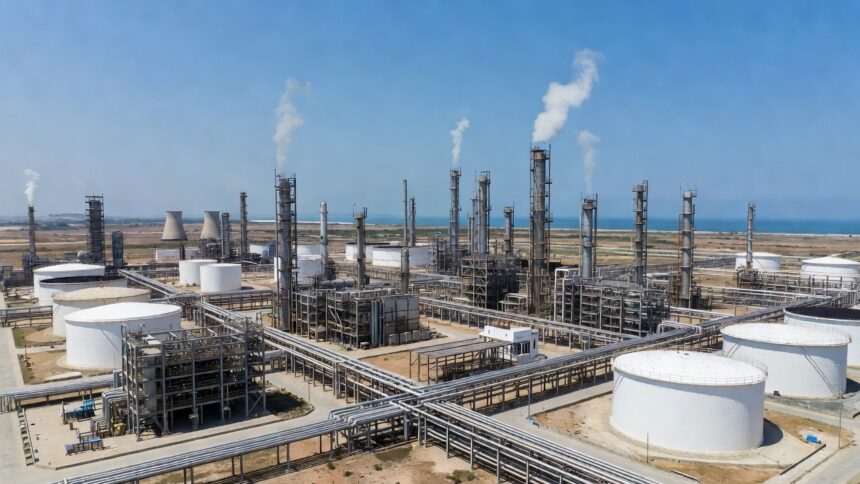
Built at a cost of approximately $20 billion on the outskirts of Lagos, the facility started operations in 2024 and attained full capacity this year after a decade of construction. It currently processes 700,000 barrels of crude per day and supplies most of Nigeria’s domestically produced gasoline. The IPO proceeds are earmarked for a $14.3 billion expansion project that the prospectus said would lift capacity to 1.4 million barrels per day by 2029.
Supply disruptions linked to the Iran war boosted demand for the refinery’s jet fuel, enabling sales into western European markets and helping the plant swing to an after-tax profit of $1.82 billion in the first half of 2026. The same prospectus showed a $476 million loss for the whole of 2025. FirstCap, one of the transaction’s co-issuers, projected refinery revenue would reach $28 billion by the end of 2026, more than double the prior year’s figure.
Refinery chief executive David Bird told Reuters the offering carried an explicit goal of wide ownership. “The intent is very much the people’s IPO, drive wide participation, enable Nigerians and the Nigerian diaspora, and Africans more broadly, the opportunity to participate in this wealth creation that comes from such an iconic industrial asset, like the Dangote refinery,” he said. The minimum subscription threshold has been set at 10 shares, equal to roughly $4 at current exchange rates, a level designed to broaden access beyond institutional buyers.
The Nigerian Upstream Petroleum Regulatory Commission reported national crude and condensate production averaged 1.68 million barrels per day in August. The transaction surpasses previous African IPO benchmarks such as Steinhoff Africa Retail’s 2017 raising of $1.25 billion, according to market compilations. Nigeria, as the continent’s largest oil producer, has historically imported the bulk of its refined products despite its crude exports, a pattern the Dangote facility has begun to alter.
Dangote, through his broader industrial group that also spans cement and sugar, has positioned the project as part of efforts to serve the continent’s 1.5 billion consumers more competitively than distant imports. The IPO is expected to account for a substantial share of total market capitalization on the Nigerian Exchange once listings conclude. Shares in the offer have been screened as Shari’ah-compliant, according to the transaction documents.