ع
ع



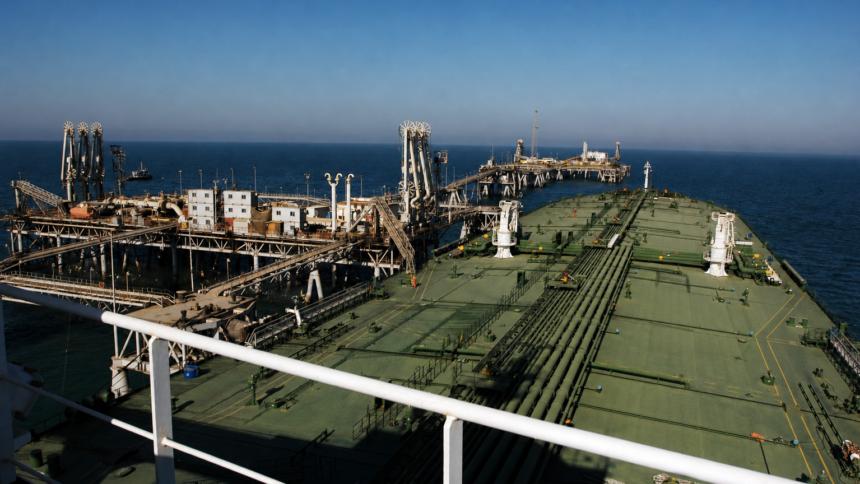


The Emirates News Agency reported that oil prices showed little change on the first day of October while Brent crude recorded its largest monthly increase since July. WAM noted the performance reflected ongoing geopolitical tensions that have curtailed supplies through the Strait of Hormuz. The agency highlighted that both benchmarks benefited from reduced export flows even as some recovery appeared in September data. Market observers pointed to the partial reopening of certain pipelines as a factor that limited further gains.
A Reuters poll of 30 economists and analysts released on September 30 raised the forecast for average Brent crude prices in 2026 to $89.05 a barrel from $85.08 in the previous survey. The poll lifted the projection for West Texas Intermediate to $83.90 a barrel from $80.20. Analysts cited expectations of prolonged disruption to Gulf exports as the main reason for the revisions with forecasts ranging from $77.27 to $97.60. Suvro Sarkar head of energy research at DBS Bank told Reuters that the market has become convinced a full restoration of exports remains unlikely in the near term.
The Oxford Institute for Energy Studies projected global oil supply to fall by 5 million barrels per day to 100.4 million barrels per day in 2026. The institute attributed the contraction to cuts in OPEC+ crude and non-crude liquids supply growth. It forecast global oil demand to contract by 850,000 barrels per day in 2026 before rebounding to growth of 2.4 million barrels per day in 2027. The balance stands at a 3.8 million barrels per day deficit in 2026 according to the institute’s assessment.
The U.S. Energy Information Administration forecast in its September 2026 Short-Term Energy Outlook that Brent crude oil spot prices would average around $90 a barrel in the second half of 2026. The EIA noted that global oil inventories have decreased by 400 million barrels so far this year which has kept prices elevated. The agency expects inventories to continue falling through the end of 2026 before beginning to rebuild in 2027 as production rises. Brent prices are projected to average $74 a barrel in 2027 under the EIA outlook.
The International Energy Agency stated in its Oil Market Report for September 2026 that world oil demand is forecast to decline by 2.5 million barrels per day in 2026. The IEA pointed to an impasse in negotiations between the United States and Iran that has delayed normalisation of flows. Benchmark North Sea Dated crude prices averaged $91 a barrel in August before surging higher in September. The agency reported that inventories have played a crucial role in balancing the market so far.
Goldman Sachs estimates placed Gulf oil exports including dark shipments at 23.3 million barrels per day over the last week of September. The bank noted this level aligns with the 2025 average after exports doubled during the month. Saudi Arabia led the recovery by more than doubling its crude exports from 2.45 million barrels per day in August. Standard Chartered raised its 2026 Brent price forecast to $92 a barrel from $85.50 citing persistent regional instability.