ع
ع



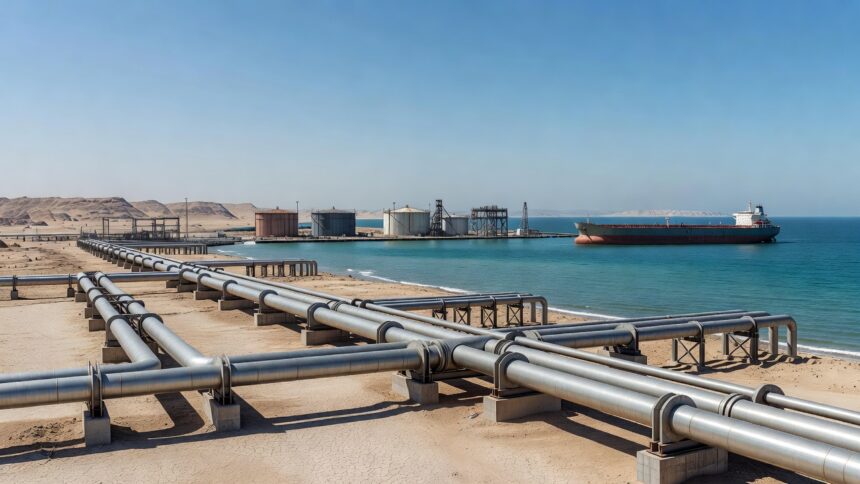


In an interview with Nikkei Asia, Amin Nasser outlined Saudi Aramco’s efforts to enhance the resilience of its supply chain as disruptions in key maritime chokepoints persist. The chief executive highlighted ongoing engineering and feasibility work for additional export pathways to mitigate risks associated with the Strait of Hormuz and the Red Sea. Nasser emphasized that the company’s infrastructure allows it to maintain supplies to customers even during challenging periods, with operations restorable within days.
Saudi Aramco currently operates three primary crude export routes, according to Nasser. These include direct shipments through the Strait of Hormuz from Gulf terminals, the East-West pipeline system to the Red Sea port of Yanbu with a maximum capacity of 7 million barrels per day as per the company’s first-quarter 2026 earnings release, and access to Egypt’s 320-kilometer Sumed pipeline linking the Red Sea to the Mediterranean. The flexibility of multiple lines in the East-West system makes simultaneous interruption difficult, Nasser noted.
The executive said the company is now advancing plans for what he termed a fourth and a fifth route, though specific locations, capacities or timelines remain undisclosed. Nasser added that Aramco is in discussions with Japanese authorities and partners to increase crude storage capacity in the country as part of broader efforts to build buffers against short-term disruptions. This expansion of overseas storage aims to provide customers with greater reliability.
Nasser told Nikkei Asia that observers sometimes underestimate the number of available pathways, often focusing only on Hormuz or the Bab el-Mandeb Strait. In reality, the Sumed option provides an additional layer of redundancy for moving crude northward to Mediterranean ports. The CEO stressed that Aramco had not halted supplies despite recent attacks on infrastructure.
Regional tensions have driven Brent crude prices above $100 per barrel, with analysts warning of further increases if disruptions continue. Saudi Arabia has boosted exports via alternative means including ship-to-ship transfers at Oman’s Sohar port to compensate for reduced flows from Yanbu following drone strikes on the East-West pipeline in September. Traders indicated that Aramco sold about 60 million barrels for loading via such transfers in September and October.
The moves reflect a strategic shift for the world’s largest oil exporter as it navigates prolonged geopolitical challenges in the Gulf. Nasser indicated that the company continues to honor all contractual commitments to buyers in Asia and beyond. Additional overseas storage and diversified routes are expected to play a larger role in future operations if current risks persist.