ع
ع



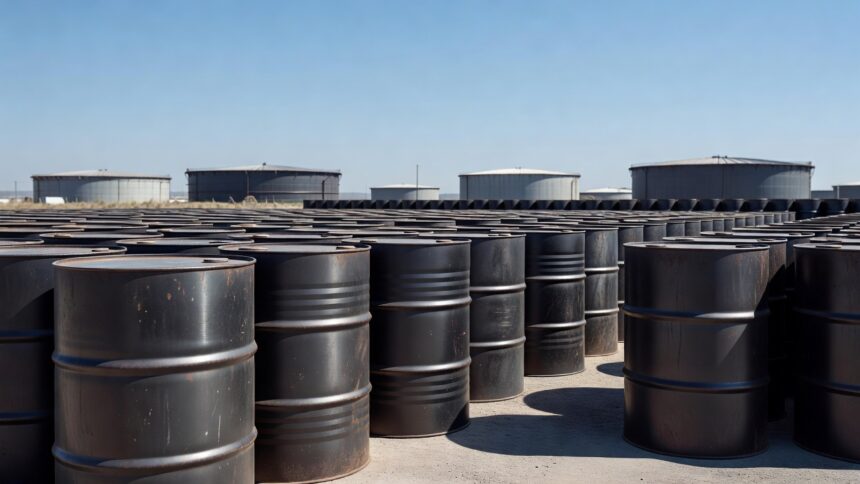


The Emirates News Agency reported that Brent crude futures fell $1.01 or 0.95 percent to close at $104.82 per barrel in Asian trading on Thursday while West Texas Intermediate futures declined 52 cents or 0.5 percent to $101.91 per barrel. Both benchmarks had dropped around 3 percent the previous day as news emerged that Saudi Arabia was preparing to increase exports to Asian refiners. The price action occurred against a backdrop of ongoing tensions that have kept values elevated despite the daily retreat.
WAM detailed how Saudi Arabia offered additional crude oil to Asian buyers through ship-to-ship transfers near Oman while also accelerating repairs to its East-West pipeline damaged by Yemen’s Houthi group with the aim of restoring half its capacity within days. These developments helped ease immediate supply shortage fears that had previously pushed prices higher. Nevertheless the market stayed tight with both major contracts holding comfortably above the $100 per barrel threshold.
Diesel markets came under particular pressure according to the same WAM dispatch with futures contracts in Europe and the United States climbing to fresh record highs even as crude prices moderated. Reduced shipping through the Strait of Hormuz combined with Red Sea tensions continued to limit further price declines. The overall environment reflected a balance between temporary supply relief measures and persistent geopolitical risks.
JPMorgan and the U.S. Energy Information Administration have estimated that if Middle East tensions and any potential blockade of the Strait of Hormuz persist without resolution crude oil prices are likely to remain in the $90 to above $100 range throughout the remainder of 2026. Their assessment underscores how supply disruptions from regional conflicts can sustain elevated levels despite periodic pullbacks. Such forecasts align with the resilience shown by benchmarks on Thursday.
WAM noted that the diesel surge stems from strains on fuel supplies linked to broader disruptions in the Middle East and Russia that have compounded challenges for refiners. Brent touched its lowest level since September 10 during the session while WTI reached its lowest since September 11 before closing higher than those intraday lows. Market participants will monitor further Saudi export moves and repair progress for additional signals on near-term availability.
The latest trading extends a pattern in which prices have remained supported by conflict-related risks even after easing on supply news. Analysts continue to watch developments around the Houthi attacks and their impact on Saudi infrastructure as factors that could influence future volatility. This dynamic has defined much of the oil market’s behavior in recent months.