ع
ع



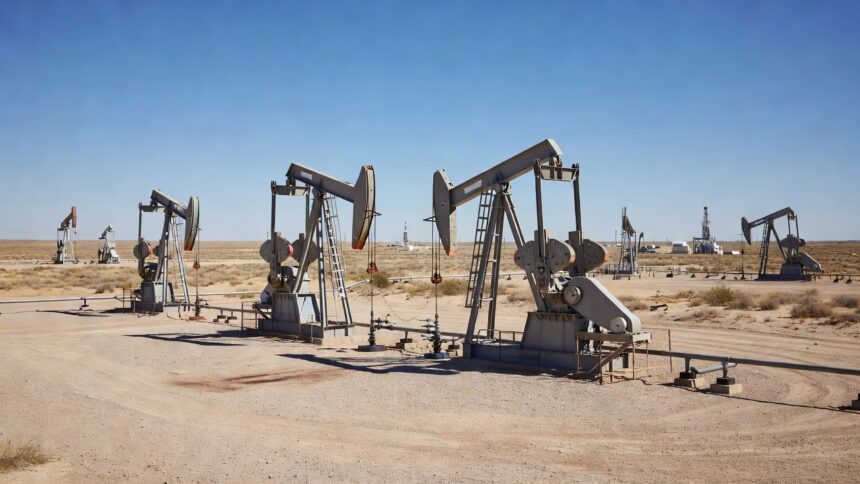


The Energy Information Administration projected United States crude oil production to average 13.8 million barrels per day in 2026, establishing a new annual record that exceeds the 13.7 million barrels per day high anticipated for 2025. First-half 2026 output has already reached 13.7 million barrels per day, reflecting a 300,000 barrel per day increase from the comparable period a year earlier. Most of this year’s gains and those forecast for 2026 have concentrated in the Permian Basin of Texas and New Mexico along with the federal Gulf of Mexico, the EIA said in its Short-Term Energy Outlook completed on September 3 and issued September 9. The agency expects the upward movement to persist into next year before any moderation appears in later forecasts.
Permian crude production will average 6.8 million barrels per day in 2026, a 3 percent increase from 2025, supported by sustained oil-directed drilling and efficiency improvements that have lowered costs for operators. Federal offshore output in the Gulf of Mexico rose 10 percent in the first half of this year compared with the same period in 2025, adding roughly 200,000 barrels per day, and the EIA anticipates a further 3 percent gain, or 100,000 barrels per day, across full-year 2026. Four major projects that began production over the past year, including the Shenandoah floating production unit averaging 70,000 barrels per day since July 2025 and the Ballymore subsea tieback at 58,000 barrels per day since April 2025, have driven much of the offshore expansion. Additional smaller projects are scheduled to start by the end of next year, according to the EIA assessment.
A stronger price environment with Brent crude averaging 91 dollars per barrel in 2026 will help maintain drilling activity and production momentum, particularly in the Permian where breakeven costs range from 63 dollars to 69 dollars per barrel in the Delaware and Midland basins. Despite a 13 percent drop in oil-directed rigs at the end of 2025 from the start of the year, rising well productivity has more than offset the decline and allowed output records to continue. EIA data shows that this combination of factors enabled production to climb steadily through 2025, setting the stage for the further advance projected for 2026. The forecast assumes West Texas Intermediate prices will provide sufficient incentive without triggering rapid over-drilling.
United States supply growth has accounted for a substantial portion of non-OPEC expansion in recent years, and the EIA expects this pattern to help balance global demand projected to rise modestly next year. Middle East production will increase in coming months as flows through the Strait of Hormuz and alternative routes stabilize, according to the agency’s global oil market assumptions. Commercial crude inventories are forecast to stay below five-year averages through the end of 2026, supporting tighter market conditions even as US exports remain near recent highs above 4 million barrels per day. The outlook does not incorporate events after the September 3 data cutoff.
Historical EIA records indicate that annual US crude production set new highs each year since 2022, reaching an estimated 13.7 million barrels per day in 2025 before the 13.8 million barrels per day projection for 2026. The agency will issue its next update on October 6, incorporating any shifts in drilling plans, economic indicators or geopolitical developments that emerge in the interim. Regional breakout improvements in the latest outlook provide greater detail on contributions from the Lower 48 states, the Gulf of Mexico and Alaska, where modest gains are also expected. These refinements help illustrate how productivity gains have sustained overall growth despite fluctuations in rig counts.