ع
ع



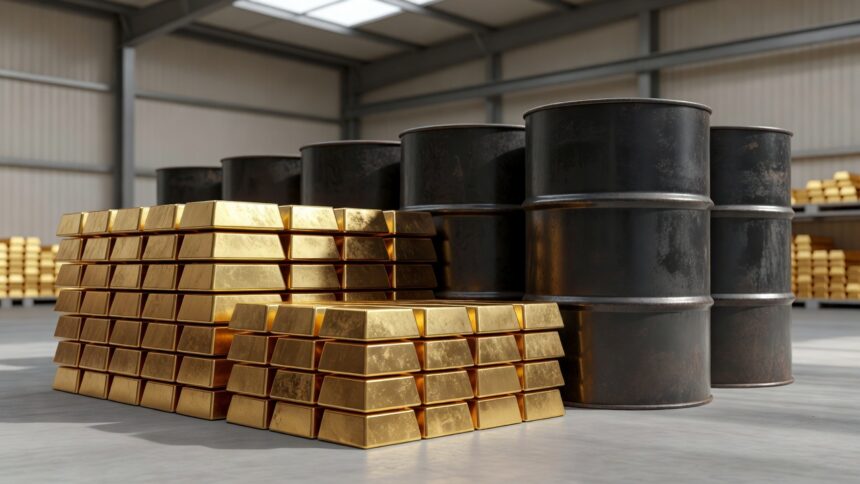


Commodity markets showed gold prices slipping on Monday as rising oil values amid renewed Middle East tensions sparked fresh inflation concerns that could lock in higher interest rates for longer Reuters reported on June 1. Spot gold dropped 1 percent to $4,489.34 per ounce by mid-afternoon in New York while U.S. gold futures closed down 1.9 percent at $4,506.30 after the metal had reached a two-week high the previous session. The move coincided with Brent crude advancing as disruptions in key shipping routes added to cost pressures across the global economy and market participants characterized the movement as gold slips as rising oil prices fuel fears of inflation.
The conflict involving U.S. strikes on Iranian targets and subsequent Iranian responses has curtailed tanker movements through the Strait of Hormuz according to multiple market assessments. Before the escalation roughly 80 vessels transited the waterway daily but that number has dropped to as low as 25 a Forbes contributor noted in late July. Such developments have propelled oil above $100 a barrel creating a feedback loop that elevates inflation expectations and reduces the appeal of non-yielding assets like gold while the U.S. 10-year Treasury yield reached 4.71 percent last week its highest since January 2025.
Jim Wyckoff a market analyst at American Gold Exchange told Reuters that expectations for interest rates to remain higher for longer are likely to keep gold under pressure unless bond yields stop rising and rates begin to stabilise or trend lower. This environment has limited gold’s safe-haven bid even as geopolitical risks intensify according to the wire service. Higher crude oil prices can add to inflationary pressures increasing the likelihood that interest rates remain elevated.
Gold has declined roughly 20 percent from its record high near $5,600 per ounce in January a South China Morning Post analysis from late May indicated as investors focused on the Federal Reserve’s battle against inflation reignited by energy costs. The metal’s underperformance persists despite the conflict because higher yields and a stronger dollar have outweighed traditional haven demand Global X ETFs researchers concluded in an August review. Asian gold ETF inflows have nonetheless risen 11 percent year on year demonstrating underlying structural support from central bank purchases.
ING commodity strategists Warren Patterson and Ewa Manthey reported that despite ongoing geopolitical risks gold has struggled to attract meaningful safe-haven demand since the conflict began with markets instead focusing on the inflationary implications of higher oil prices. They identified $4,000 per ounce as the key near-term support level while cautioning that elevated energy costs and rising yields are likely to cap any recovery. Ole Hansen head of commodity strategy at Saxo Bank added that gold continues to take its cues from the oil market with rising energy costs keeping risks of dollar strength and elevated inflation in focus.
Bart Melek global head of commodity strategy at TD Securities explained to Reuters that higher oil prices are raising the risk that the U.S. central bank and others might have to increase interest rates to fight what would surely emerge as stagflation. Recent U.S. consumer price data showing the largest annual increase in nearly three years has further bolstered expectations that the Federal Reserve will keep rates unchanged for some time according to the wire service. Analysts maintain a bullish longer-term outlook on gold as central bank buying and other drivers remain intact even as near-term pressures from the oil shock persist.