ع
ع


Motor premiums rose 10 percent in 2024 as Bahrain’s insurance market passed $835 million. Soor is positioning itself at the point where compulsory demand, insurer choice and digital distribution meet.
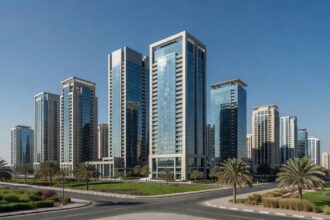
Bahrain’s motor insurance market generated $226.1 million in premiums in 2024, up 10.1 percent from the previous year and equivalent to 27.1 percent of the country’s entire insurance market, according to Atlas Magazine’s April 2026 market review. Total life and non-life premiums reached $835.2 million, an 8.8 percent rise, while locally incorporated insurers accounted for more than 86 percent of the business written.
The size matters, but the character of motor matters more. Insurance is compulsory for registered vehicles, renewals bring customers repeatedly back into the market, and the product can be compared across price, coverage and service. Bahrain therefore has a sizeable recurring pool of demand in which the act of choosing an insurer can itself become a valuable digital business.
The market has plenty to compare
By December 2025, the Central Bank of Bahrain counted 141 authorised insurance companies and organisations, alongside 35 insurance brokers, according to its latest insurance-sector fact sheet. That makes Bahrain an unusually dense insurance marketplace relative to the size of its economy. The opportunity for digital distribution is not to manufacture more supply. It is to organise what is already there.
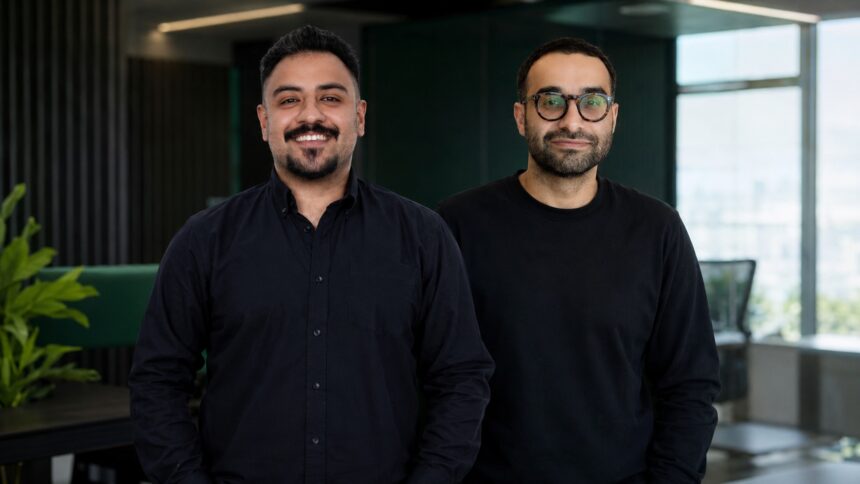
This is the market Soor has entered. Founded in 2024 by Mahmood Dhaif and Qasim Albaqali, the Bahrain-based insurtech gives customers a single digital interface through which they can compare policies from multiple insurers and buy the coverage that fits their needs. The company secured an undisclosed pre-seed investment from Spring in August 2026, with the capital directed toward product development, additional insurer partnerships and customer experience. Wamda reported the round on 10 August.
Owning the moment of choice
The commercial prize in aggregation is larger than putting several prices on one screen. Every insurer connected to the platform expands the customer’s choice, while every customer interaction gives the platform a clearer view of how people shop for cover. At sufficient scale, the aggregator becomes a distribution channel for insurers as much as a comparison service for consumers.
That is how Soor itself describes the model. “We built SOOR to simplify insurance for customers by helping them find policies that match their needs in less than a minute,” founder Mahmood Dhaif told Biz Bahrain on 7 August 2026. He added: “For insurers, SOOR creates a stronger digital channel to reach, serve, and understand customers better.”
That second sentence is the more consequential one. Insurers have spent years digitising their own customer journeys. Aggregation changes the starting point. Instead of a driver choosing an insurer first and then asking for a quote, the platform invites the driver to see the market first and choose afterward.
Motor makes the model stronger
Health insurance was still Bahrain’s largest class by gross premiums in 2024, with a 30.6 percent share against motor’s 27.1 percent. But motor produced $212.8 million in net earned premiums during the year, compared with $164.6 million for health, according to the same 2024 market data compiled from Central Bank figures. Motor net earned premiums rose 6.7 percent year on year.
That is a useful distinction for a platform built around recurring consumer purchasing. Motor combines scale with frequency, and it already sits at the centre of Bahrain’s retained non-life insurance business.
From insurance product to distribution infrastructure
The next phase of Bahrain’s insurtech market will therefore be determined less by whether consumers are willing to buy insurance online and more by which platforms become habitual gateways to the market. More insurer connections improve comparison. Better comparison attracts customers. More customers make the digital channel more useful to insurers. The reinforcing loop is familiar from travel, lending and payments, and Gulf insurance is increasingly developing its own version.
Soor enters that cycle with a licensed Bahraini platform, fresh capital and a market whose motor premiums have already crossed $226 million. For a young company, the flattering part of the data is not simply that insurance is growing. It is that one of Bahrain’s largest recurring insurance categories is precisely the kind of market in which the interface between buyer and provider can become a business of its own.