ع
ع



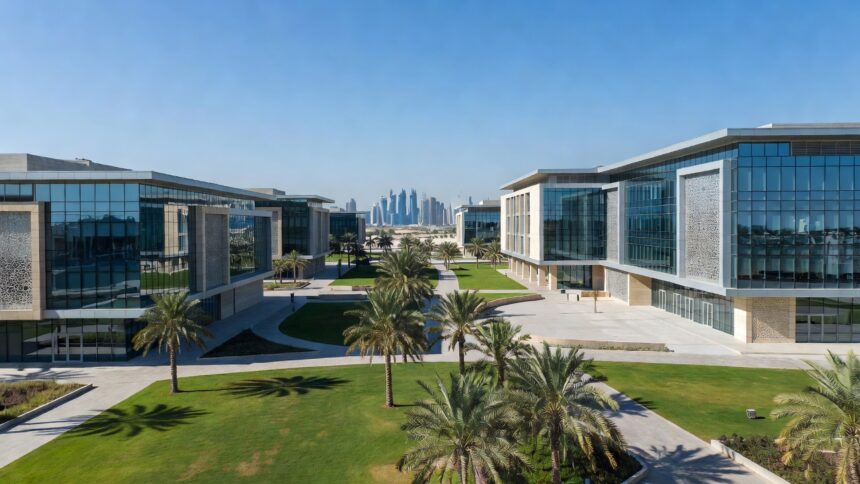


Qatar News Agency reported that Hamad Bin Khalifa University and The Center for Wellbeing formalized a partnership through a memorandum of understanding signed on Tuesday in Doha to advance research, knowledge exchange and evidence-based policies supporting community development. The agreement was signed by Prof. Ahmed Abdulrahman Al Emadi, acting CEO of the Center for Wellbeing, and Dr. Maryam Al-Mannai, vice president for student affairs at HBKU, with executive leaders from both sides in attendance. This collaboration merges HBKU’s academic research strengths with the center’s specialized experience in wellbeing promotion to improve institutional capacities across Qatar.
The partnership will support joint research projects, professional development activities and training programs that draw on personnel from both organizations, according to the news agency. Data gathering and analysis focused on wellbeing and quality-of-life indicators will feed into the Center for Wellbeing’s dedicated observatory to build a robust scientific database. Such efforts are designed to inform practical initiatives that address societal challenges while aligning with broader national priorities.
Partners will exchange expertise, information and technical know-how under the MoU, the statement indicated, enabling more effective use of combined resources. Targeted projects will examine topics tied to wellbeing, social cohesion and community values, creating opportunities for applied studies with direct relevance to Qatari society. Joint conferences, seminars, workshops and discussion panels will further facilitate dialogue and shared learning between the institutions.
The framework also calls for regular sharing of research data, technical reports, policy papers and joint scientific publications to sustain ongoing cooperation. HBKU’s participation reflects its longstanding commitment to knowledge creation, education and community engagement in support of Qatar National Vision 2030, QNA noted. The Planning and Statistics Authority has tracked steady gains in national quality-of-life indicators in recent years as authorities implement the vision’s human and social development pillars.
Prof. Ahmed Abdulrahman Al Emadi described the agreement as a milestone that will contribute to sustainability and innovation in tackling community needs. Dr. Maryam Al-Mannai emphasized how linking academic expertise with practical field knowledge can produce research that directly serves Qatari requirements across multiple sectors. She highlighted potential for integrating insights from health, education, social sciences and technology to achieve lasting impact.
HBKU has concluded multiple similar agreements with local and global partners over the past decade to amplify its role in research and capacity building, university announcements show. These efforts have consistently focused on translating academic work into tangible benefits for government, industry and society. The new arrangement with the Center for Wellbeing extends that pattern by concentrating on wellbeing metrics and community-focused outcomes.