ع
ع



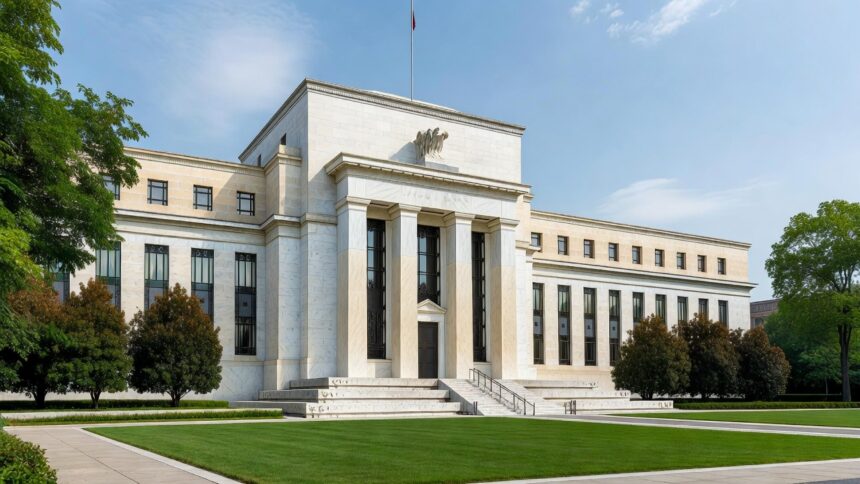


The Federal Reserve kept its target range for the federal funds rate at 3.5 percent to 3.75 percent in a 9-3 vote at the July 28-29 meeting, according to the minutes it published this week. Three officials dissented in favor of an immediate 25-basis-point increase, the largest one-way dissent bloc since September 2016. Many participants assessed that policy tightening would likely prove necessary if inflation failed to decline further, the account showed, as officials weighed persistent price pressures against solid economic growth.
Several participants favored an increase of 25 basis points at the July meeting, the minutes stated verbatim. This wording implied wider support for action than the dissent count alone suggested and raised the prospect of a tighter vote split when policymakers convene again on September 15-16. The central bank has held borrowing costs steady for five consecutive meetings while it evaluates incoming data on prices and the labor market.
Federal Reserve Governor Christopher Waller noted that higher rates could be required in the near term, according to the minutes. Philadelphia Fed President Anna Paulson said she remained open to raising rates, leaving room for the balance to shift as new information arrives. Such views depend heavily on the August employment report, upcoming CPI readings and the July personal consumption expenditures price index that the Bureau of Economic Analysis is scheduled to publish later this month.
Economist Diane Swonk said September is still a live meeting for a hike. Interest-rate futures currently embed roughly one-in-three odds of a rate increase at that gathering, market pricing shows. The probability has receded after a string of softer inflation and jobs figures but has not been eliminated.
The Bureau of Labor Statistics reported that the consumer price index rose 3.4 percent in the 12 months through July after 3.5 percent in June, with core prices excluding food and energy easing to 2.5 percent, the lowest in five months. Unemployment stood at 4.1 percent in July while job gains have kept pace with workforce expansion. These readings indicate gradual progress toward the Federal Reserve’s 2 percent goal even as supply shocks in energy and other sectors continue to complicate the picture.
A conflict in the Middle East has driven crude oil prices roughly 35 percent higher and pushed diesel costs near recent peaks, according to a Reuters assessment that highlighted risks to the inflation outlook. The Federal Reserve’s own policy statement noted that economic activity is expanding at a solid pace despite elevated uncertainty, with strong productivity growth and capital investment. Officials are expected to discuss these dynamics at the Jackson Hole symposium this week before finalizing their September decision.