ع
ع



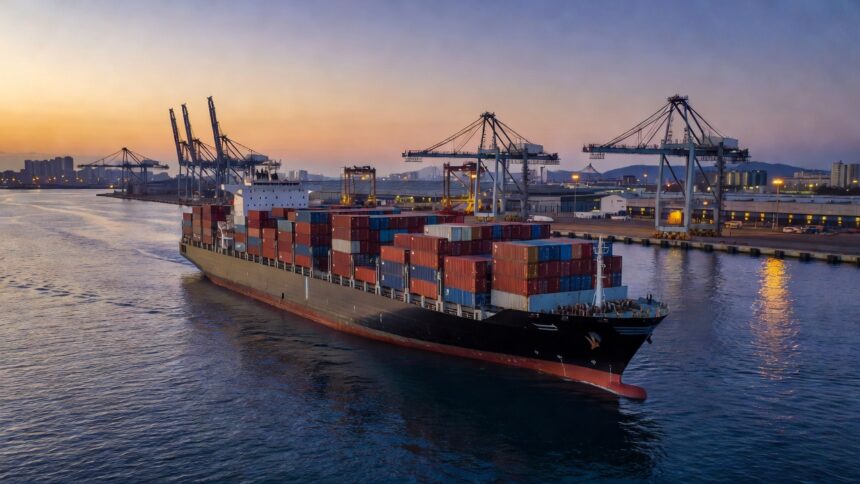


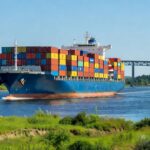
The PanStar Acro departed Busan New Port at 9:30 p.m. local time on Saturday for a pioneering voyage that will take it north along Russia’s coast through the Northern Sea Route before calling at Felixstowe in Britain, Rotterdam in the Netherlands and Gdansk in Poland. The Ministry of Oceans and Fisheries confirmed the ship’s departure in a statement while the operator PanStar which secured the government tender for the trial expects the round trip to last 40 to 45 days. PanStar acquired the 2,758-TEU vessel formerly known as the HMM Mombasa from South Korea’s largest container line and modified it for polar navigation with a crew of 20 South Koreans and Indonesians. The ship loaded 837 TEU of cargo including auto parts, chemicals, used vehicles and empty containers according to details released by the company.
South Korean authorities estimate the Arctic passage can reduce travel time by 35 percent compared with the Suez Canal route while cutting the distance by roughly 7,000 kilometres and lowering fuel consumption. President Lee Jae-myung has designated Arctic shipping a national priority with officials aiming to position the route as a regular trade corridor by 2030 and transform Busan into a global maritime hub. The Korea Institute for International Economic Policy provided the distance and time savings figures that underpin the government’s push toward commercial viability for the Northern Sea Route during summer months when ice levels permit safe transit.
This trial follows a similar voyage by the Chinese vessel Dubai Tower which departed Ningbo earlier in August and marks South Korea’s first container ship transit of the Arctic in a decade. Norway’s Centre for High North Logistics data shows 88 vessels completed 103 transits of the route last year up from 97 in 2024 and 43 in 2022 with the majority involving Russian and Chinese operators. Reuters reported that the increase reflects easier passage due to accelerated melting in the Arctic which warms about four times faster than the global average.
Korea’s Vice Oceans Minister Nam Jae-hon described the Arctic route as bound to become an alternative to Middle Eastern shipping lanes as geopolitical risks and technological advances improve its competitiveness. Marc Lanteigne a political science professor at the Arctic University of Norway told Reuters the voyage coming soon after China’s effort signals the Northern Sea Route is normalising as a secondary maritime transit corridor. He added that a successful trip would demonstrate South Korea’s commitment to developing alternative sea lanes while cautioning that the country risks falling behind expanding Chinese services on the route.
Western diplomats have expressed concern over the voyage because it requires permits and navigational support from Russia raising potential issues with sanctions related to Moscow’s war in Ukraine. The South Korean foreign ministry declined to comment on those risks when approached by reporters while the oceans ministry stated that consultations with relevant countries and agencies had been completed beforehand. Vladimir Tikhonov a Korean studies professor at the University of Oslo noted in remarks reported by AFP that US and EU sanctions are not international law unlike UN measures leaving room for such voyages amid uncertainty in the Middle East.
Environmental groups have warned that growing commercial traffic on the Northern Sea Route could accelerate sea ice loss already driven by climate change. The Paran Ocean Citizen Science Center said in a statement last year that the route has become increasingly viable as Arctic warming leads to sharp declines in sea ice yet making it commercially sustainable would demand further temperature rises that conflict with global climate efforts. Major carriers including CMA CGM, MSC and Hapag-Lloyd have publicly pledged to avoid Arctic routes entirely according to industry assessments.