ع
ع



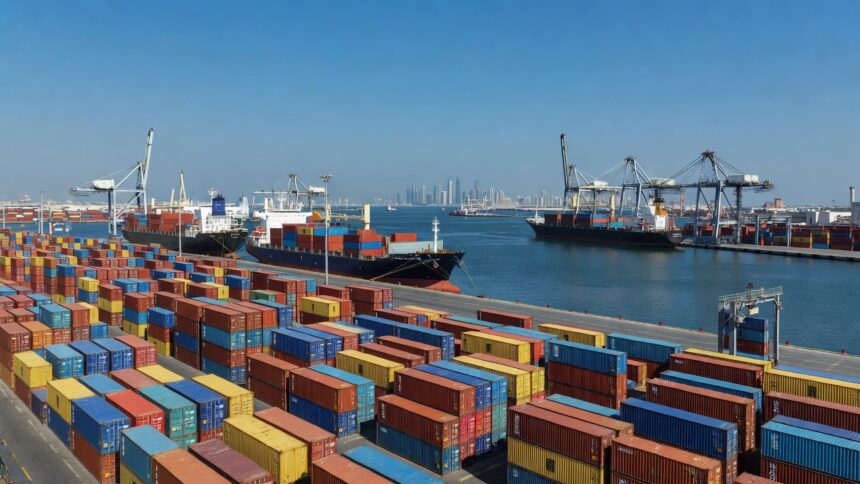


Dubai Customs reported that its digital systems now process a customs declaration every three seconds while managing 10 million declarations in 2019 with only a modest rise in staff from 2,897 to 3,000 employees. The authority operates a risk engine that draws on officer intelligence, historical data, government reports and importer profiles to clear low-risk shipments instantly or route high-risk ones for inspection. These capabilities have reduced procedural costs for businesses and strengthened border governance across one of the world’s busiest logistics gateways, according to Dubai Customs data.
The transformation accelerated in 2013 after a directive from Sheikh Mohammed bin Rashid Al Maktoum called on government entities to provide 24/7 services similar to hotels. Within 100 days Dubai Customs became the first UAE department to deliver 100 percent of client-facing services on mobile platforms, later refining systems that initially struggled with complex tasks such as filing declarations. Client satisfaction reached 88 percent, surpassing the 79 percent target, while adoption rates exceeded expectations by 34 percent, the authority stated in its performance review.
A consultative council brings major traders together to supply direct feedback, supplemented by real-time customer satisfaction meters that inform continuous adjustments. This stakeholder engagement operates alongside an agility framework covering environment, operations, culture, change and performance, which emerged from a gap analysis aimed at balancing flexibility with governance. Dubai Customs has maintained its focus on adapting swiftly to global legislation shifts and evolving trade patterns, the Business Agility Institute assessment found.
An accelerated innovation laboratory unites business and technology teams to develop tools including blockchain for cross-border e-commerce, robotic process automation for audits, an AI classifier for image-based tariff coding and a predictive risk engine now used by other customs bodies worldwide. The laboratory’s AI productivity engine received approval for deployment across additional government departments. Such innovations have enabled responses to operational challenges, including retraining canine units with smaller breeds to detect concealed items in confined spaces, Dubai Customs said.
Recognition has followed, with the World Customs Organization honoring the authority’s strategic plans and the European Foundation for Quality Management awarding gold status in 2019 after its ranking climbed from 18th in 2004 to first in 2015. These accolades reflect practices now viewed as benchmarks for other customs administrations. The authority launched its 2030 artificial intelligence strategy in late 2025 to embed the technology fully across all operations and create a smart digital ecosystem.
The advances support broader UAE ambitions to expand the logistics sector from AED 129 billion in 2023 to AED 200 billion annually, according to government planning documents. Dubai Customs facilitates massive trade flows that underpin national economic growth, with historical figures showing substantial value processed between 2013 and 2018. Officials continue to position the emirate as a leader in fast, predictable trade facilitation that attracts international business.