ع
ع



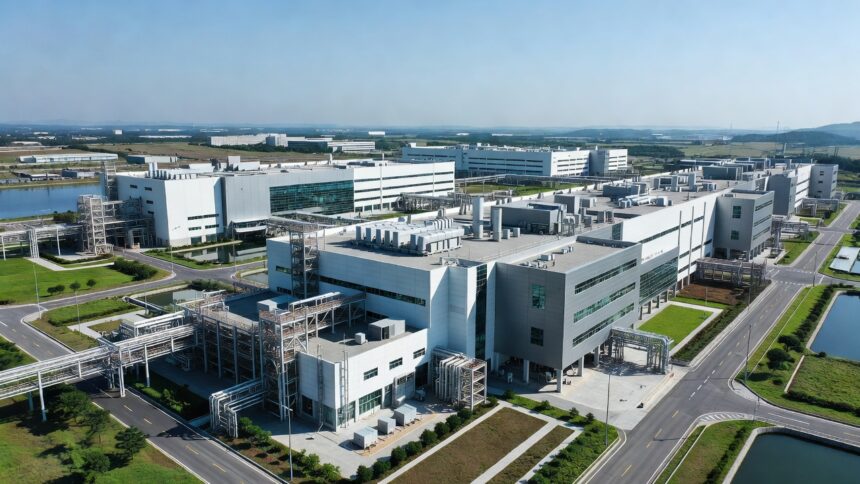


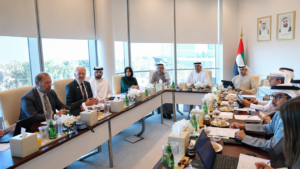
South Korea will launch a 5 trillion won fund equivalent to about $3.5 billion targeting promising companies in chip materials, parts, equipment and fabless design, a presidential official announced. Presidential Chief of Staff Kang Hoon-sik detailed the measure after a meeting chaired by President Lee Jae Myung, adding that authorities will extend a further 5 trillion won in trade finance to support suppliers. The steps form part of a semiconductor megaproject unveiled in June under which Samsung Electronics, SK Hynix, their suppliers and local governments are expected to invest more than $576 billion in new production facilities, many of them in the southwest region.
The megaproject seeks to establish multiple chip manufacturing hubs to meet growing demand. Kang outlined a 10-year program valued at 1 trillion won to encourage cooperation between large firms and smaller suppliers across development, testing and production phases. According to the chief of staff, the government will also pursue passage of a Mega Special Zone Act in parliament before the end of the year to accelerate permitting, environmental assessments and infrastructure construction.
President Lee urged the Defence Ministry during the session, which included senior executives from Samsung and SK Hynix, to relocate functions at a military air base in Gwangju by mid-2028. The 8.3 million square metre site has been designated a candidate for a national industrial complex, with full relocation and temporary dispersal of military facilities scheduled for completion in the second half of that year. Kang said these actions would clear the way for development of the semiconductor manufacturing complex on the location.
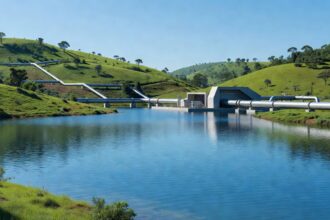
Resource planning for the clusters includes specific targets for water and electricity. For the Gwangju and South Jeolla project, officials intend to secure 650,000 metric tonnes of water daily by 2030 using recycled wastewater together with supplies from nearby dams. The Yongin cluster south of Seoul is projected to receive 14.7 gigawatts of electricity by 2041 through a mix of cogeneration facilities, liquefied natural gas generation and power routed from other regions.
Kang stated that the government would ensure power and water availability stay on schedule for every new semiconductor project. He added that megaprojects worth more than 350 trillion won in other areas of the country are scheduled to begin construction or expansion this year. A further 57 trillion won in research and development projects will also start during the same timeframe.
The Lee administration has identified expanded semiconductor capacity as a central element of industrial strategy because existing bases in Yongin and Pyeongtaek will not suffice for artificial intelligence-driven needs. A Boston Consulting Group assessment documented South Korea’s earlier plans for a $471 billion investment through 2047 to build 16 new fabrication plants within a mega cluster in Gyeonggi Province. Semiconductors accounted for 9.6 percent of manufacturing output and 17.3 percent of exports in 2019, a Hoover Institution study found.