ع
ع


International backers cut deployment by 65 percent in the first half. What holds a small ecosystem together at that point is not cheque size but whether resident money and resident founders will back each other.
The first half of 2026 was the thinnest six months regional venture capital has recorded in years. MENA startups raised $1.35 billion across 214 deals, according to MAGNiTT, funding down 22 percent year on year and deal count down 41 percent, the fewest in a half since at least 2022. The number underneath matters more. Active international investors fell 48 percent to 95, and the capital they deployed dropped 65 percent, leaving MENA-based investors to fund 81 percent of everything raised, their largest share in more than five years and up from 58 percent.
What remained was also concentrated. The UAE absorbed $895 million, or 66 percent of all regional capital, despite its own deal count falling 37 percent. Saudi Arabia, which took 49 percent of MENA funding in the first half of 2025, took 16 percent this time. The smaller Gulf ecosystems, Bahrain included, do not appear in the headline splits at all.
That absence understates Bahrain. The Global Startup Ecosystem Report 2026 valued the kingdom’s ecosystem at $1.6 billion for the period from July 2023 to December 2025, a 759 percent increase on the 2021 window, ranking it top five in MENA for performance, top ten for AI-native activity and top fifteen for research and development. Tamkeen reported more than 44,300 employment and career opportunities delivered and over 8,600 enterprises supported in 2025 alone.
The part policy cannot buy
Precision is a policy answer. It is not a capital answer. When foreign cheques withdraw, the binding constraint becomes behaviour rather than allocation, and behaviour is set by the people writing the local cheques.
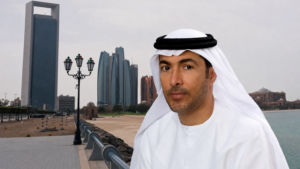
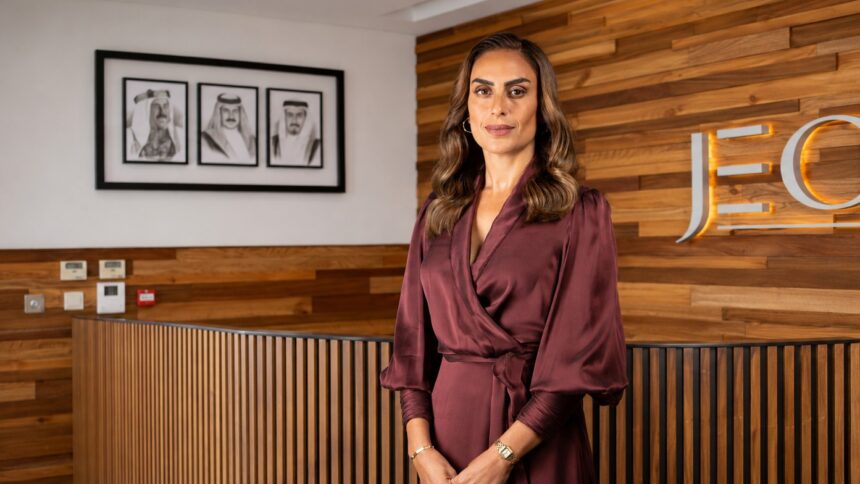
Mashael Isa Fairooz is one of them. The founder of JEO Capital Management, a Bahraini investment firm with a decade of operating assets behind it, and a board member of the Entrepreneurs’ Organization’s Bahrain chapter, she has already done in public what the current numbers demand at scale. In February 2024 she co-invested in Thiqa Tutoring, an Emirati tutoring platform founded two years earlier, putting private money in alongside Hope Ventures, the investment arm of Bahrain’s state-backed Hope Fund, and angel investor Dr Lamya Mahmood, in a $300,000 round closed on the third season of Beban, the region’s private-public investment show. Co-founder Hamdan Karmustaji said the company’s team passed 100 employees within three months of filming. It is a small deal and precisely the kind that disappears from regional totals, which is the point: this tier of capital is what the headline figures do not measure.
Her stated approach to partnership explains the selectivity. She describes a counterparty that looked flawless on paper, with financial strength, reputation and decades of experience, and a project that still failed because both sides read the same opportunity through different lenses. Neither was necessarily wrong. “We simply weren’t aligned,” she has written, and “capability alone doesn’t create alignment.” Early in her career she saw investors as accelerants; now she says flatly that “not every cheque is worth accepting,” and that “finding the right person is far more valuable than finding the first person.”
The firm’s other early-stage positions read the same way: the Bahraini learning platform Lumofy, the freelance marketplace HENA and Riyadh-based Akwan, each described as capital plus go-to-market work rather than a cheque.
A network small enough to read
The scaffolding is legible at this scale. EO Bahrain disclosed last September that its 37 members’ companies represent roughly $120 million of investment volume and around 3,900 jobs, with a fifteen-member board and a target of fifty members. A resident investor base that size is effectively one network, where reputational cost is immediate. In June, Fairooz joined a Bahrain panel for World Business Angel Investors Week at Applied Science University, under a 2026 global theme of diversity, inclusion and financial inclusion; the week is coordinated by WBAF, an affiliated partner of the G20 Global Partnership for Financial Inclusion. Bahrain brings numbers to that table: women make up 43 percent of the national private sector workforce and 35 percent of managerial positions, and the kingdom moved from 116th to 104th in the Global Gender Gap Report between 2024 and 2025.
The limit of relationship capital
A network is not a market. MAGNiTT’s Philip Bahoshy has warned that first-half figures lag by six to nine months and that early-stage activity, the truest measure of ecosystem appetite, has slowed markedly. The structural gap is starker: between 2020 and 2025 the UAE’s venture-to-GDP ratio reached 0.2 percent and Saudi Arabia’s 0.07 percent, against 0.8 percent in the United States and 1.2 percent in Singapore. Trust lowers the cost of a transaction. It does not raise the size of one.
Which is what makes this half interesting rather than simply bad. Businesses are built with capital, as Fairooz puts it, “but they are sustained by trust.” Ecosystems built on foreign validation are contracting fastest. Whether the ones built on resident relationships hold is a testable question, and Bahrain, small enough that its investors all know each other, is close to a controlled experiment.