ع
ع



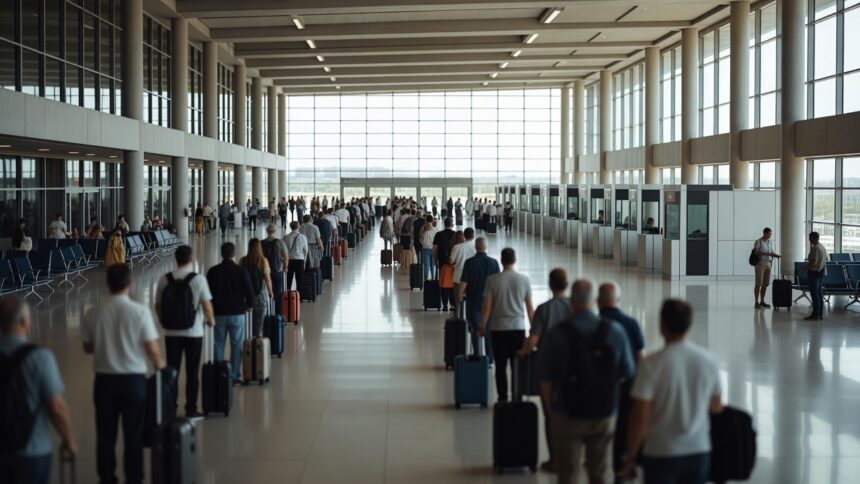


The Entry/Exit System requires non-EU passport holders to provide fingerprints, a facial image and a digital record at both entry to and exit from the Schengen Area, which spans 29 countries, according to an analysis published by Gulf Times on July 22, 2026. Aviation analyst Alex Macheras reported that the dual verification has doubled biometric touchpoints at airports never designed for such additional processing on departures. Hubs including Rome and Faro have seen processing times nearly triple those recorded under the former manual stamping procedure, while individual days at Zurich, Brussels, Alicante, Palma and Tenerife have produced lines approaching five hours.
These bottlenecks have led passengers to miss connections and outbound flights, with some aircraft departing gates while booked travelers remained stuck at passport control, Macheras stated in the article. Departure halls in particular lack the physical space and staffing levels needed to accommodate hundreds of waiting non-EU passengers, a situation that has proven as disruptive as arrivals congestion. The analyst emphasised that a missed return flight carries added difficulty for travelers who expect the hardest part of their journey to be complete upon reaching the airport.
Industry bodies including ACI Europe, Airlines for Europe and IATA jointly wrote to European Commission President Ursula von der Leyen on July 1, 2026, requesting the option to suspend biometric checks during the peak July and August travel period, the Gulf Times report noted. Nine member states backed the appeal, yet the Commission declined a full suspension and instead described the system as not perfect while identifying roughly 20 difficult spots among some 1,500 border crossing points. Officials also confirmed they would not extend the flexibility window airports had used during the initial rollout phase.
Member states have made extensive use of a fallback provision that permits suspension of biometric registration in renewable six-hour blocks when queues become unmanageable, according to the assessment. This mechanism has delivered limited relief but has failed to eliminate excessive waits or shield airline schedules from disruption. When the main tool for managing the new border process is the ability to deactivate it temporarily, the regime has not achieved its intended readiness, Macheras argued.
Biometric profiles created under the system remain valid for three years, allowing returning visitors to confirm their identity rather than repeat full registration, a step that should accelerate processing as the season advances, the July 22 article explained. Many airports have not clearly communicated this distinction to passengers, and border staff have not always applied it consistently. The resulting confusion has undermined efficiency gains the technology was expected to deliver.
The World Travel and Tourism Council has warned that the disruptions jeopardise as many as 41 million arrivals, a substantial exposure at the height of Europe’s competitive tourism season. In his analysis, Macheras concluded that Europe’s EES has become summer’s defining bottleneck, imposing fresh costs on inbound travel without adequate infrastructure, staffing or public information to support a smooth rollout that began in phases the previous October. The experience has highlighted sequencing problems in replacing manual border controls with a biometric regime across an entire continent.