ع
ع



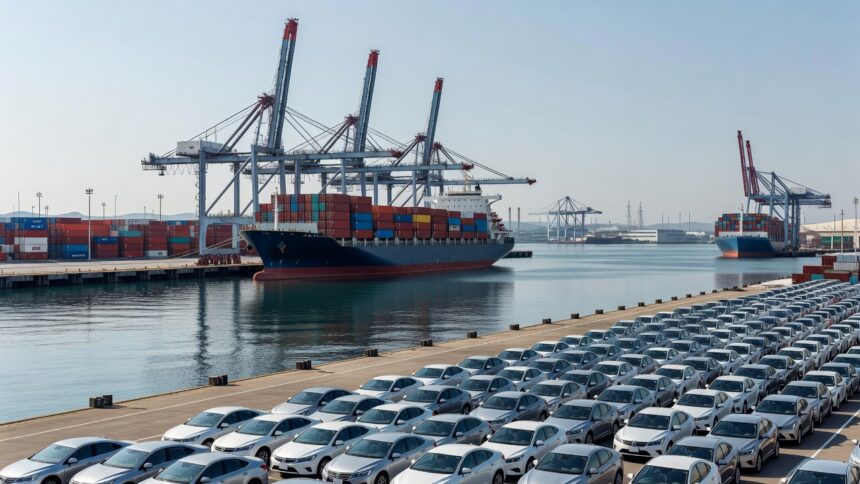


The Ministry of Finance reported that exports reached 9.12 trillion yen in June reflecting the 19.3 percent year-on-year jump which accelerated from a 12.5 percent rise the previous month. Imports grew at a more modest 7.2 percent to 8.45 trillion yen according to the same preliminary figures resulting in a trade surplus of 670 billion yen. The ministry’s data highlighted gains across 15 of 18 export categories with electronic components and capital goods leading the expansion as global supply chains continued to stabilize.
Semiconductor exports surged 32 percent while automobile shipments rose 18 percent the ministry breakdown showed with strong sales in the United States and Europe supporting the latter. The figures come as Japan’s key trading partners displayed signs of economic recovery following earlier slowdowns induced by the pandemic and subsequent geopolitical events. A Japan External Trade Organization assessment found that cumulative exports for the first half of 2026 reached 52 trillion yen up 14 percent from the comparable period in 2025.
The United States accounted for the largest share of Japanese exports with shipments climbing 22 percent according to the ministry data while exports to China increased 15 percent despite tensions in select sectors. Trade with European Union countries advanced 19 percent driven by machinery and chemical products the statistics indicated. These regional performances underscore the diversified nature of Japan’s export markets which have helped buffer against domestic inflationary pressures.
Bank of Japan officials have linked the weak yen to enhanced export competitiveness in recent quarters with a senior economist telling Reuters last month that currency depreciation contributed around 4 percentage points to growth rates. The central bank projects the export sector to remain a significant driver of overall economic expansion through the end of 2026 according to its latest outlook. This aligns with separate International Monetary Fund projections that place global trade growth at 3.2 percent for the year providing a favorable environment for Japanese manufacturers.
The Ministry of Finance cautioned that sustained performance would hinge on developments in major economies particularly the United States and China. Economists at Nomura Holdings forecast full-year export growth to average around 12 percent if current trends persist the firm said in a recent analysis. The positive June data adds to broader evidence of resilience in Japan’s trade sector following multiple years of volatility tied to global events.
World Bank data shows Japan’s export-to-GDP ratio has stabilized near 18 percent in recent years highlighting the sector’s ongoing importance to national economic health. The ministry noted that further gains could support government targets for GDP expansion amid challenges in domestic consumption. Additional monthly releases will provide further insight into whether the June acceleration marks the start of a broader upward trajectory.